

Meet the baseball player who's tired of promoting Big Oil
In an exclusive interview, Brent Suter becomes the first American pro athlete to speak out against fossil fuel advertising in sports.


Brent Suter won’t be remembered alongside the likes of Jackie Robinson, Billie Jean King and Muhammad Ali.
But the Los Angeles Angels relief pitcher is making history all the same this week, taking a principled stand as the first American professional athlete — so far as I know — to speak out against oil and gas sponsorships in sports.
Shortly after the Angels clobbered the Dodgers on Sunday, Suter gave me a call. He’d spent the weekend pitching beneath the gigantic 76 gasoline ads at Dodger Stadium. Soon he’d be back in Anaheim for a three-game series against the Houston Astros, whose players wear Occidental Petroleum patches on their jerseys.
Suter doesn’t like any of it.
“Certainly I can’t go over the line with any criticisms of companies sponsoring us, as an employee or as an athlete in Major League Baseball,” he said. “But certainly I’d prefer clean energy companies.”
“For someone who studies environmental science and all that,” he added, “it’s a little bit of a conundrum.”
Indeed, Suter isn’t your average baseball player. He studied environmental science and policy at Harvard, pursuing a passion that began his sophomore year of high school, when he and his mom saw Al Gore’s documentary “An Inconvenient Truth.” He knew that working on climate would be his “life mission.”
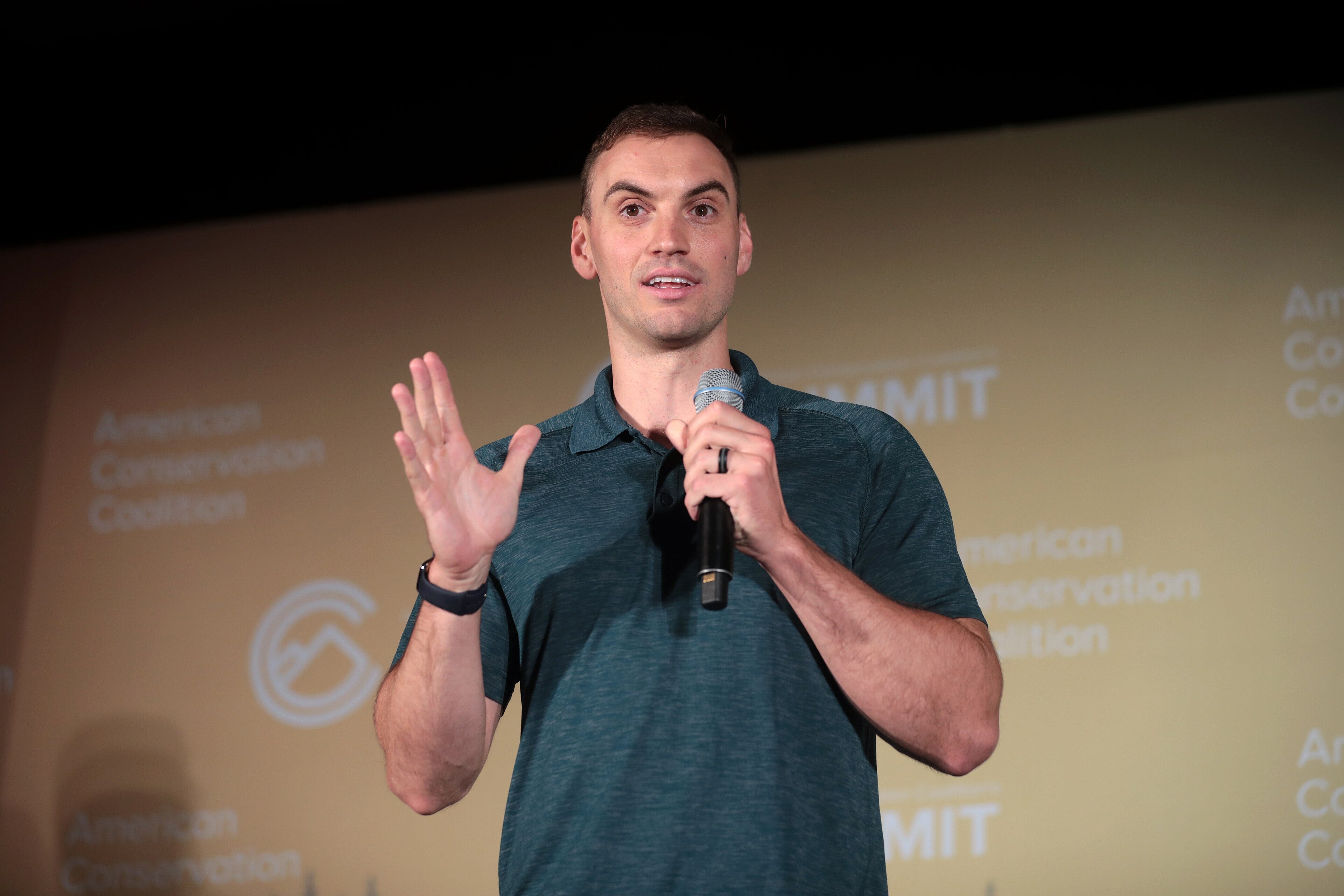
.jpg)
But he was also a good baseball player, and he was selected by the Milwaukee Brewers late in the 2012 draft. He made his major league debut in 2016 and has played for the Brewers, Colorado Rockies, Cincinnati Reds and Angels over the last decade, logging 529 strikeouts and a 3.63 ERA over 635 innings — solid numbers.
Meanwhile, he’s stayed engaged on climate. He supported a carbon-fee-and-dividend bill in Congress. He helped launch Sidelining Carbon, an initiative to offset climate pollution from sports team travel. He serves on the advisory board of EcoAthletes, which works with athletes to promote climate action and sustainability. He was actually the group’s first member.
“When we got him, I was like, ‘Oh, maybe we have something here,’” said EcoAthletes founder and CEO Lew Blaustein.
Suter’s latest cause is his boldest yet.
Climate advocates have increasingly accused fossil fuel companies of partnering with sports teams to launder their reputations as hotter heat waves, worsening wildfires and other climate impacts endanger players and fans. In Europe, athletes and activists have been calling out “sportswashing” for years — as seen on “Ted Lasso.”
But until recently, American activists largely ignored fossil fuel advertising in sports. That started to change in 2024, after I wrote a column calling on the Dodgers to cut ties with longtime sponsor Phillips 66, owner of the 76 gasoline brand. Since then, more than 28,000 people have signed a petition urging Dodgers ownership to dump 76.
The Dodgers have refused, but the campaign has gone national, with activists protesting fossil fuel advertisers at arenas across the country. The Sierra Club Angeles Chapter and Third Act SoCal announced Wednesday that they’re planning their next series of protests at nine stadiums across North America on June 21, tied to the FIFA World Cup, which starts this week.
The press release announcing the June 21 protests quotes Suter — a big endorsement for an emerging movement still looking for its first win.
“As an athlete, I care a lot about promoting companies that share my values, and I also care a lot about our planet,” Suter says in the press release. “Have I used and directly benefited from fossil fuels in my life? Absolutely. Do I believe that continuing to fully depend on fossil fuels as a society is dangerous? Absolutely. We need to find ways to power our society in cleaner ways, and I want to represent companies that want to be part of the solution.”
When I spoke with Suter, I asked him: If he were in charge, would baseball teams stop accepting oil and gas sponsorships?
At first he hedged: He’d be OK promoting fossil fuel companies “who are making big strides into the clean energy space.”
Then he paused and thought about it some more.
“I don’t even know if those [companies] exist,” he said. “Come to think about it, I don’t think it exists. A lot of greenwashing out there.”

I asked something even harder: Would Suter be willing to play for the Astros, with those Occidental patches on their sleeves? What about the Cleveland Guardians or the Texas Rangers, which also advertise Big Oil on their jerseys?
Good question, he said, mulling it over.
“None of those teams have approached me in free agency seriously,” he said.
Suter is 36 years old, a veteran relief pitcher likely to retire in the next few years. He’s said his post-baseball career will focus on sustainability. I doubt his decision to take a stand on sportswashing will go down as a watershed moment in sports history.
But it’s becoming more difficult for teams to ignore the climate crisis.
For the next month, the eyes of the world will be on the World Cup, with scientists warning that extreme heat could imperil players and spectators. Even if athletes don’t get sick, extraordinary temperatures could impair player performance.
FIFA’s response has been mixed; the soccer federation mandated three-minute hydration breaks during each half but scheduled many games during the hottest part of the day in the U.S., Mexico and Canada, to facilitate optimal TV viewing times in Europe. FIFA won’t allow fans to bring reusable water bottles to games, claiming they’re a safety hazard. And one of its biggest sponsors is Saudi Aramco.
Warmer winters and declining snowpack, meanwhile, are making it harder to find feasible spots for the Winter Olympics. And pro athletes aren’t the only ones feeling the heat; high schoolers are subjecting themselves to riskier temperatures and seeing games canceled due to fossil fueled wildfires and unhealthy smoke.
In 2024, a UCLA Law survey found that at least 59 U.S. sports teams are sponsored by oil giants, or by utilities that rely primarily on fossil fuels. As global warming gets worse — and as activists keep up the pressure — I suspect it will only get harder for teams to justify promoting oil and gas.
All of which is a long way of saying: Suter may be the first American pro athlete to call out fossil fuel advertisers, but I doubt he’ll be the last.
“He’s great to have as our first,” Blaustein said. “We need to clone him.”
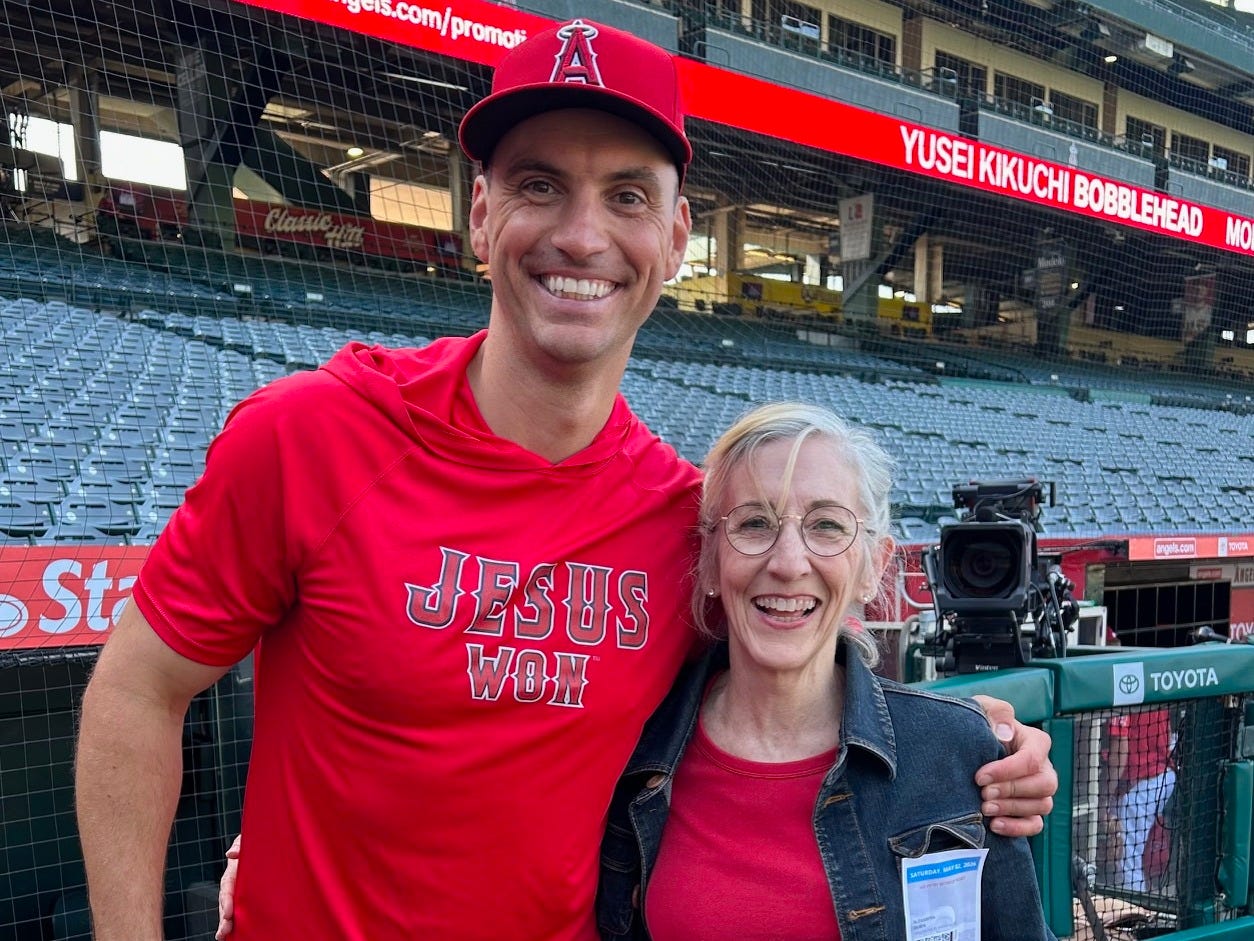
There’s a funny idea that gets bandied about by sports fans — usually when they’re mad at athletes for supporting causes they don’t like — that sports are supposed to be apolitical. I suspect this idea would have confused Jackie Robinson and other social justice-minded athletes, many of whom — still today! — use their platforms to bend the arc of the moral universe.
I’m thinking about folks like basketball player Jason Collins, who bravely came out as gay in 2013, making himself the NBA’s first openly gay player (and who sadly died last month at 47). Folks like Dodgers star Mookie Betts, who kneeled during the national anthem in 2020 to protest police brutality. Folks like Megan Rapinoe, who with other members of the women’s national team sued the U.S. Soccer Federation, accusing it of paying women less than men.
To be clear, Suter isn’t comparing himself to any of them. He’s not trying to make a lot of noise. He just wants to be part of building a better future.
“I love supporting clean energy companies,” he said. “I love supporting people that are doing well and doing good.”
Still, he thought long and hard before speaking out.
“The first guy through the wall can sometimes get bloody,” he said.
So let’s give Suter some love. Next time he jogs in from the bullpen, cheer him on. If you don’t watch baseball, he’s on Instagram. Some likes are in order.
And if you want to protest sportswashing on June 21? Here’s the list of locations, including Dodger Stadium and SoFi Stadium in Los Angeles and Golden 1 Center in Sacramento.
This won’t be your last chance. There’s a lot of baseball left to play.
Catch up on Climate-Colored Goggles
Behind on your inbox? Been there. Here are some of my favorite recent newsletters:
April 29: Jane Goodall’s love affair with Disney
In other news
Fire on the landscape:
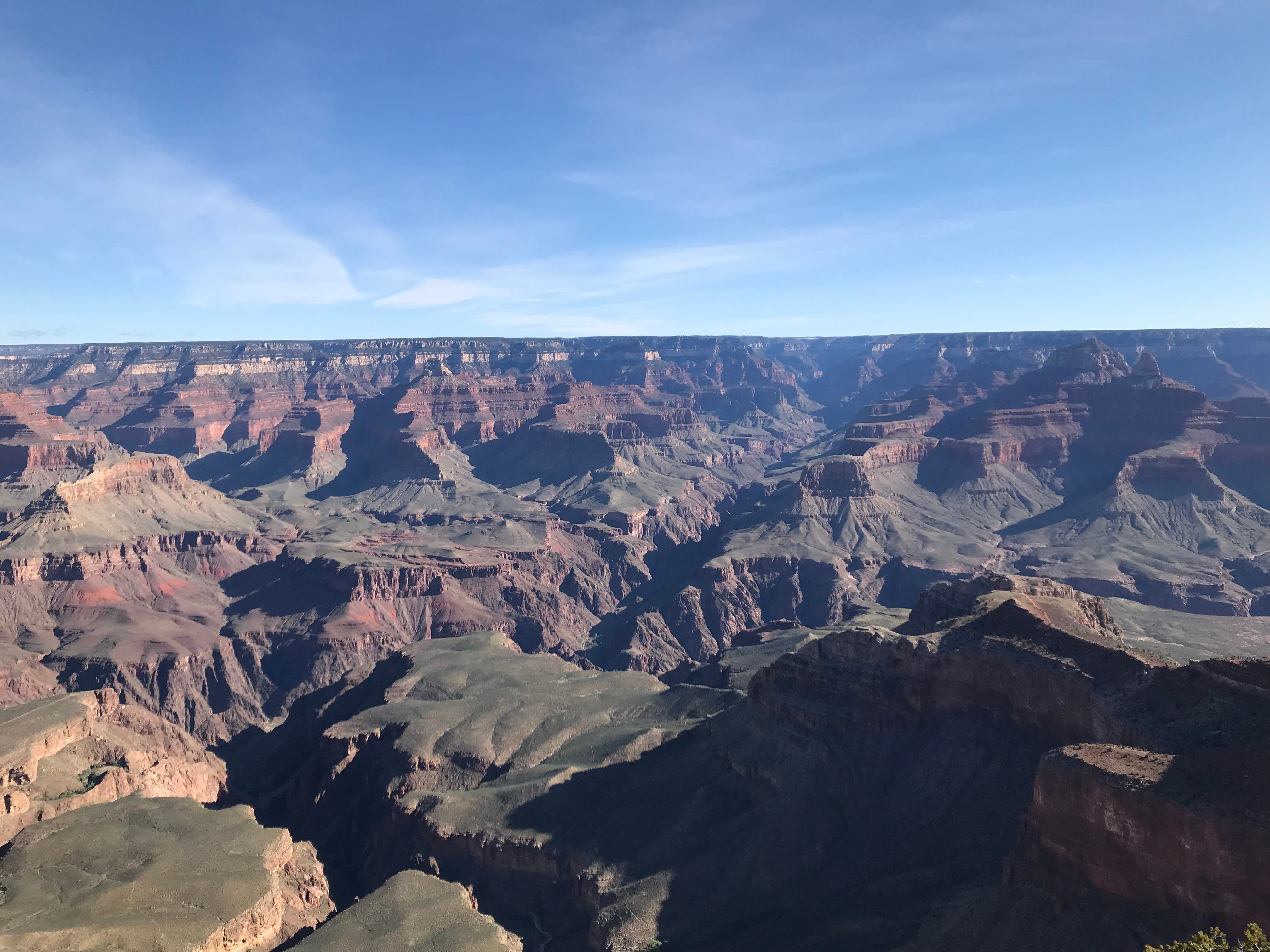
The Grand Canyon’s North Rim is back open to visitors following a devastating fire. Some folks lined up at the gate before the 6 a.m. opening; others hiked from the South Rim the night before. (Eva Terry, Deseret News)
Researchers are studying whether exposure to wildfire smoke makes it harder to conceive children. (Susan Shain, High Country News)
Hexavalent chromium — a highly toxic, cancer-causing metal — stayed in the air for months after the 2025 Los Angeles fires. (Tony Briscoe, L.A. Times)
“These fish continue to amaze me.” The Santa Monica Mountains’ last steelhead trout survived the Palisades fire — and had babies. (Lila Seidman, L.A. Times)
The energy transition:
California is now home to the first major battery installation in the U.S. that can supply electricity for eight hours rather than four — a big step toward 24/7 clean energy. (Julian Spector, Canary Media)
The company behind Nevada’s controversial Rhyolite Ridge lithium mine says it expects to announce a new funding partner this month — a key milestone before construction can begin. (Amy Alonzo, the Nevada Independent)
Wind and solar generated more electricity than gas worldwide in April — a first. (Dan McCarthy, Canary Media)
On the Colorado River:
Another poor winter could devastate lakes Mead and Powell, leaving the massive reservoirs nearly dry. (Jake Bolster, Inside Climate News)
San Diego County may be able to sell desalinated water to Arizona and/or Nevada, helping stave off shortages at Mead. (MacKenzie Elmer, Voice of San Diego)
President Trump plans to nominate California farmer Aubrey Bettencourt to lead the U.S. Bureau of Reclamation. (Alex Hager, KJZZ)
Can’t beat the heat:
“I felt at times really dizzy and just really tired and walking around like a zombie.” Players endured a scorching French Open. (Tumaini Carayol, the Guardian)
From January through May, Southern California saw its most unhealthy air days in more than a decade. High temperatures were to blame, cooking pollution into smog. (Tony Briscoe, L.A. Times)
One more thing: If you plan to drink alcohol while watching the World Cup, and it’s hot where you are, be careful. Stay hydrated. Here are some tips from the Associated Press’ Dorany Pineda.
Timely column with World Cup starting this week and temps in the LA area expected to be high. Brent Suter is young yet, and after his baseball career, he'll be well positioned to contribute in the fight against fossil fuels. Go Brett!
Kudos to Suter. He's a mensch1