

The desert solar project that refuses to die
Soda Mountain Solar would harm bighorn sheep. The developer is an oil company. Should California approve it anyway?

Programming note: This story took me on a reporting trip deep into the Mojave Desert. It also features an exclusive interview with a top California official.
I can’t keep doing this work without your support. If you enjoy my reporting and commentary, I hope you’ll upgrade to a paid subscription to help me keep it going.
Thank you.
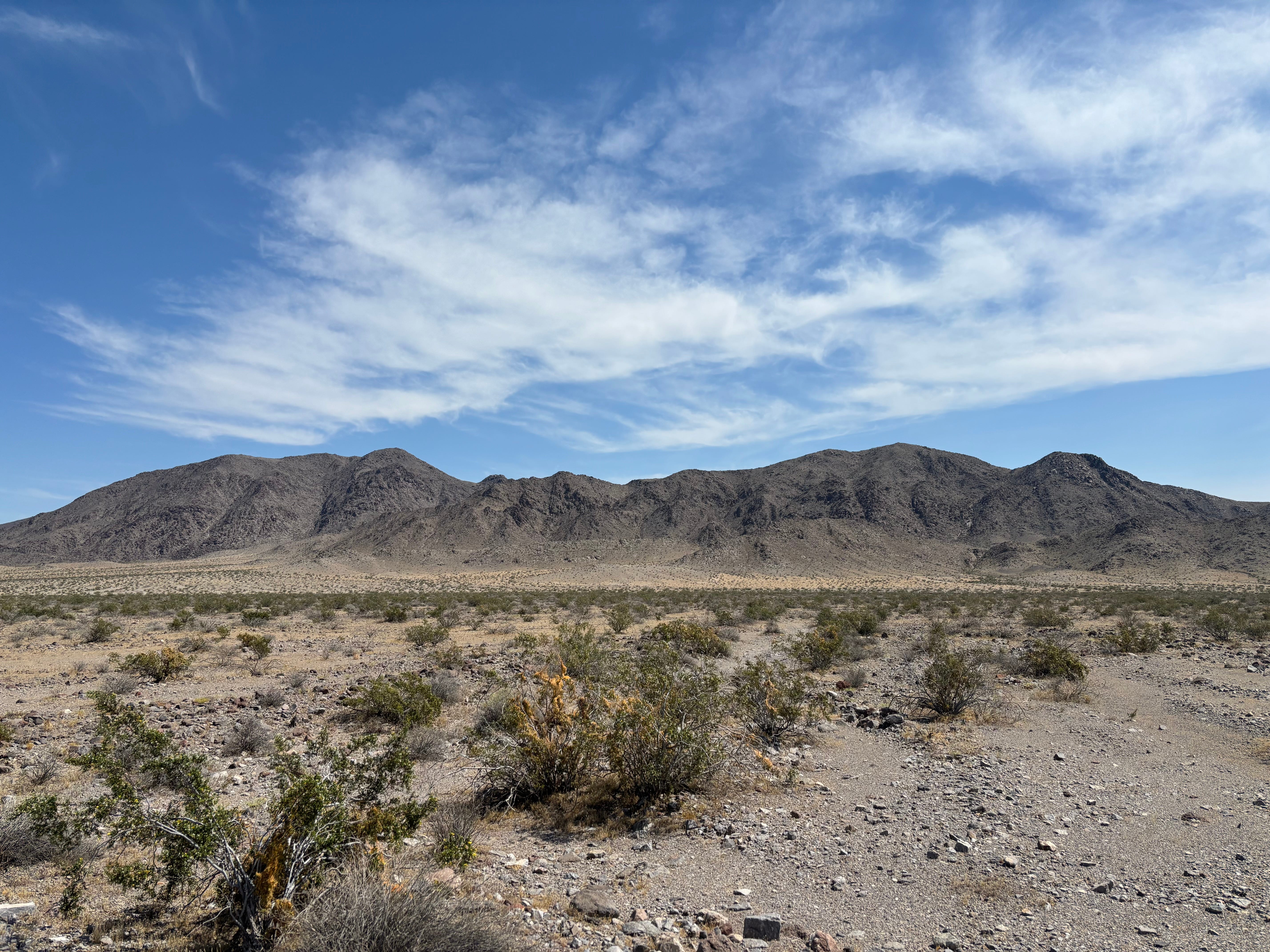
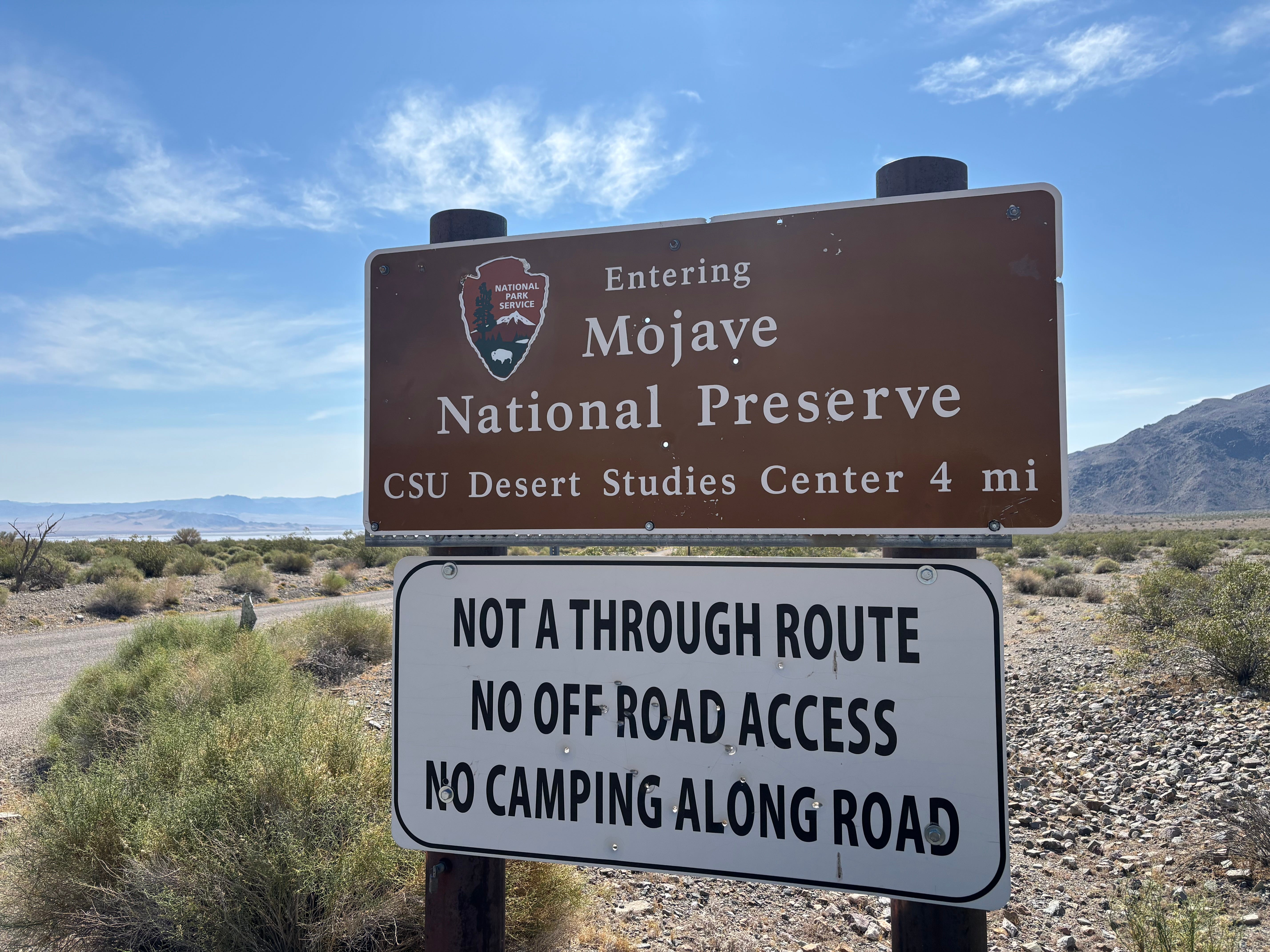
I should start by telling you about the bighorn sheep that live in the Soda Mountains south of Interstate 15, two-thirds of the way from L.A. to Vegas, just outside Mojave National Preserve. I should describe the proposed solar project that critics say would disrupt their habitat, discouraging them from crossing over the freeway and breeding with their brethren on the other side. I should explain that state regulators will vote in just a few weeks on whether to approve the solar project.
That’s how most writers would start this story. They’d tell you how the April 27 vote will have significant repercussions for treasured public lands. They’d point out that it could set a precedent for how California navigates long-simmering tensions between renewable energy development and conservation.
I’ll get back to that stuff shortly. Promise.
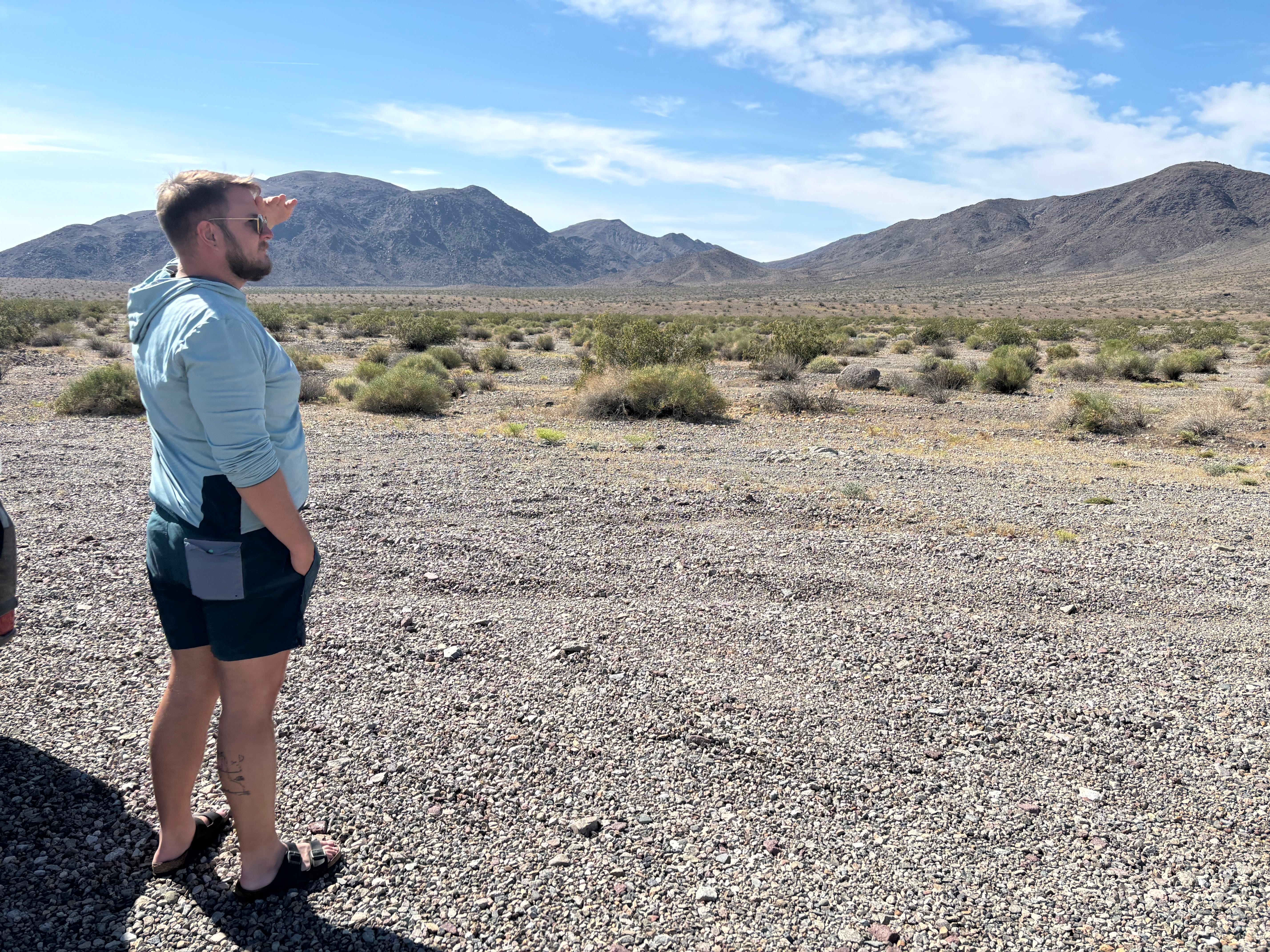
First, I want to share something Chance Wilcox said to me last month as we drove up I-15, past the site of the proposed Soda Mountain solar farm.
Wilcox works for the National Parks Conservation Association, a nonprofit advocacy group that opposes Soda Mountain. He pointed out that the sea of solar panels would be extremely visible from the highway, which prompted me to ask if that would really be so bad. Depends on who you ask, he responded.
“This highway cuts alongside Mojave Trails and Mojave National Preserve. It’s scenic, it’s beautiful, you have a lot of people coming through here,” he noted. “This is an area without billboards. This is in an area that naturally is beautiful, and I think that [solar] would definitely mar that natural beauty.”
“Even though you’re on an interstate,” he added.
Fair enough. But as we pulled off the freeway, Wilcox caught me off guard: He told me he prefers wind turbines to solar farms. Visually speaking.
“This is a personal statement, but wind turbines have a little bit more of a, what’s the word I’m looking for? Charisma, I guess,” he said.
I shouldn’t have been surprised; sure, plenty of people hate looking at wind turbines, but there’s no objective standard of beauty or ugliness. Personal experience has a lot to do with these kinds of judgments. President Trump has been vilifying wind energy ever since someone built an offshore wind farm within sight of one of his golf courses. Personally, I learned to love the big spinning turbines as a kid, when my family would drive through Palm Springs’ iconic wind farms on summer road trips.
I also think solar farms look gentle and serene, probably because I’m a climate writer. Even when I lived in the desert — weekends spent camping in Death Valley, hiking on Mt. San Jacinto and exploring less-visited places like the Wee Thump Wilderness — I loved spotting solar farms. To me, they represent a safer future.
Maybe Wilcox sees solar differently because his job involves fighting solar farms that would hurt wildlife and damage sensitive ecosystems.
“Sheep prints!” he called out, laughing with excitement as we hiked a rocky patch of desert south of the highway. I crouched to take a look. Sure enough: two small cloven hoofs, imprinted in the soil.
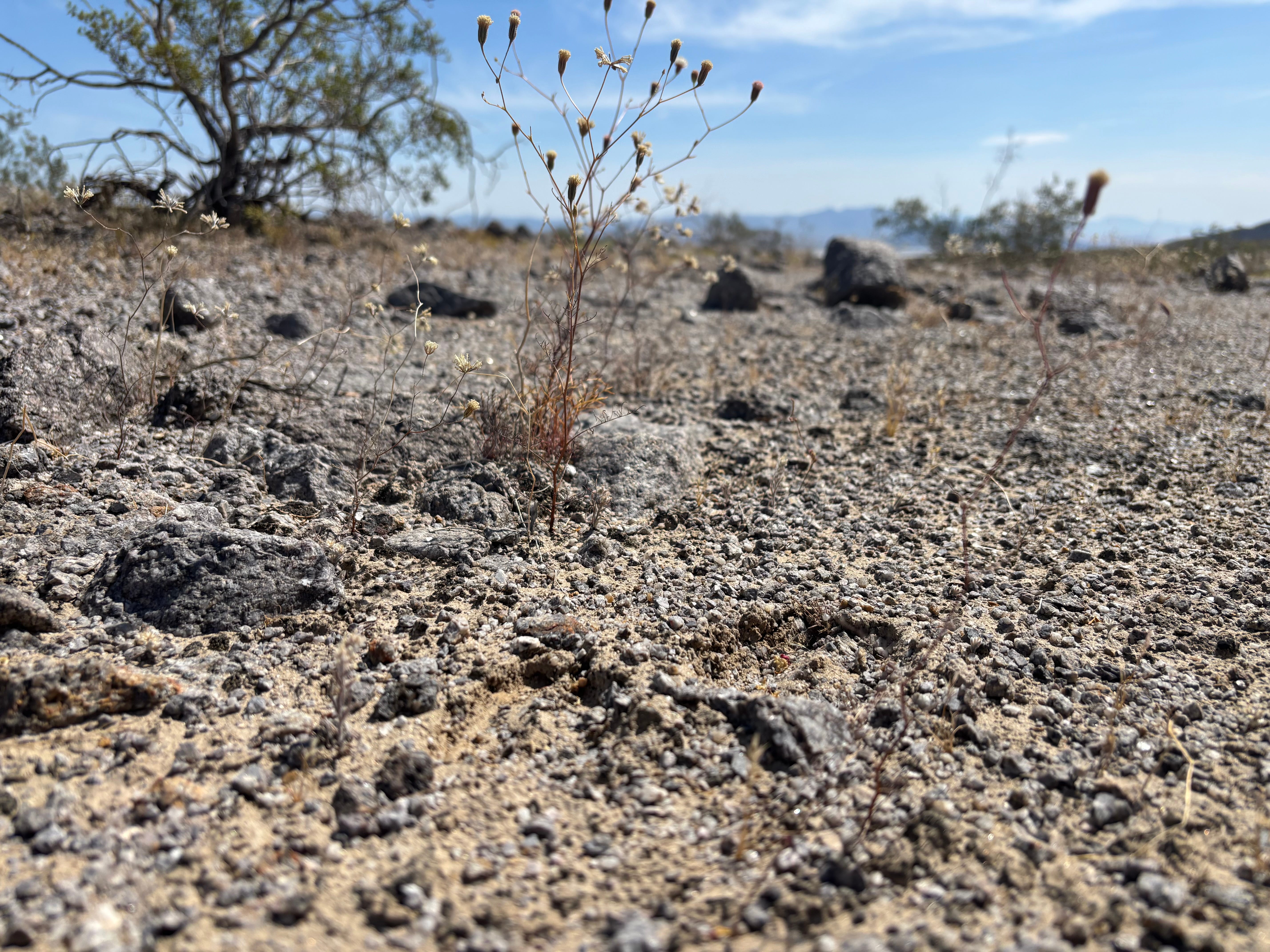
We’d spent all day looking for sheep without success, but this was proof. This was why Wilcox needed to block Soda Mountain.
“We don’t oppose solar,” he said. “But this is a bad site.”
He acknowledged that I must hear similar statements all the time — and he’s right, I do. Which is frustrating, because I’ve never written about a renewable energy project that someone didn’t oppose on the grounds of “this is a bad site.”
Which isn’t to say there aren’t bad sites.
But this is why I didn’t want to start with Soda Mountain: I am absolutely exhausted by the never-ending debate over whether and where to build solar in the desert. When I started writing about energy for the Desert Sun in 2014, some of my first stories were about controversial solar farms — including Soda Mountain, which was first proposed in 2007. I never imagined I’d still be writing about it in 2026.
I also never imagined I might be convinced it was a good project.
How to explain? Where to begin?
Several solar companies have tried and failed to secure approval for Soda Mountain, which would be built on federal public lands. A previous developer came close during the Obama years, winning a permit from the Interior Department before losing a 3-2 vote at the San Bernardino County supervisors. That seemed to be the end.
But in 2022, state lawmakers passed Assembly Bill 205 to help developers circumvent local opposition to solar, wind and battery projects. Instead of seeking approval from cities and counties, developers can now go to the California Energy Commission. The agency has to make a decision within nine months.
Sensing an opportunity, VC Renewables — a subsidiary of European fossil fuel giant Vitol — acquired the rotting carcass of Soda Mountain and submitted an application to the Energy Commission to build 300 megawatts of solar and 1,200 megawatt-hours of battery storage. Conservation groups were outraged. State and federal officials had spent eight years writing a 10-million-acre master plan for where to prioritize solar in the desert. The Soda Mountain site didn’t make the cut. Now state officials might fast-track solar there anyway? Just 1,500 feet from Mojave National Preserve?
It felt like a betrayal.
“When it comes to Soda Mountain Solar, we’ll continue fighting no matter what stage of the game this is in,” Wilcox said.
The fight revolves around bighorn sheep, a desert icon. When I-15 was built in the 1950s, it split the Soda Mountains in half, confining the local bighorn population to the southern part of the range. Ever since, they haven’t been able to move through a migration corridor that runs north to Death Valley National Park.
As a result, they can’t breed with other bighorn populations, limiting gene flow. That makes them more likely to die during disease outbreaks. In the long run, it also limits their ability to find safer habitats as the planet warms.
A solution is in the works.
California agencies and rail company Brightline West — which hopes to build a high-speed train through the middle of I-15 — have agreed to spend $120 million building three wildlife crossings over the freeway. One crossing would reconnect the south and north Soda Mountains, allowing bighorn sheep to reclaim lost territory, build genetic diversity and stay safe from climate change.
But independent biologists say the solar farm could discourage sheep from using the crossing, keeping them confined to the south Soda Mountains in practice. Their route to the crossing wouldn’t be blocked, but the sight of thousands of acres of solar panels could make them scared to descend from the mountains.
“They’re wary animals. They’re always weighing the benefits against the risks,” said Christina Aiello, a biologist with the Wildlands Network and a bighorn sheep expert. “When they have the option to avoid people, they will take it.”
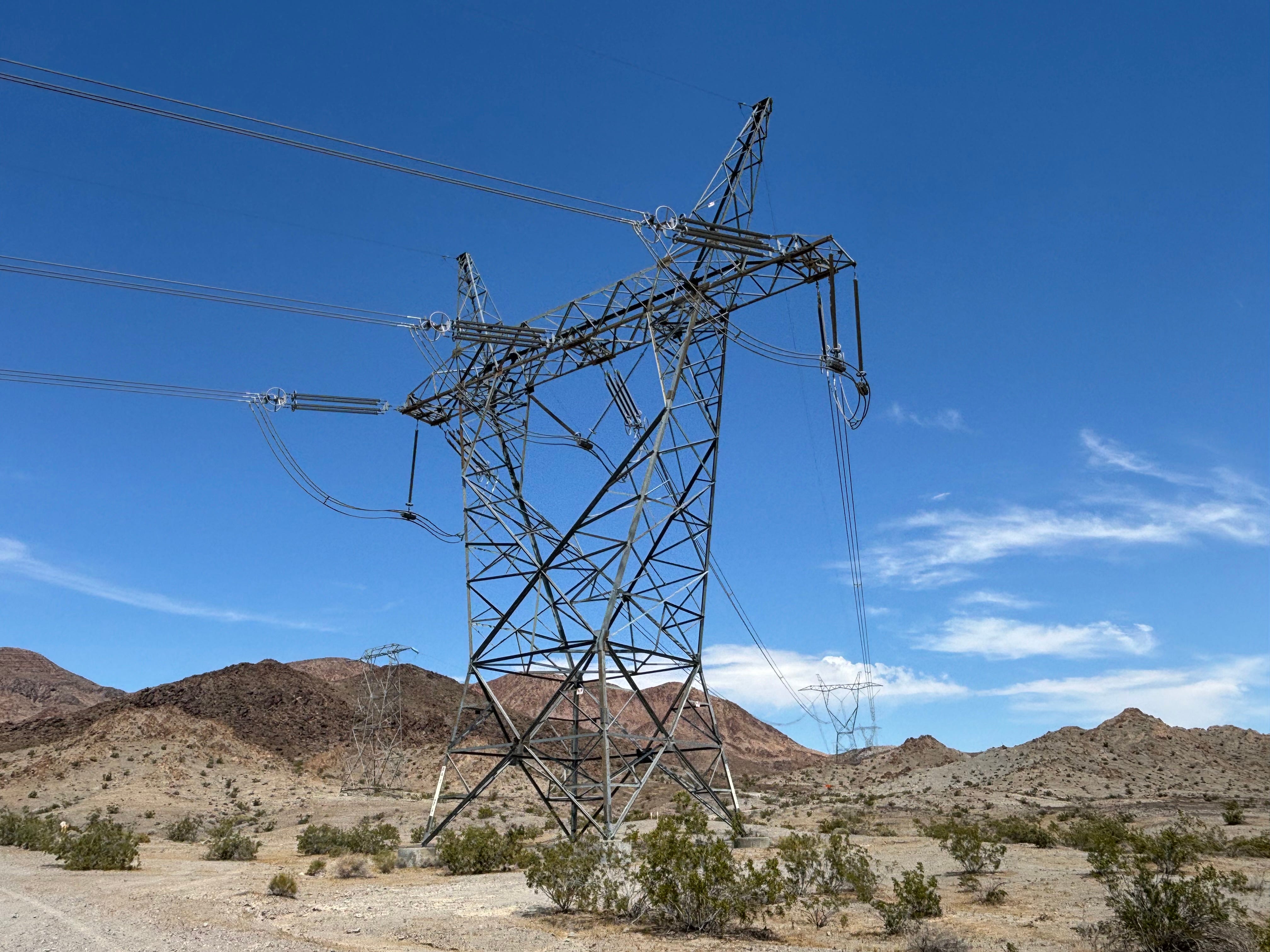
Visiting the area, it’s clear how much humans have already altered the landscape. As Wilcox led me through the desert on foot, pointing out the knoll across I-15 where the overpass will link the north and south Soda Mountains, I watched as vehicles sped by on the freeway. Many of them were semitrucks, including an Amazon Prime big rig. A hulking electric line paralleled the other side of the highway, transmitting power from Hoover Dam to Los Angeles. We’d passed an off-road vehicle area just up I-15. Soon a high-speed train could join the fray.
No wonder Aiello is hesitant to add solar to the mix.
For sheep, “you’re adding up these scary things on top of each other,” she said.
Aiello urged the Energy Commission to require a buffer of at least 0.62 miles between the solar project and the mountains — and possibly as much as 1.24 miles. At the high end, that would kill the project. At the low end, it would cut the project in half.
In theory, the five commissioners — who are appointed by Governor Gavin Newsom — could still follow Aiello’s advice. In practice, they probably won’t.
In a 1,767-page report last month, Energy Commission staff rejected Aiello’s advice. They recommended the commissioners approve Soda Mountain with a buffer of just 0.25 miles, which they described as the minimum distance that would reduce harm to bighorn sheep “to a less than significant level.”
This is where I get existential: What the hell is a “less than significant level,” and who should we trust to determine that? Is any harm acceptable?
Perhaps more importantly, how much should I care about the fate of maybe 100 bighorn sheep? Shouldn’t I be more concerned with what kind of planet I’m going to be living on when I’m 50 — not to mention what kind of planet my future children are going to be living on when they’re 50 — if we don’t build a lot more solar, a lot faster?
I asked Drew Bohan, the Energy Commission’s executive director, to explain why he’d recommended the project’s approval. He was refreshingly honest.
“Nobody’s joyful about having any impact to the bighorn sheep,” he said. “On balance, we found that the value of the project was greater than that impact.”
Bohan told me state wildlife officials suggested a quarter-mile buffer. Still, he acknowledged that “of course a larger buffer would be more protective.”
“Every project does have impacts,” he said. “Our objective, and our legal mandate, is to reduce them to less than significant.”
So what does “less than significant” mean?
“You can’t look it up in a dictionary. There’s no precise definition. You just have to make a judgment,” he said. “It’s like most every policy decision, right? There’s some element of subjectivity.”
Ain’t that the truth. Nice as it would be to confront the climate crisis without having to make tough judgment calls, the energy transition is littered with messy, subjective decision-making. Lithium mines with the potential to drive wildflowers to extinction. Nuclear plants that fuel pollution from uranium mining. Hydropower dams that block salmon migration. Wind farms that disrupt sacred tribal sites.
There are no easy answers — certainly not for solar in the desert. Much as I’d love for rooftop solar to solve all our problems, researchers have found it will never come close to replacing fossil fuels. We need to get comfortable with hard choices.
At least for me, Soda Mountain is an especially hard choice — partly because it’s been revived by a company that seems terrified of public scrutiny.
I spent three months trying to persuade VC Renewables to give me a site tour; at one point, the company’s lead consultant agreed to a phone call before backing out. Later, when I told her I’d be visiting the site with an environmental group, she said it would be best for her to join us for “safety purposes,” which made no sense because the land belongs to the public. When I asked her to meet me there on another day, she declined and requested written questions. She didn’t answer any of them by my deadline.
Suffice to say, I don’t especially like VC Renewables.
I also don’t like that Soda Mountain violates the spirit of the 10-million-acre master plan for where to put solar in the desert — although it doesn’t violate the letter of the plan. It would be built in an area zoned as “general public lands,” where clean energy isn’t streamlined but isn’t prohibited, either.
Neal Desai, another staffer at the National Parks Conservation Association, said Soda Mountain “undermines the ability for California to develop renewable energy.”
“It’s giving solar a black eye,” he said.
I agree that it stinks. In an ideal world, this project would have died years ago.
But we don’t live in an ideal world. We live on an overheating planet ravaged by fossil fueled wildfires, droughts and storms. Since graduating from college in 2014, I’ve lived through Earth’s 11 hottest years on record. I’ve watched my city burn. I’ve lost track of all the drought emergencies, the billion-dollar disasters, the doomsday headlines.
We’re not doomed. But we do need to build a staggering number of solar projects — even if we install enormous amounts of rooftop solar, which we should. To reach 100% clean power, California alone needs to quadruple its fleet of large solar farms, officials estimate, building 36 gigawatts by 2031 and another 32 gigawatts by 2045.
The alternative is to keep burning coal, oil and gas. That’s no alternative at all.
Which is why I’ve concluded the Energy Commission would be right to approve Soda Mountain. If every solar project that faced opposition got rejected, very few would get built. I’m willing to risk the possibility of confining the sheep to their isolated range if it means securing 300 megawatts of solar and storage.
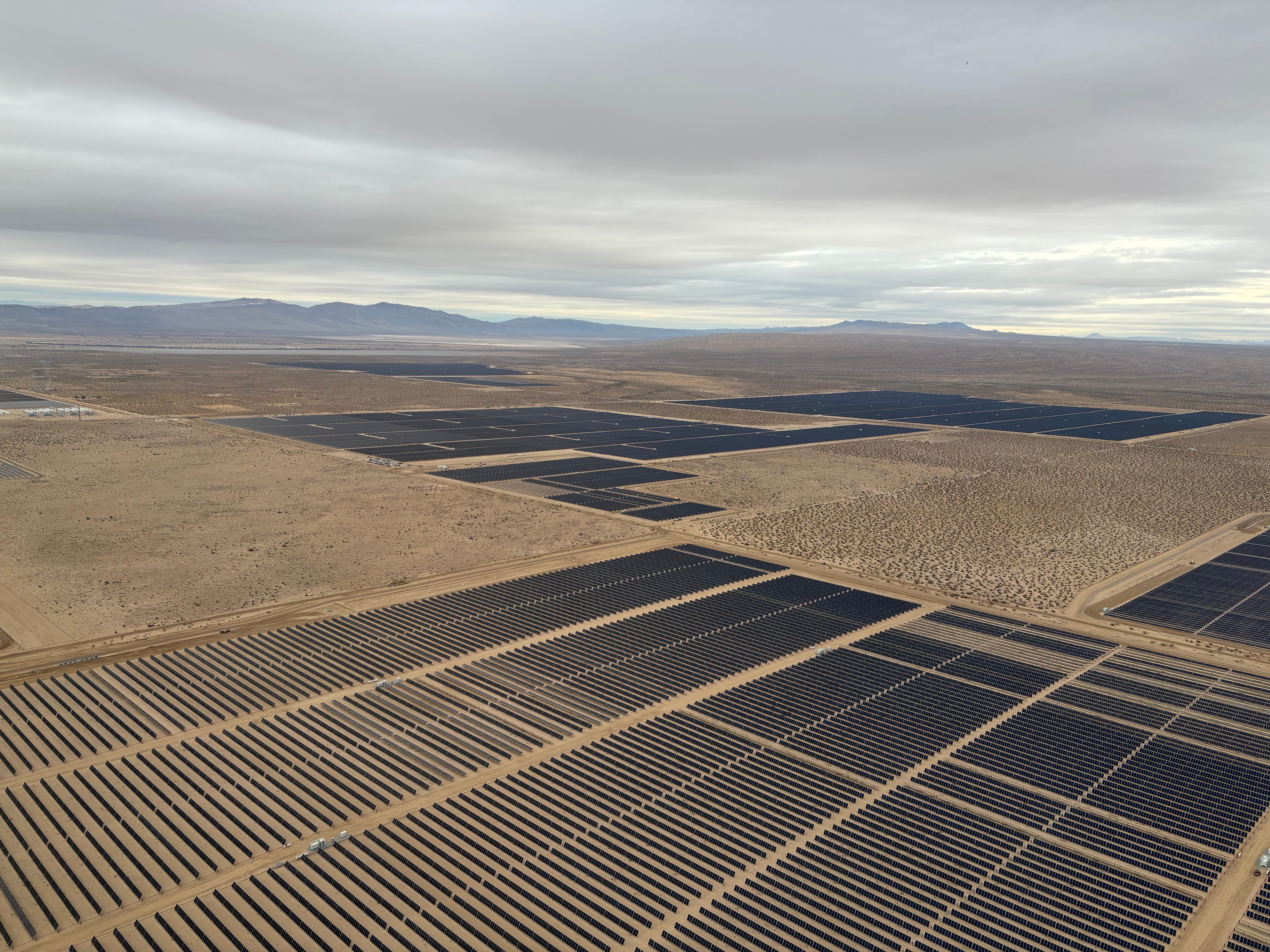
I feel bad disagreeing with the National Parks Conservation Association, whose work I respect and admire. But this is a judgment call I’m making, and I’m comfortable with it. Your own values and life experiences may lead you to feel differently — in the same way they may predispose you you to feel that a solar project is beautiful, or an eyesore, or somewhere in between. Parsing the facts can only get us so far.
Which is why the desert solar debate is exhausting, by the way. Why it never ends.
Really, it never ends. Even if state officials approve Soda Mountain, that’s not the last hurdle. VC Renewables needs a buyer for the electricity, and thus far it’s given no sign it has one. It also can’t start building without a permit from the Trump administration — no friend to the solar industry.
If Soda Mountain ever does get built, I’m not sure how I’ll feel when I see it. I suspect I won’t have my usual reaction of, “Amazing, a solar farm.” More likely I’ll worry about the bighorn sheep. Maybe I’ll stop near the wildlife crossing and search for tracks.
No easy answers. Such is life in the Anthropocene.
Thanks for weighing the various factors, and the uncertainty associated with each, and leading readers through these difficult choices. Will corporate demand for power to supply data centers add pressure to the decision as this proposed project moves slowly forward? Power grid issues? Bohan’s directness is welcome. What’s with VC Renewables resistance to making its position clear to the public? And those majestic sheep, scraping out their living in this rocky landscape…
What will happen to the sheep when the temperature rises another 1C? Will there be any grasses surviving the extra heat and lack of moisture in the soil? Sure the solar panels will affect the ecosystem, but doing nothing could be worse.