

Jane Goodall's love affair with Disney
The famed scientist formed a close bond with the entertainment giant. Here's the inside story.

Fun fact: Climate-Colored Goggles celebrated its sixth-month anniversary last week! I was so busy working I didn’t even notice.
I actually sent the first interview request for this story back in October, right after I launched CCG. Since then, I’ve published more than 50 newsletters — all while continuing to plug away at long-term stories like this one.
If you want to help me keep going, please consider a paid subscription.
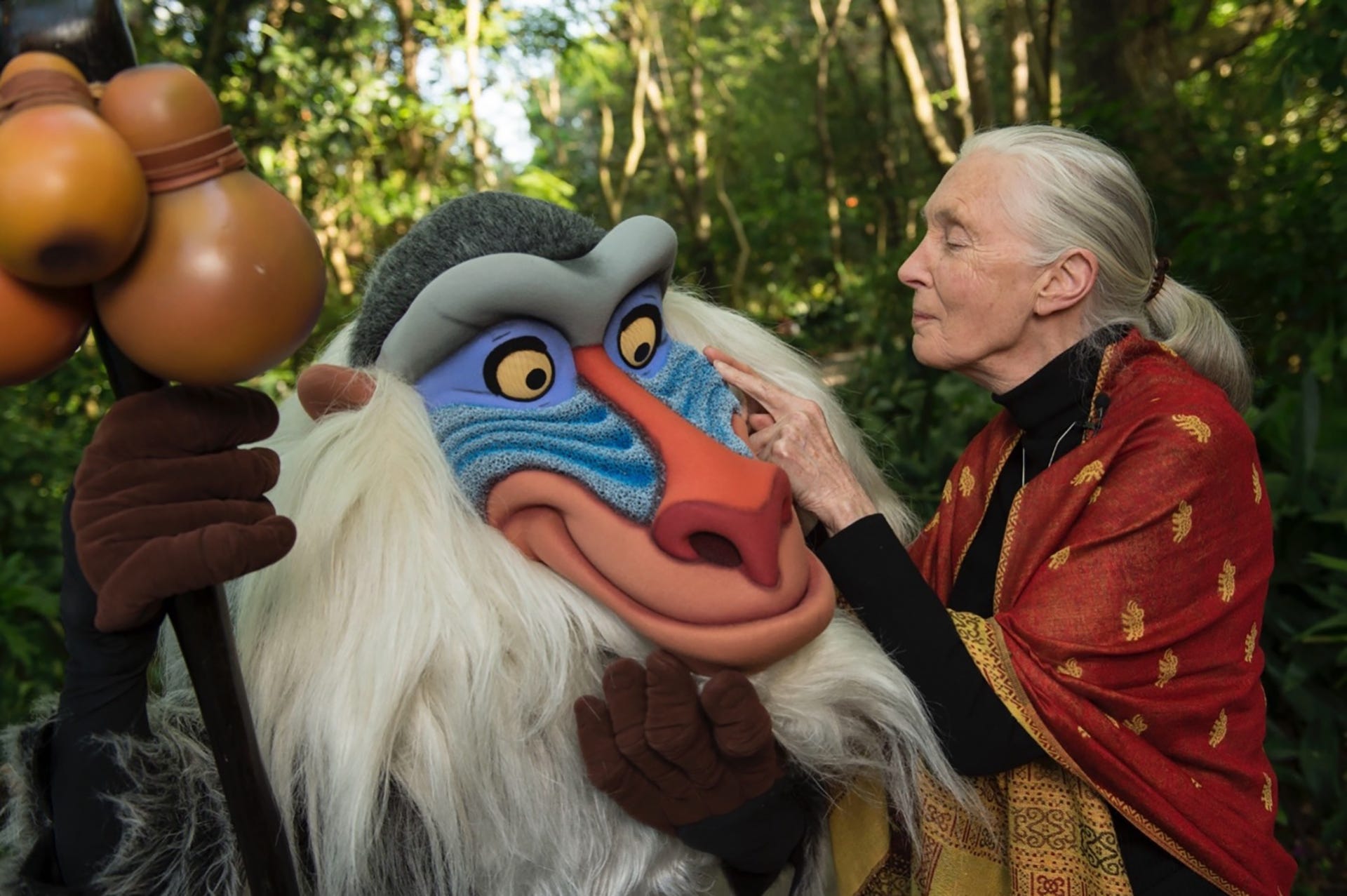
When Disney Imagineer Joe Rohde dreamed up Animal Kingdom in the early 1990s, he knew he wanted guests to learn that “animals exist in a context, and that context includes you.” Even before renowned conservationist Jane Goodall joined the project, Rohde hoped to show families that animals live in the same world as them. That their lives are interconnected.
So he designed a theme park that didn’t offer pristine presentations of nature. The premier attraction, Kilimanjaro Safaris, didn’t take place in the African wilderness. It began in a “profoundly commercial town,” Rohde said, before taking visitors through a game reserve surrounded by ranches and phosphate mines. The poaching crisis was a major plot point.
Those types of storytelling choices, Rohde believed, would put guests in the right frame of mind to appreciate Animal Kingdom’s Conservation Station — a museum-like space with a veterinary clinic that preached the importance of protecting habitat.
“It’s not predominantly an information distribution mechanism. It’s an inspiration mechanism,” Rohde told me.
Goodall, the pioneering chimp researcher who died in October at age 91, distributed plenty of information during her legendary career. She also inspired millions of people with her storytelling prowess.
One of her steadiest collaborators? The Walt Disney Company.
Goodall’s partnership with the entertainment giant began when Disney asked her to advise on animal care and habitat design for the thousands of critters it would house at Animal Kingdom in Florida. The relationship blossomed from there, with Goodall consulting on the documentary “Chimpanzee” and becoming a public ambassador for other Disneynature docs. She filmed Earth Month videos with Disney executives. The Disney Conservation Fund gave more than $7 million to her nonprofit.
Along the way, Goodall formed tight bonds with a cadre of Disney staffers — some of whom she recruited to build her last major project, “Dr. Jane’s Dream.”
“She just had such a grace to her, such a calm presence,” said Claire Martin, a Disney senior manager for biodiversity conservation, recalling her first time meeting Goodall. “She was able to inspire this sense of personal action, inspiration, hope.”
Goodall and Disney may seem like strange bedfellows — one a scientist and nature advocate who reshaped our understanding of chimp behavior, the other a corporation that simulates nature at its theme parks (with help from audio-animatronic apes). For whatever reason, the odd couple never got much press. I checked Goodall’s obituaries in a dozen major news outlets and didn’t find any references to her work with Disney.
But to me, a proud Disney nerd, this is a fascinating story: Why did Goodall agree to help out with Animal Kingdom? And what drew her back to Disney, again and again? Did she simply want the company’s money?
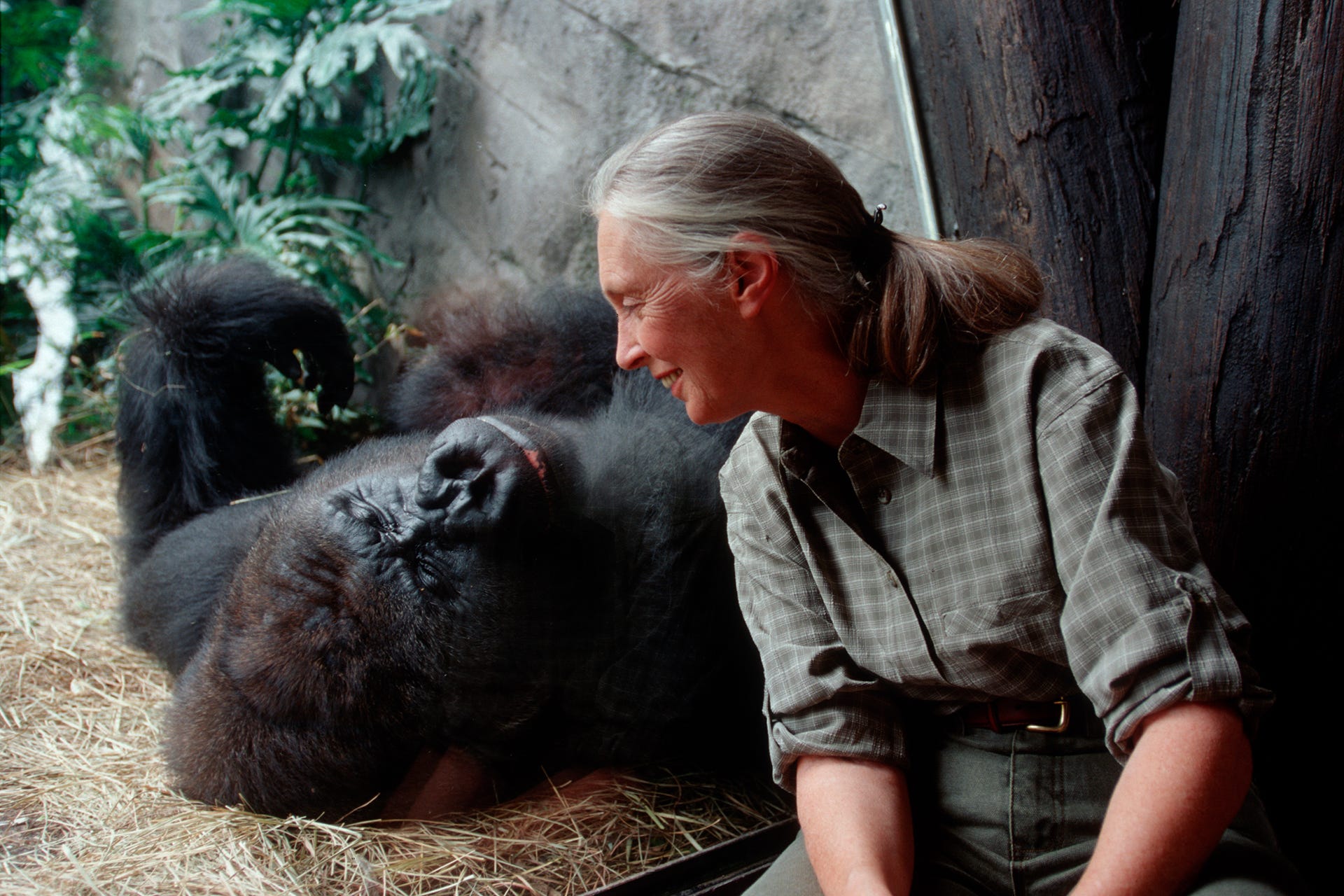
As I talked with several of Goodall’s colleagues, I quickly came to realize this was no financial quid pro quo. Goodall saw Disney as an ideal storytelling partner, a company with an enormous megaphone and a willingness to use it.
She also loved the people she worked with.
“Jane had close friends who she met through Disney, who then became collaborators,” said Anna Rathmann, executive director of the Jane Goodall Institute USA. “She had a couple of people from Disney who she invited to be on the board of directors.”
There’s a lesson here for folks who care about confronting the climate crisis. It has to do with bridge-building, the power of narrative and the need for stories that help people make sense of the world they’re experiencing.
We’ll get there. First, let’s talk about pungent elephants.
When Rohde and his colleagues asked Goodall to consider advising them on Animal Kingdom, she’d never been to a Disney park, according to Mary Lewis, her longtime assistant. An initial meeting in Anaheim led to a second meeting at the construction site outside Orlando.
“Jane was very interested because of the large number of animals they wanted to have there,” Lewis said. “She asked a lot of questions over the ensuing months and years.”
Among her questions: Would animals have enough space to roam, and enough high-quality food? What would the veterinary facilities be like? How would aging animals be treated? They wouldn’t be forced to keep having babies, would they?
Ultimately Disney satisfied her: Animals would receive immaculate care. There would be no cages. Guests wouldn’t see every creature on the safari ride, because the animals would be roaming around freely.
“They put in incredible veterinary facilities,” Lewis said. “I remember people saying that it was probably better than an awful lot of hospitals at the time.”
She remembered Goodall was especially pleased when Disney delivered on a promise to construct a “vast great wallowing pool” for elephants, where the massive mammals could “submerge themselves and get covered in mud.”
“There’s nothing like the smell of an elephant,” Lewis insisted.
Unlike some animal rights advocates, who see all zoos as inherently wrong — PETA called for a boycott when Animal Kingdom opened — Goodall took a different stance, to hear Lewis tell it. For Goodall, there were good zoos and bad zoos. She was alarmed by global habitat loss and felt that if zoos could provide safe, healthy homes, they were a better alternative than animals being starved or hunted to extinction.
At a celebration marking Animal Kingdom’s 10th anniversary — one of many trips she made to the park — Goodall paid perhaps the ultimate compliment.
“If I was an animal out of my natural habitat, this is where I would like to be,” she said.
Something else about Animal Kingdom appealed to Goodall: She knew that “most of the young people who go there will never get to Africa or Asia or wherever else to see animals in the wild,” Lewis said. Disney World was “as near as they’re going to get.”
“I’m not saying it’s perfect by any means,” Lewis said. “But if [kids] can see an animal looking healthy and not bored, rigid and rocking itself stupid sitting on concrete with nothing to do all day, then at least they get that experience.”
Kids got a lot more as Goodall leaned into her relationship with Disney.
Most of the money the company gives to the Jane Goodall Institute benefits Roots & Shoots, an action-oriented program that helps young people organize projects such as cleaning up rivers and planting pollinator gardens — whatever they think will benefit their communities. The program operates in at least 70 countries.
“She wanted Roots & Shoots to be the antidote to apathy,” Rathmann said.
To celebrate last month’s release of “Hoppers” — a wonderful animated movie with a powerful message about protecting wildlife habitat — Disney teamed up with Roots & Shoots, encouraging teens to complete projects that support animals. Ten participants chosen by the Jane Goodall Institute won trips to Animal Kingdom.
Disney’s Martin described the grandmother character in “Hoppers” — who helps her rebellious granddaughter, Mabel, learn to appreciate the calming tranquility of nature — as “such a Jane.” Martin saw the film with a group of Roots & Shoots youth.
“The energy and enthusiasm of those young people was such a reminder of why this work is so important,” she said. “They came up and told me how they loved different characters, or that they’re Mabel, and thank you for telling this story, I feel seen.”
Rathmann described Goodall’s work with Disney “part of this broader philosophy she had of joining up with outlets that do storytelling, which Disney does so beautifully.”
“It was a very strong partnership based upon the power of story to inspire, to change minds, to entertain but also teach,” Rathmann said.
Makes sense to me. I started this newsletter because I believe media companies and other cultural power brokers play a crucial role in laying the groundwork for political progress. When I wrote a story that prompted Disneyland to commit to replacing gas-guzzlers with electric cars at Autopia, it was one of my proudest achievements. Before people demand change, they need inspiration. They need stories.
Bill Wallauer gets it. He met Goodall while volunteering with the U.S. Peace Corps in Tanzania in the late 1980s, becoming her go-to cinematographer after scaling a tree to capture the first-ever video of a wild chimpanzee giving birth.
When Disneynature made the “Chimpanzee” documentary, Wallauer was an obvious choice to operate the camera. He spent three years in Uganda securing amazing close-up footage of chimp life. It was a blockbuster, with millions spent on production.
“When the film came out, [Goodall] went to all of the openings and spoke both about the film itself and her programs,” Wallauer told me.
In typical Disney fashion, the tale blends reality and fantasy. The plot centers around Oscar, a cute young chimp whose clan is threatened by neighboring apes encroaching on their territory. Oscar’s mother is tragically killed. But his clan’s alpha male, Freddy, heroically steps in to raise him. All is well.
In truth, the “neighboring” apes filmed by Wallauer were 1,200 miles from Oscar and friends in Ivory Coast. And the leader of the villainous pack — dubbed “Scar,” like the murderous baddie in “The Lion King” — was actually a “gentle guy,” Wallauer said.
“It was a Disney film. It wasn’t a piece of scientific work,” he acknowledged.
Still, the events portrayed on screen could have happened in real life, he said. And he felt there was immense value in using the Disney megaphone to tell a story that could help millions of people, including kids, fall in love with an endangered species.
Wallauer said he’d love to make a documentary about how the climate crisis impacts chimps and their habitat. He’d just need funding — not easy to come by.
“A hard-hitting film about human behavior and climate change would be considered such a downer,” he said. “It’s the same reason that people are so hesitant to watch the news these days. It’s just so damn depressing, they don’t want to think about it.”
“As Jane said, we’re the smartest dumbest animals on the planet,” he added. “Because we’re the only animal who is destroying their own habitat.”
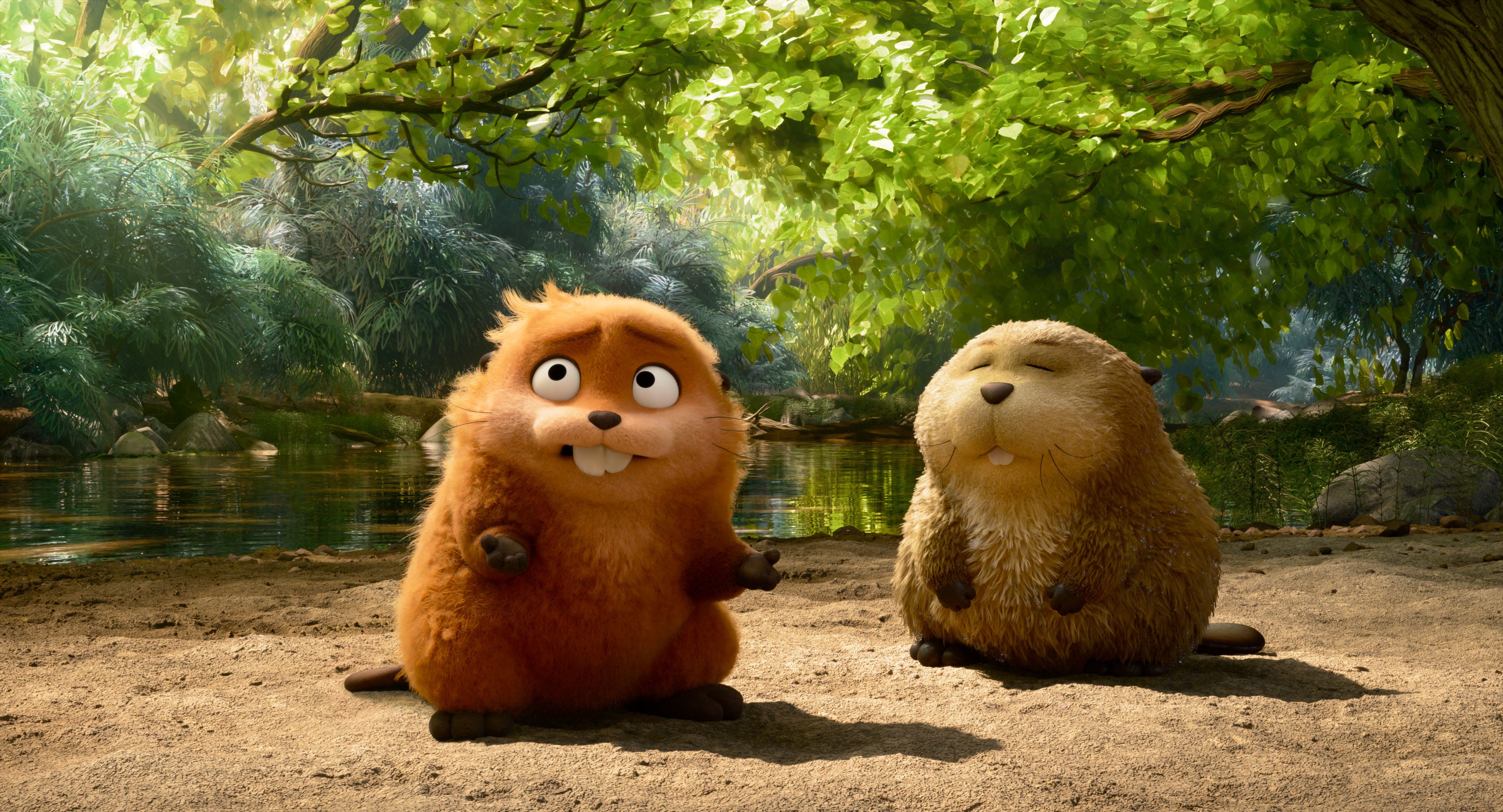
I hope Disney starts telling more climate stories through its films, parks, video games and other platforms. But the execution won’t be easy. As Rohde told me: “You can’t be very pedagogical.”
“That’s not what people are coming for, and they can’t budget their time that way,” he said. “They can’t budget for deep, attentive contemplation.”
“You have to give them emotional content and strong visceral tags that they can carry with them for when they do have time,” he added.
He was talking about theme parks, but I think the same point holds for other forms of entertainment. People don’t want lessons; they want to be moved.
I have to think that’s why Goodall poured so much time and energy into Disney: She realized she’d found a collection of storytellers willing and able to go to the next level, to make people feel while also giving them thoughtful material to chew on later. That’s certainly been my own experience with Disney, from films like “Hoppers” to rides like Kilimanjaro Safaris. As Rathmann told me, Goodall “was guided by instinct.”
“She could have had a relationship with any media company. But there was something that was deeper about Disney,” Rathmann said.
Maybe more than anything, Goodall liked the people. She befriended Beth Stevens, a Disney environmental executive who worked on Animal Kingdom, and Paul Baribault, a Disneynature film executive, eventually asking both to serve on her institute’s board. She grew especially close with one of Animal Kingdom’s chief planners, Rick Barongi, visiting him 10 days before she died. He wrote a beautiful tribute afterward.
Her highest-profile friend was Rohde, who is famous among Disney parks fans for his many dangling earrings, collected from around the world. (Lewis, Goodall’s assistant, called him “quite the most extraordinary man I’ve ever had the good fortune to meet.”) When Goodall first made plans for Dr. Jane’s Dream — an immersive cultural center in Tanzania that will combine art and education to showcase her scientific legacy and animal advocacy — she asked Rohde to draw up the initial sketches.
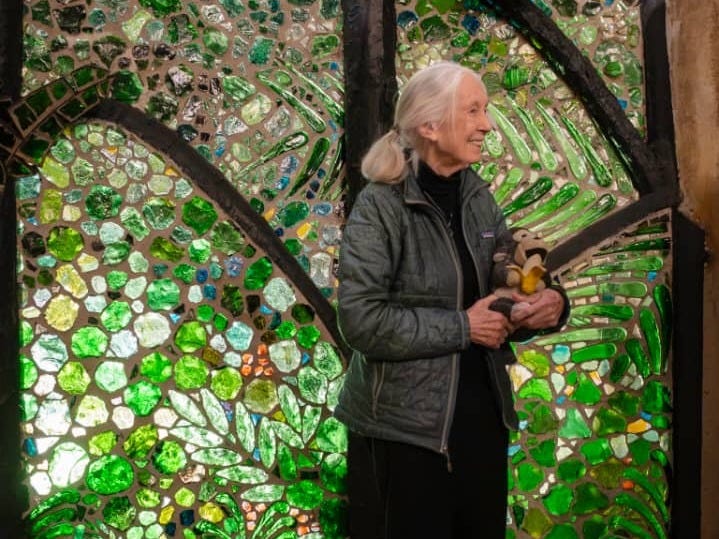
Several years later, Goodall returned to Rohde with a bigger ask: She wanted him to design the exhibits. He was retired, but he assembled a group of volunteers — mostly former Disney theme park designers, known as Imagineers.
Eventually Rohde and his team bowed out. But by the time Dr. Jane’s Dream reached construction, Goodall had grown dissatisfied with how it was shaping up. Once again, she sought Rohde’s help. They sat down last fall and decided the project had begun to incorporate too much technology. It had strayed from fine arts that could be produced locally — painting, glasswork, sculpture. They made a plan.
“And then she passed away like 10 days later,” Rohde said.
Not long after, he flew to Tanzania and spent a week with the local project team. He’s forging ahead with Dr. Jane’s Dream.
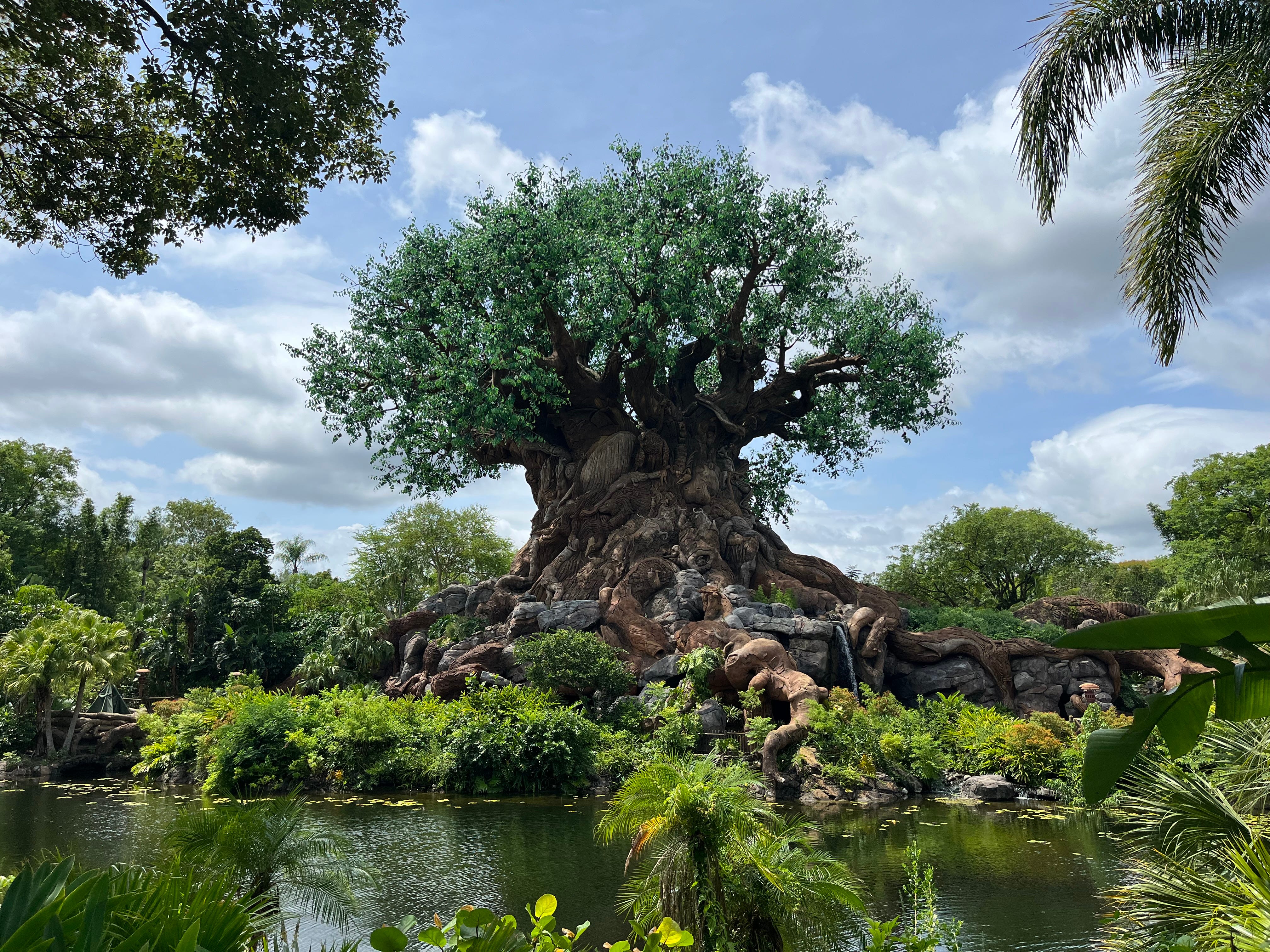
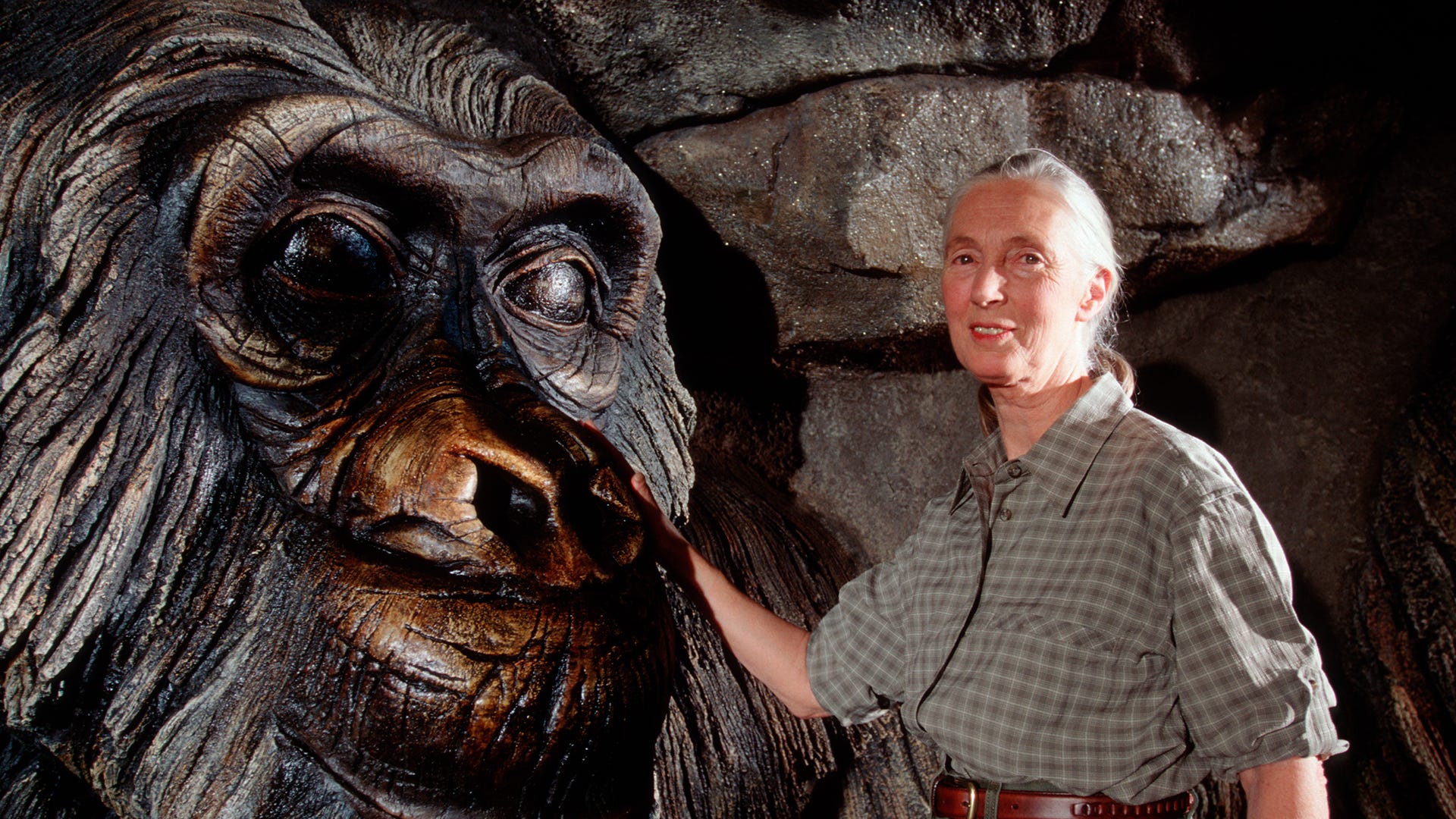
Meanwhile, the theme park he designed features a lasting tribute to his friend. When Goodall visited Animal Kingdom during construction, she climbed the park’s Tree of Life, a gorgeous 145-foot sculpture of a baobab tree featuring carvings of hundreds of animals. She commented afterward that she hadn’t seen any chimps.
Lo and behold, the Imagineers added one: David Greybeard, the first chimp Goodall observed using tools in the wild. The first chimp she bonded with.
Animal Kingdom has changed a lot since then, but environmental storytelling is still embedded in its DNA. Rohde described the “Avatar”-themed land, which he designed, as a Superfund site “where scientists and Indigenous people are working to restore an environment that’s been destroyed by irresponsible commercial behavior.”
Would Disney’s audiences embrace climate stories? Rohde thinks so.
“I travel all around the world. Everyone is thinking about climate change,” he said. “‘We’ve never seen rain like this. What happened to my crops? What happened to all my animals? What happened to all the fish I used to see here?’”
I wish I could ask Goodall what she’d like to see from Disney next. But that’s a question the next generation of Imagineers and filmmakers will have to answer.
Such a moving piece! Sammy, if we can't ask Goodall what she'd like to see from Disney next, maybe we can remind their Imagineers and filmmakers of some of the hopeful ideas you've outlined: https://www.latimes.com/environment/newsletter/2024-04-02/column-disneyland-is-ditching-gas-cars-at-autopia-its-a-great-first-step-for-tomorrowland-boiling-point
I got goosebumps at the mention of David Greybeard. Jane’s saga with Disney is moving, a high-profile example of working across differences to find common ground and build a better future. I’m searching for that, in the world around me and within myself. Another message came to me in this YouTube interview, Scott Galloway and David Brooks. Brooks says he looks for small stories that make big points. https://www.youtube.com/watch?v=mTgbsTm3KX0