

Meet Jacquie Pierri, your Winter Olympics climate hero
She grew up in New Jersey, built a career in clean energy and is playing hockey this month for the Italian women's team in Milan Cortina.

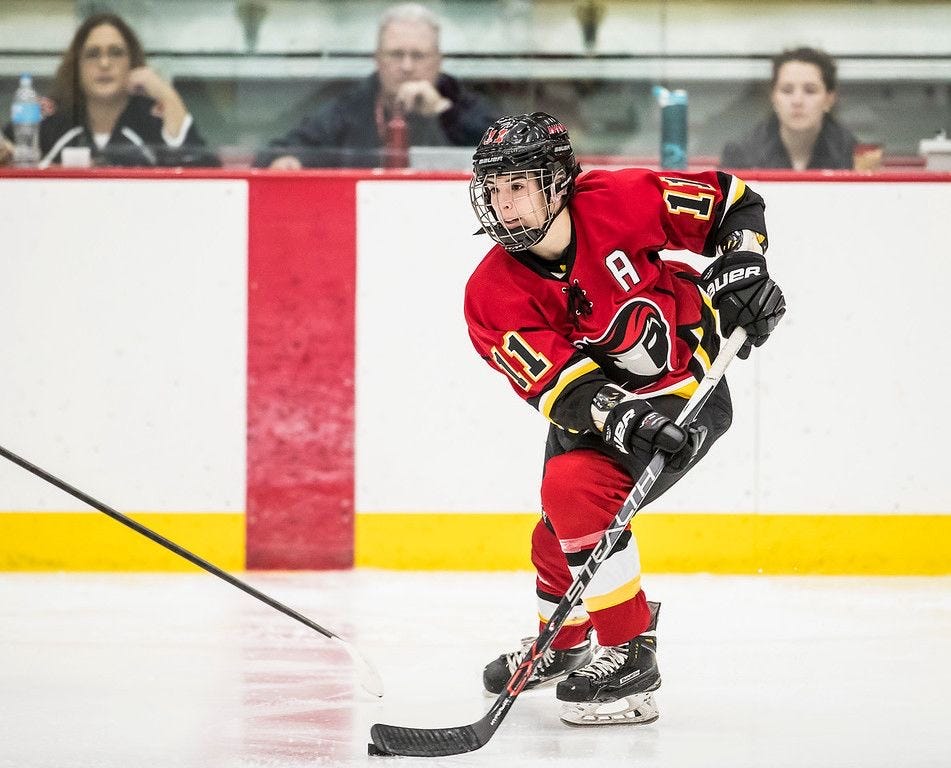
Jacquie Pierri grew up in the New Jersey suburbs, studied mechanical engineering at Brown University with a focus on energy, then popped over to Europe for her master’s in sustainable energy systems. She lived in Barcelona and Stockholm, researching ice rink refrigeration and how to cool the ice with less energy. Later she moved to Italy, where her dad was born. She worked for a startup capturing heat from compost, then for a group focused on ecologically sound construction.
OK, I may have skipped a few parts.
Pierri loved playing hockey as a kid — a joy she shared with her brother and father. She played Division I at Brown all four years before moving to Canada, where she spent five years playing professionally for the Calgary Inferno, winning a Canadian Women’s Hockey League championship in 2016.
Later, while studying in Europe, she thought she’d hung up her skates for good. But soon after she arrived in Italy, it was announced that the 2026 Winter Olympics would be held in Milan and the nearby ski town of Cortina. Pierri had a new mission.
“I’ve been working on this goal single-mindedly for the last five years,” she said.
She applied for Italian citizenship so she could compete for the national team and honor the legacy of her late father, who died of a heart attack while playing hockey. She joined the EVB Eagles Südtirol, the European Women's Hockey League team in Bolzano. She also found work in sustainable energy.
And in the meantime, she joined EcoAthletes.
The nonprofit works with athletes around the world to promote climate action and sustainability. Pierri is one of 260 EcoAthletes Champions, along with MLB pitcher Brent Suter and WNBA star Napheesa Collier. They use their platforms to advocate for a safer planet — although Pierri, with her unique combination of climate chops and world-class hockey talent, offers an especially informed perspective.
“If you play a sport outdoors, this is dramatically impacting the future of your sport,” she said. “Hockey we play indoors, but most hockey players fall in love with this sport playing outdoors as a kid. Especially Canadians.”
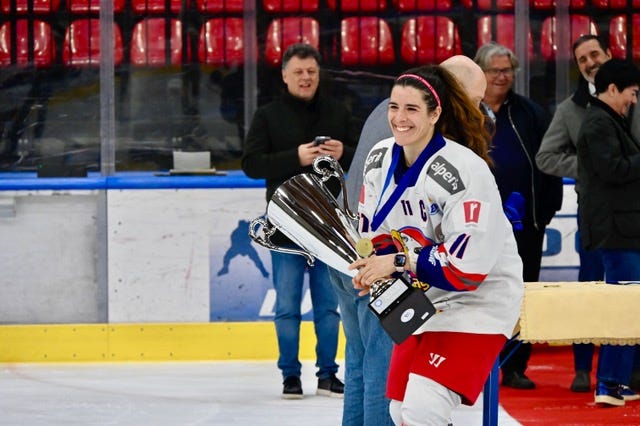
Pierri has seen the consequences of global warming firsthand. And as she fights for a medal in Milan — the Italian women’s hockey team beat France 4-1 on Thursday in its first game, ahead of Friday’s opening ceremony — she’s acutely aware that the Winter Olympics are threatened by Earth’s rapidly changing climate.
In a report last month, the nonprofit research group Climate Central concluded that warmer winters “threaten the reliability of the cold temperatures and abundant snow required for the Winter Olympics.” Skiing, snowboarding and bobsledding are some of the sports already facing issues such as less snow, fewer viable training locations and increased risk of athlete injury. Apparently falling on artificial snow can feel like falling on concrete.
“Climate change is reshaping winter. Shorter, warmer winters, less predictable,” said Kaitlyn Trudeau, a senior research associate at Climate Central.
“We can’t have winter sports if we don’t have winter,” she added.
Winter isn’t going away entirely. But a recent study analyzed warming temperatures and declining snow depths in 93 cities that have hosted or would be ideal for hosting the Winter Olympics. Researchers predicted that 41 of the 93 cities won’t have reliable climate conditions by the 2050s, absent a major acceleration in global emissions cuts. Former Salt Lake City Mayor Rocky Anderson, who led the city during the 2002 Winter Games, doesn’t think Utah will be able to host as planned in 2034.
Trudeau isn’t a big winter sports fan. But her cousin is a professional snowboarder from South Lake Tahoe who won gold medals in 2014 and 2018. She appreciates that putting on the Olympics is already difficult enough.
“These are massive international events that are planned years and years in advance,” she said. “It’s going to get a lot harder to plan them, and a lot more expensive.”
Climate conditions in Cortina are getting dicey.
Since 1956, when Cortina first held the Winter Games, February temperatures in the mountain ski town — where most of this year’s outdoor events will take place — have risen by 6.4 degrees Fahrenheit, Climate Central found. Cortina sees 41 fewer freezing days annually than it did in 1956. Snow depth is decreasing.
February temperatures in Milan, which will host indoor events such as figure skating and hockey, are now 5.8 degrees Fahrenheit higher than they were in 1956.
Pierri has watched as global warming melts glaciers in the Italian Alps. She’s learned about local winemakers moving to higher altitudes, and dairy farmers whose cows are producing less milk because of extreme heat.
“The lakes used to freeze here more often,” she said. “People remember skating on the lake all winter. Now it freezes one day per winter.”
Pierri didn’t expect to live in Italy. She didn’t expect any of this, really. Hockey was a stopgap, Italy a place she and her family would visit cousins every summer when she was young. Even when she moved to Canada to play for the Calgary Inferno, she also worked for a natural gas company in hopes of “changing things from the inside” and making gas heating less climate-polluting.
But even after she kept playing hockey in Sweden — and after her graduate program unexpectedly gave her a chance to study ice rink refrigeration, a hockey crossover she called “too crazy to pass up” — her athletic career might have been over except for the timing of the 2026 Winter Games announcement. Not knowing what she wanted to do after finishing her master’s, she’d moved to Italy to figure it out. The universe gave her an answer.
Still, representing her dad’s home country in the Olympics was no guarantee. First she had to get her Italian citizenship — which she did two months ago, just in time.
Then, on January 15, she officially made the team.
“Independently, the dream of the Olympics is its own thing. But it definitely had a special component to it, knowing it would be where my dad was born, and honoring our last name, and his last name on the back of an Italian jersey,” Pierri said. “I know he would be super excited if he was still here.”

So if you didn’t otherwise care about the Winter Olympics: Now you have a climate hero to cheer for. During Italy’s win on Thursday — the country’s first-ever Olympic victory in women’s hockey — Pierri was on the ice as a defenseman. Italy will play a few more first-round games over the next few days (schedule here). They’ll probably need to win at least one more to advance to the quarter-finals.
Outside her family and close friends, Pierri may have no bigger supporter than Lew Blaustein, founder of EcoAthletes. Like her, he’s from New Jersey, so he was able to drive to her hometown Thursday for a watch party with her high school teammates. (She played on the boys’ team, because there was no other team.) He enjoyed seeing how much everyone loved her.
“The ripple effect of her, the impact she’s had on so many people’s lives is incredible,” he said. “You would think Jacquie was George Bailey from ‘It’s a Wonderful Life.’”
Now Blaustein wants to help Pierri have a ripple effect on the climate.
After years writing GreenSportsBlog, he started wondering why athletes who were comfortable leading beach cleanups and promoting recycling rarely talked publicly about global warming.
“I thought, ‘This isn’t good, because athletes are the most influential humans on the planet,’” he said. “Athletes have led on all manners of social issues for decades: Jackie Robinson, Muhammad Ali, Billie Jean King, Colin Kaepernick, Megan Rapinoe.”
Over time, Blaustein asked environmentally conscious athletes about their hesitance on climate and identified three problems: fear of being seen as “political”; discomfort talking about scientific issues generally; and concern that fans would accuse them of hypocrisy, because they travel so much and thus have high carbon footprints.
Those conversations led Blaustein to start EcoAthletes in 2020. The nonprofit works with pro and college athletes, offering trainings for discussing climate and engaging fans. It also arranges green endorsement deals, coordinates media opportunities and mentors college students for sports sustainability jobs.
“In the green world, there’s a lot of preaching to the choir. Well, sports fans are well beyond the choir,” Blaustein said.
Yes: For climate advocates, sports are one of the very best opportunities to get out of the narrow political and policy arenas where they typically operate and reach a much wider audience. An audience that cares immensely about what happens on the field, on the court, on the ice, and might listen to their favorite players in a way they won’t listen to a politician, or an advocacy group, or a news article.
We’ll have much more to talk about after the Winter Games — and over the next two years, ahead of the 2028 Summer Olympics in Los Angeles. For now, I’m excited to see what happens in Milan Cortina. The Italian women’s hockey team is an underdog, but Pierri, no surprise, likes their chances.
She isn’t sure what she’ll do when the tournament ends — probably something related to sustainability. Whatever it is, I’ll be rooting for her.