

Alright, Xavier Becerra. Prove us wrong
Plus: An exclusive update on Disneyland's air quality mishap.

.jpg)
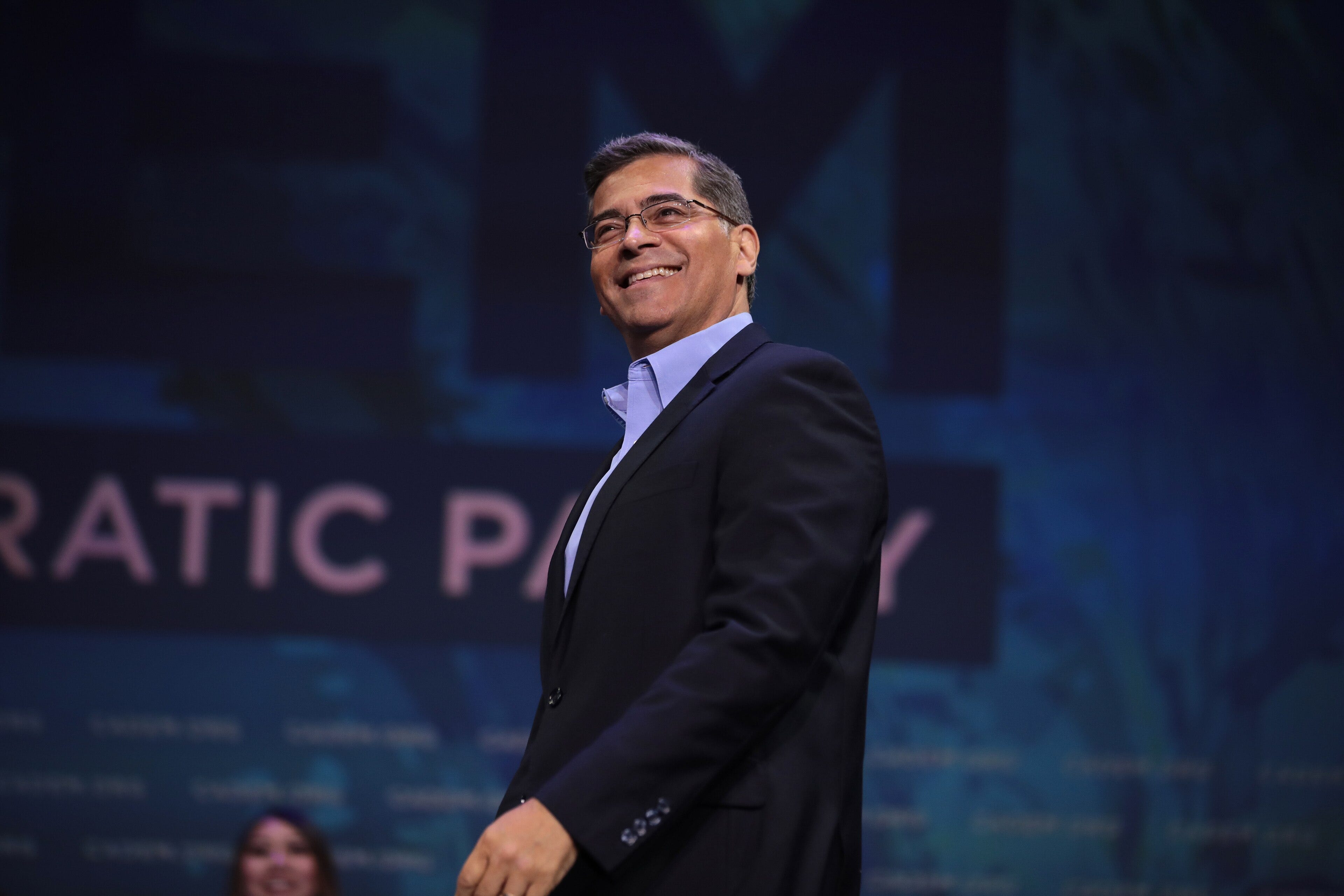
During the final weeks of California’s gubernatorial primary, I didn’t hide my opinion of Xavier Becerra, the Democratic front-runner.
I criticized California’s former attorney general for questioning the state’s ability to meet its climate targets, especially as oil giants spent heavily to support his campaign. I described billionaire climate activist Tom Steyer as a far better choice for governor.
Leading environmental groups reached similar conclusions. Several endorsed Steyer; none backed Becerra. One activist told me Big Oil was “choosing its governor.”
Now the people have spoken. Becerra received the most votes, with Republican Steve Hilton finishing second, meaning they’ll advance to the general election. Steyer is on track to finish a close third. Barring anything wildly unexpected, deep-blue California will elect Becerra as its next governor.
I’m disappointed by the outcome. I’d love for Becerra to prove me wrong.
Under Governor Gavin Newsom, California has spent the last few years backpedaling on climate policies — slashing rooftop solar incentives, weakening a program to limit carbon emissions, expanding oil drilling and extending the life of gas plants. Newsom and his appointees have undermined other environmental priorities, including single-use plastic regulations, virtual power plant and community solar incentives, indoor air quality protections and energy efficiency standards.
Newsom abandoned his pledge to shut down the Aliso Canyon gas field. Meanwhile, he’s stood idly by as oil-friendly Democrats kill “Make Polluters Pay” bills that would hold fossil fuel companies financially liable for climate damages.
Aggressive climate action isn’t easy. Solar and wind are certainly cheaper than fossil fuels, but I don’t envy policymakers navigating the short-term tensions of the energy transition: oil refinery closures, sky-high electricity rates, the stew of lies peddled by President Trump and right-wing media.
Still, that’s no excuse for ignoring the reality of accelerating global warming — or for using “affordability” as an excuse to do Big Oil’s bidding.
I suspect Becerra will keep doing most of the things Newsom has done well, including continuing California’s dogged pursuit of 100% clean power.
But if Becerra wants to keep calling California a climate leader, that’s not enough. He should work with the environmental groups that opposed him, and find a way to make them like him more than Chevron does. He should also figure out why PG&E spent at least $13.5 million to defeat Steyer, and try to redirect some of that ire at himself.
If Becerra does all that, fantastic. I’ll write about it.
If he doesn’t — if he’s Newsom 2.0, or worse — environmental groups should be ready to fight back, vocally and adversarially.
Some of those groups may want to avoid upsetting a powerful new governor. But come on, it’s 2026. The time for pulling punches has long since passed.
Exclusive: An update on Disneyland’s air quality mishap
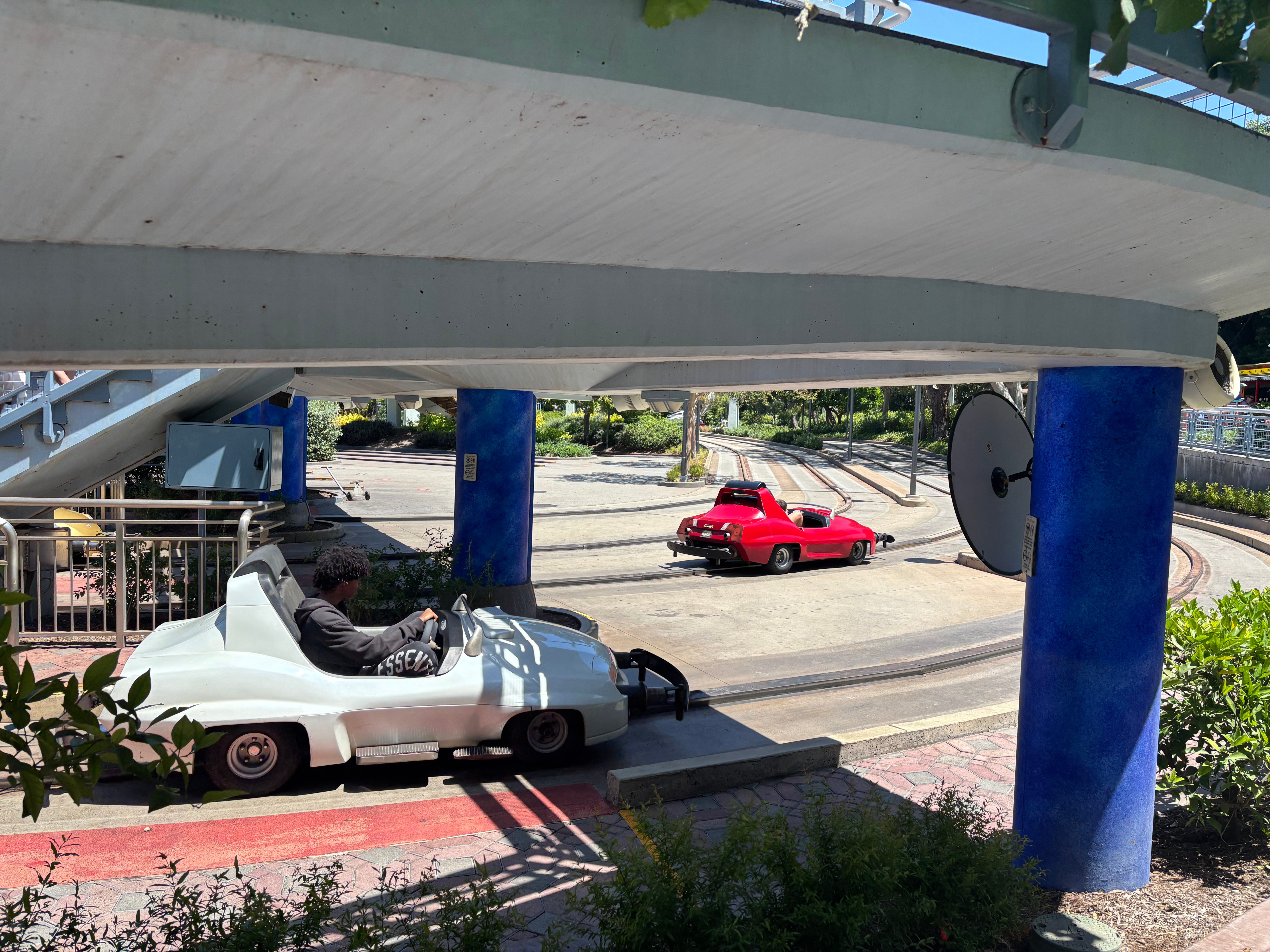
I reported last month that Disneyland’s promise to convert its 71-year-old Autopia ride from gas-guzzlers to electric vehicles was motivated — at least in part — by an alleged air quality violation.
To recap: In early 2024, the California Air Resources Board sent Disney a “notice of violation” alleging that Autopia’s gas engines were out of compliance with emissions rules. Five months earlier, Disney had voluntarily disclosed that the engines — which were built by Honda — weren’t properly certified. As part of a settlement deal, Disney paid a $56,250 penalty and agreed to overhaul Autopia.
But the documents didn’t answer several key questions: What, if anything, was wrong with the engines? Had they emitted excess pollution? And what had prompted Disney to report the problem to the Air Resources Board?
Citing Disneyland officials, the Orange County Register reported that there was “no impact to the environment.” But Disney wouldn’t answer my questions. State officials wouldn’t give me much information, either.
So I sent a California Public Records Act request to the Air Resources Board, seeking a copy of Disney’s settlement compliance plan. I thought maybe it would shed light on the situation.
A few days ago, I got a redacted copy, with confidential business information blacked out. You can read it here.
Short summary: There’s nothing revelatory in the document (at least nothing that isn’t blacked out). But there are a few intriguing tidbits.
For instance, Honda bears at least some responsibility for the mishap. The document says Honda “failed to certify” the engines, seemingly due to an “administrative error.” In August 2023, Honda sent Disney a notification. Soon after, Disney “communicated the newly learned information” with the Air Resources Board.
That roughly tracks with a statement Honda sent me last month.
“Honda takes seriously its obligation to comply with all applicable California Air Resources Board (CARB) regulations and when it discovered a non-compliance with a certification requirement in 2023, it reported that fact to CARB and remediated the issue,” a spokesperson said in an email.
The compliance plan doesn’t explicitly require Disney to convert Autopia to electric vehicles, saying only that the company will “retire gas-engine powered Autopia fleet” and “continue search for suitable clean technology.” But Disneyland officials told the Orange County Register last month that they’re “working on the design, engineering and testing of a fully electric Autopia ride vehicle prototype.” So it sounds like they’re sticking to the promise they made two years ago, when they first told me that Autopia would be going all-electric.
One more tidbit of special interest to Disneyland fans like me? The compliance plan sets a 30-month deadline for retiring the gas cars — and the settlement was finalized on August 1, 2024.
That means Autopia in its current form must shut down by February 1, 2027.
In other news
Election roundup:
In the Los Angeles mayoral primary, progressive City Councilmember Nithya Raman will advance to the runoff against Mayor Karen Bass. I wrote about why Raman’s climate plan and track record made her the best choice.
Monterey Park, California, became the first city in the country to ban data centers by public vote. (Blanca Begert, L.A. Times)
Texas GOP primary voters selected an oil and gas regulator who “posted a social media poll asking whether Jews or Muslims were a bigger threat to America.” His campaign was funded by oil tycoons. He’ll likely win the general election. (Carlos Nogueras Ramos, the Texas Tribune)
Checking in on MAGA:
The Trump administration’s latest nonsense is a $700 million federal investment in coal — including an Oakland export terminal. (Hayley Smith, L.A. Times)
As North Dakota governor, Doug Burgum made big plans for a Teddy Roosevelt presidential library, set to open July 4, 2026. Now that he’s gutting protections for public lands as President Trump’s Interior secretary, things have gotten awkward at the library. (Alex Heard, Re:Public)
With apologies for burying one of the most important stories of 2026, the Trump administration is trying to shift control of scientific research funding from actual experts to political appointees — a proposal that could destroy American science. (Ella Nilsen and Andrew Freedman, CNN)
Climate backsliding:
New York lawmakers are no longer requiring the state to slash climate pollution 40% before 1990 levels by 2030. Here’s hoping Xavier Becerra doesn’t follow New York Governor Kathy Hochul’s lead. (Ysabelle Kempe, Canary Media)
Recent changes to California’s cap-and-invest program will not only weaken the state’s ability to meet its emissions targets, critics say — they could cause wildfire prevention funding to dry up. (Noah Haggerty, L.A. Times)
Another possible casualty of the cap-and-invest changes? Funding for clean water in communities currently drinking toxic water. (Ian James, L.A. Times)
The information landscape:
The Washington Post’s opinion page was overhauled by Jeff Bezos — and its new podcast is mixing in some climate denial. (Natalie Korach, Status)
Bill Gates was forced to own up to an affair with a Russian nuclear physicist who did work for his nuclear energy company, TerraPower — and who was referenced in Jeffrey Epstein’s emails. (Emily Glazer, the Wall Street Journal)
Some social media influencers and Republican lawmakers now claim that Frito-Lay won’t buy potatoes grown on any land where solar panels were ever installed. Yes, this is totally made up. (Austyn Gaffney, Canary Media)
Finally, I was sad to read that Politico is shutting down E&E News, which does great climate and energy journalism. I’m glad nobody is getting laid off, and I hope Politico keeps climate front and center even as it shifts toward energy-centric reporting.
But like UCLA’s Evan George, who wrote about the shift for his excellent newsletter, The Drain, I worry that Politico could be falling victim to the same mentality as other news outlets and deciding that climate simply isn’t so important anymore.
Hopefully that isn’t the case; only time will tell. Here at Climate-Colored Goggles, my focus on the climate crisis will stay sharp and true.
If Becerra wants to mend fences with enviros, he should appoint Steyer to head up California's PUC. That would give him the platform he needs to enact the changes we want in the utility and oil sectors.
I mean, not that us climate activists want to take credit for Autopia's electrification or anything, but we filed our official complaints with AQMD and CARB in late 2022 and March 2023, respectively, following up with calls and emails to CARB. Honda notified Disney it had failed to certify the engines in August 2023, months after we began objecting to Autopia's air quality. All's well that ends well--and park visitors and employees, as well auto and other journalists had been complaining about Autopia's fumes for years and years--but yeah, would love to know if we made an impact. I'll have to call up Bob Eisner, whose wife, Willow Bay, was feet away when I announced our protest at a public lecture just three days before Disney comms called me to say Autopia was going all electric. True fact.