

The obvious choice for California governor
At least if you're a climate voter.

.jpg)
With ballots being mailed this week, and less than a month until primary day, lots of Californians are still deciding who they’d like to see replace Gavin Newsom.
If you’re trying to choose between the two leading Democrats, here’s my advice.
One of them is endorsed by Jane Fonda, Bill McKibben and Rebecca Solnit, as well as EnviroVoters and the political arms of the Center for Biological Diversity, the Climate Center, Third Act, NRDC and Climate Action California.
The other one took a $39,200 check from Chevron to fund his campaign. He defended the money by insisting that Chevron is “not the bad guy.”
The first wrote a book about the clean energy revolution. He’s now being bombarded by Pacific Gas & Electric-funded attack ads.
The second has taken a dim view of rooftop solar. He suggested he’d make it a priority to “go after” solar installers “who are out there to swindle families.”
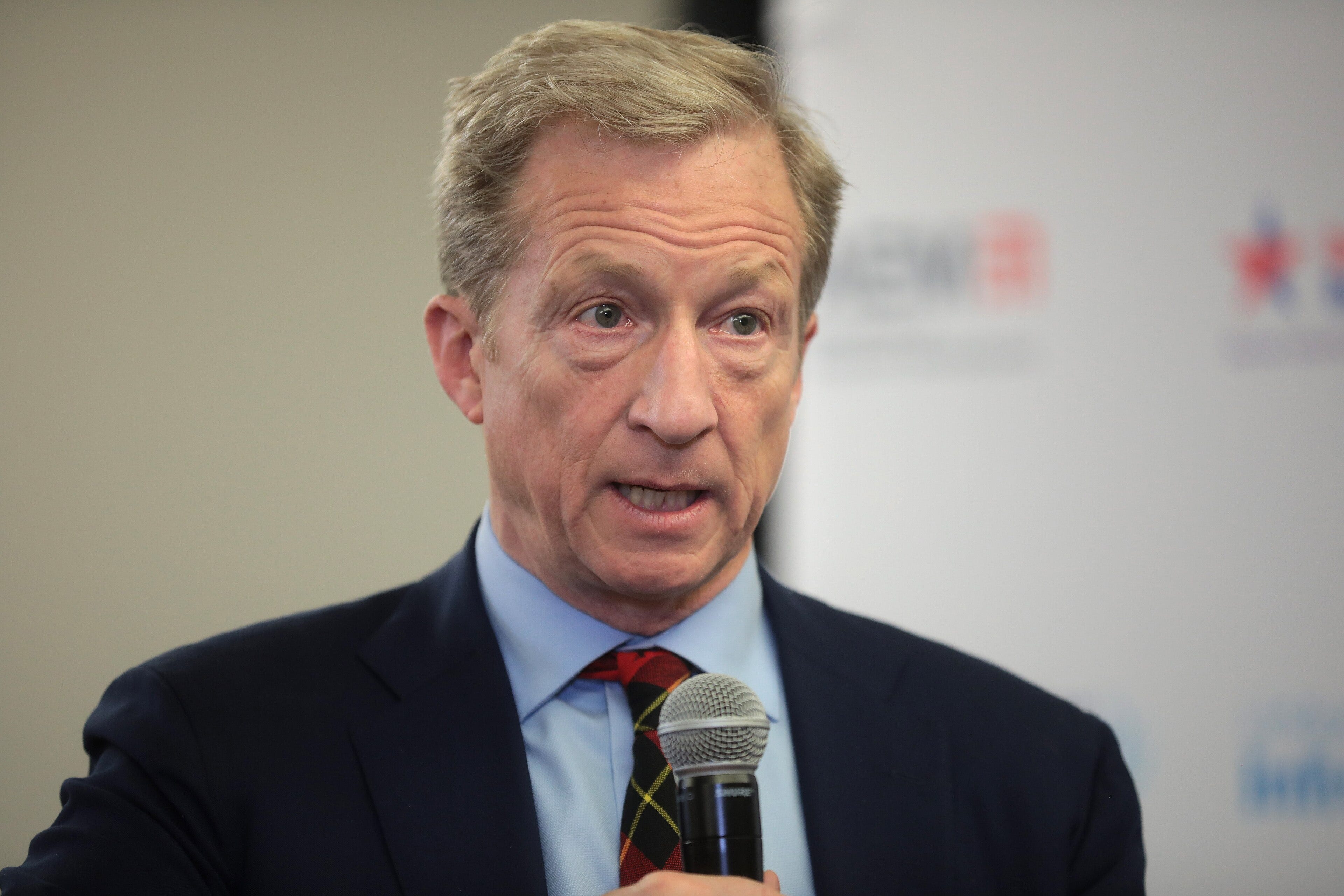
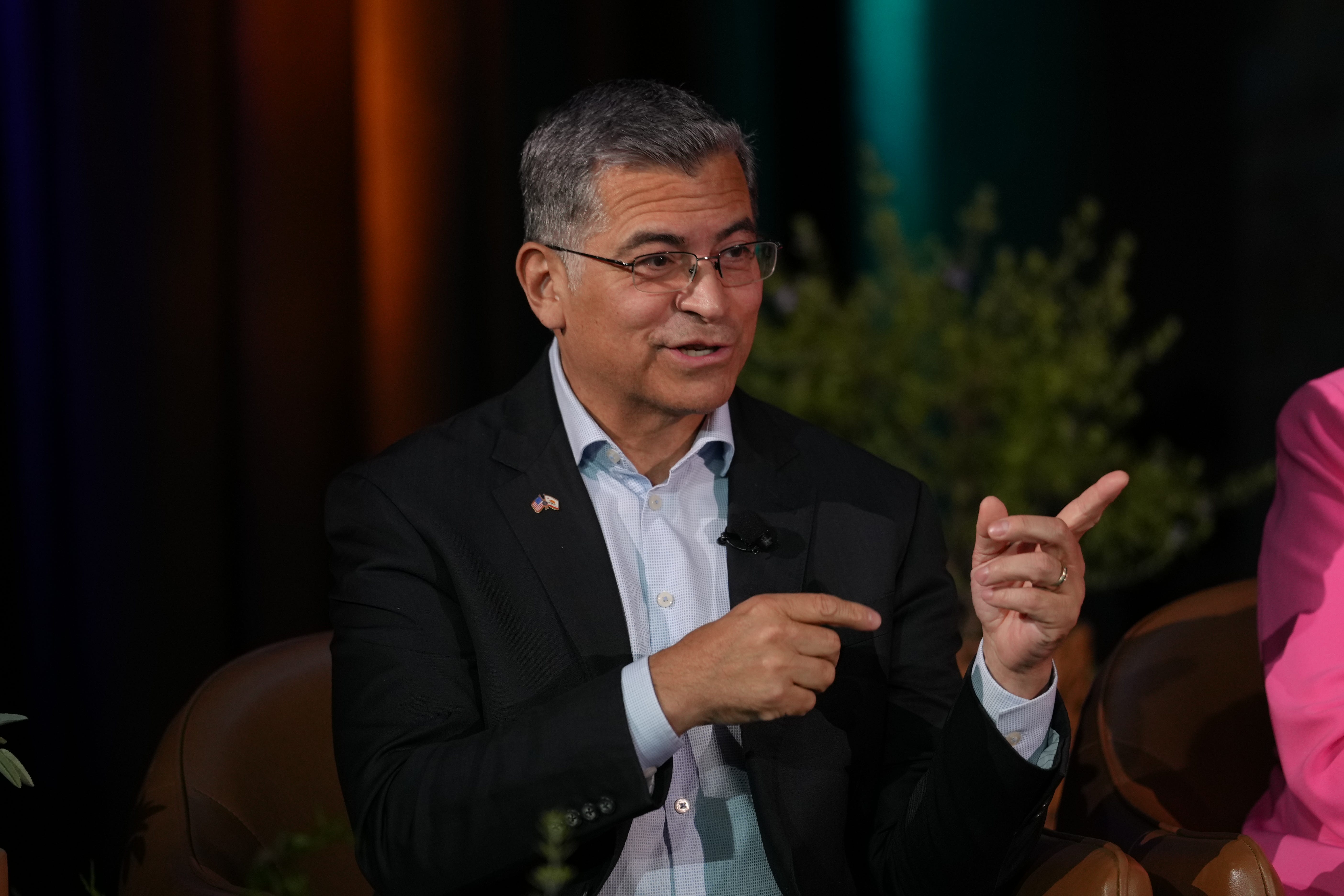
The first candidate is billionaire investor Tom Steyer. The second is Xavier Becerra, California’s former attorney general.
I’ve followed the race closely — I moderated a climate forum with the top candidates — and to my mind, this is an easy choice.
I would expect Becerra, if he wins, to handle climate much the same as Newsom has the last few years: keen to defend California’s existing accomplishments but not eager to take bold new steps. At least not if they involve politically costly confrontation with utility companies or the fossil fuel industry.
Steyer would mark a break with the status quo. It’s plain from his track record that he wouldn’t hesitate to buck powerful interests for the sake of climate.
For context, Steyer’s transition from generic hedge fund manager to political activist has been driven by his concern over climate change. It started in 2010, when he spent $5 million leading the campaign to defeat Proposition 23, a ballot measure backed by Big Oil (including Koch Industries) that would’ve suspended California’s foundational law to reduce climate pollution. Steyer succeeded.
He went on to found NextGen Climate (now called NextGen America), a progressive advocacy group focused on youth engagement and voter registration. He spent nearly $30 million backing a ballot initiative that closed a corporate tax loophole and funded clean energy. He was the biggest individual donor to Proposition 50, which countered GOP gerrymandering, and also to Prop 56, which raised California’s tobacco tax.
Steyer spread his wealth outside California, too, spending tens of millions of dollars supporting climate candidates in Florida, Virginia, Washington and elsewhere. After a failed presidential run, he wrote the thoughtful book, “Cheaper, Faster, Better: How We’ll Win the Climate War.” In recent weeks, he’s talked about his climate and energy plans in lengthy podcasts with journalists David Roberts and Emily Atkin, showcasing an impressive grasp for detail and nuance.
One of Steyer’s main proposals: making it easier for people to lower their utility bills by installing rooftop solar. His whole campaign is built around a populist message of tackling California’s high cost of living by raising taxes on wealthy folks like himself and forcing corporations to play by the rules. He’s attacked the state’s biggest utilities with special vigor, promising to “break up the electric monopolies” so that PG&E and its brethren will stop stifling rooftop solar to pad their profits.
That helps explain why PG&E is spending so much money to defeat him. Along with Southern California Edison and San Diego Gas & Electric, PG&E has long urged state officials to cut rooftop solar incentives. Under Newsom, they’ve succeeded. Seemingly wary of alienating the utilities — and labor unions that represent utility employees — Newsom has put politics above the climate crisis, letting his appointees cut incentives and failing to support other clean energy solutions disfavored by the utilities.
Becerra, I fear, would bring more of the same.
When I asked about rooftop solar at the climate forum, Becerra offered faint praise. First, he suggested that solar is a largely out of reach for low-income Californians — an increasingly outdated criticism — before pivoting to his desire to protect families from bad actors in the solar market. He said briefly he’d like to expand access to solar but gave zero details on how he’d do that.
When Steyer talks about “breaking up” the investor-owned utilities, he isn’t actually calling to dismantle PG&E, Edison and SDG&E. If you read the electricity plan on his website — he also has a climate plan and a gas price plan — you’ll see what he means. He wants to appoint regulators who will lower utility profit margins, limit the need to build expensive power lines and prioritize rooftop solar, batteries and microgrids.
As for Becerra? The scant “energy and utilities” page on his website frames the clean energy transition as an obstacle to affordability. He’s behind the times.
He’s also hard to trust on fossil fuel industry accountability.
Steyer has expressed strong support for a “climate superfund” bill — also known as “Make Polluters Pay” — that would hold oil and gas companies financially liable for climate damages. There are similar laws on the books in New York and Vermont. But the proposal hasn’t gone anywhere in Sacramento, partly because Newsom has shown no interest in supporting it. Steyer could change the game.
It’s much harder to know where Becerra stands. When I asked him whether polluters should pay for climate damages, he worded his reply carefully: “Yes, they will be at the table, but they will definitely have to pay their fair share.”
Yes, they will be at the table. He used that expression — “at the table” — several times during the climate forum. Charitably, he was trying to frame himself as a consensus-builder. Uncharitably, he was trying to avoid taking firm stances.
“We have to make sure that everyone is at the table, including the polluters,” he said.
So maybe I shouldn’t have been surprised by what he said last week when asked about Chevron giving tens of thousands of dollars to his campaign.
“It’s a free country,” he said. “Chevron — that’s the problem with politics — they’re not the bad guy. Does everybody here drive an electric vehicle? You need Chevron, I need Chevron, my people of the state of California need Chevron.”
Rob Bonta, who succeeded Becerra as California attorney general, is currently suing Chevron (and several oil other giants) for what his office describes as a “decades-long campaign of deception” to hide the dangers of global warming.
Sounds like the bad guy to me.
The sad thing is, Becerra has a decent track record. He spent his term as California attorney general suing the Trump administration to defend the state’s environmental policies. He has a long history of elevating climate justice, including when he ran the U.S. Department of Health and Human Services under President Biden.
But as the climate crisis worsens, and our cities keep burning, California can’t afford Newsom 2.0. We need a governor for whom accelerating the energy transition is a top priority, if not the top priority. That’s not Becerra. It’s Steyer.
For many progressive voters, the main objection to Steyer — and it’s a big one — is that he’s a billionaire, and that billionaires can’t be trusted. Buttressing that concern, Steyer’s opponents — and corporate-funded attack ads — have suggested he got rich on fossil fuels and private prisons. And therefore he’s a hypocrite for campaigning on climate action and abolishing ICE.
Personally, I don’t find the “hypocrite” argument convincing.
Farallon Capital Management, the hedge fund Steyer founded in 1986, did invest in fossil fuel projects and private prisons, most infamously an Australian coal mine and Corrections Corporation of America. But Steyer sold his stake in Farallon in 2012 and makes a compelling case that he’s a new man. While he never should have invested in private prisons, he’s apologized repeatedly. And he’s spent so much money supporting climate action that it’s difficult for me to fault him for his dirty energy mistakes.
If you’re dead set against supporting a billionaire — which, totally fair — my advice is to vote for Katie Porter, the former member of Congress.
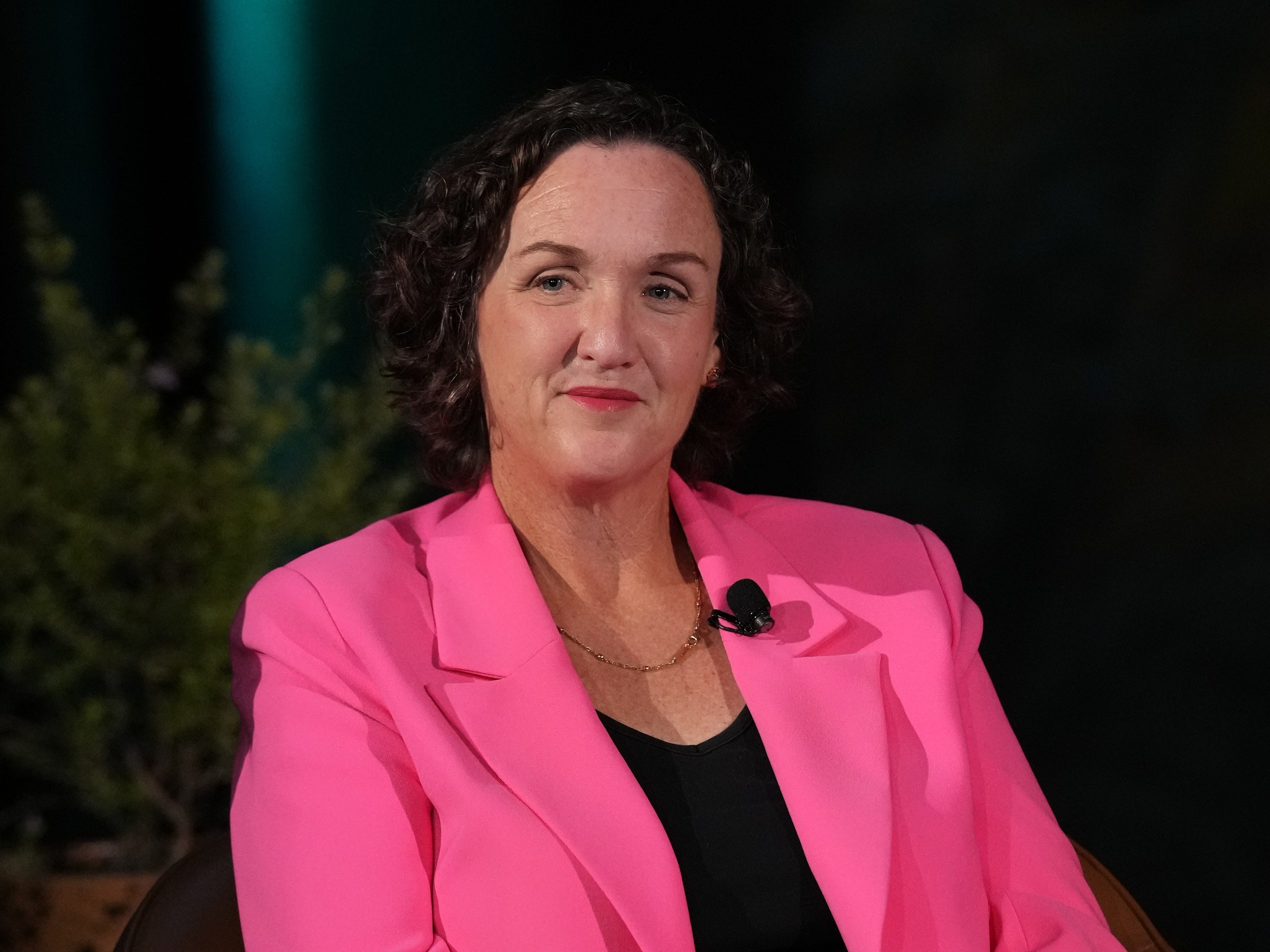
Her climate platform isn’t nearly as detailed as Steyer’s, and she hasn’t given climate nearly as same attention that he has. But she impressed me at the climate forum with her detailed knowledge of the issues, and with her suggestion that she would shake up the California Public Utilities Commission. And like Steyer, she earned endorsements from EnviroVoters and the Climate Center Action Fund.
I really think Steyer is the best choice, though, much as I mistrust billionaires. Here’s McKibben explaining how he reached the same conclusion:
Maybe 15 years ago he called me out of the blue to pick my brains about climate stuff; as he talked on the phone, I googled him and established he was a hedge fund billionaire, a species to which I am allergic. I tried to put him off, but he politely insisted to the point where escape would have required real rudeness on my part, and so I proposed he come for a day hike in the Adirondacks, figuring that at the very least I would get some exercise out of it. A week later we were climbing Giant Mountain via Rocky Peak Ridge, one of the harder ascents in the High Peaks, and what do you know he was keeping up with me, and what do you know he was interesting and congenial. Over time we became real friends. He’s bunked in the guestroom at my house, and vice versa (his is nicer); we’ve donated to the same causes (350.org, Third Act; his checks were larger, though perhaps not as a percentage of one’s wealth).
More to the point we’ve carried on a nonstop conversation about climate change, which he rightly understood as the most important question the planet faces. Alone, I think, among major American politicians he could identify not just James Hansen, but climate scientists like Zeke Hausfather, Bob Howarth, and Mark Jacobson… He’s the real deal: he stepped away from his hedge fund because his colleagues wouldn’t divest it from fossil fuel, and he’s been working hard ever since to make progress on the energy transition. I can’t think of a more knowledgeable or committed climate champion in political life in America today.
As I mentioned up top, a bunch of environmental groups are similarly impressed. It was particularly fascinating to me that Steyer won endorsements from the Center for Biological Diversity — which prefers rooftop solar to massive solar farms and has an adversarial relationship with the big utilities — and also NRDC, which tends to favor large-scale solar (and is on relatively better terms with the utilities).
The fact that Steyer got both of these group in his camp is a big deal. I think it speaks to the fact that he’s truly a climate-first candidate, in a way that’s rare at high levels of American politics. I can’t imagine either group thinks he’s perfect. But they must have realized they couldn’t pass up the chance to elect a hard-core climate leader.
I can’t pass up the chance, either. I’ll be voting for Steyer.
If he manages to win, and he does a lousy job, you’ll read about it here. I won’t let him off the hook.
If someone else wins and does a great job, I’ll be thrilled. You’ll hear me say so.
Elections matter. But what happens after matters a hell of a lot more.
What many may not know is how many labor unions have endorsed Steyer. They include the United Domestic Workers, representing some quarter-million home care and family child care providers in CA, and the California Teachers Association, one of the state's largest and most powerful teachers unions; and the CA Nurses Association, the state's largest and fastest-growing union of registered nurses. Sheldon Whitehouse has endorsed, too.
Yes, and for those of us also concerned about human rights and endless wars over big oil, and mass migration caused by the same extractive policies, this is also the best choice... because what California does influences the Nation, the world. Thank you for this thoughtful analysis Sammy!