

I was right. The L.A. fires changed nothing
A year after Altadena and Pacific Palisades burned, "climate change" has exited the chat.

“People want leadership, Mr. President, and in the absence of genuine leadership they’ll listen to anyone who steps up to the microphone.” — Lewis Rothschild (Michael J. Fox), “The American President” (1995)
Let’s start today with a guessing game. Who do you think said the following, to mark the one-year anniversary of the Palisades fire?
“It wasn’t an act of nature. It wasn’t some ‘storm of the century.’ And it wasn’t climate change, and don’t let anybody try to tell you otherwise.”
Was it:
Climate-denier-in-chief Donald Trump?
Billionaire developer and former Los Angeles mayoral candidate Rick Caruso (now considering another run for mayor, or perhaps governor)?
Former reality TV star Spencer Pratt, who lost his home in the Palisades fire and announced last week that he’ll challenge Karen Bass for mayor?
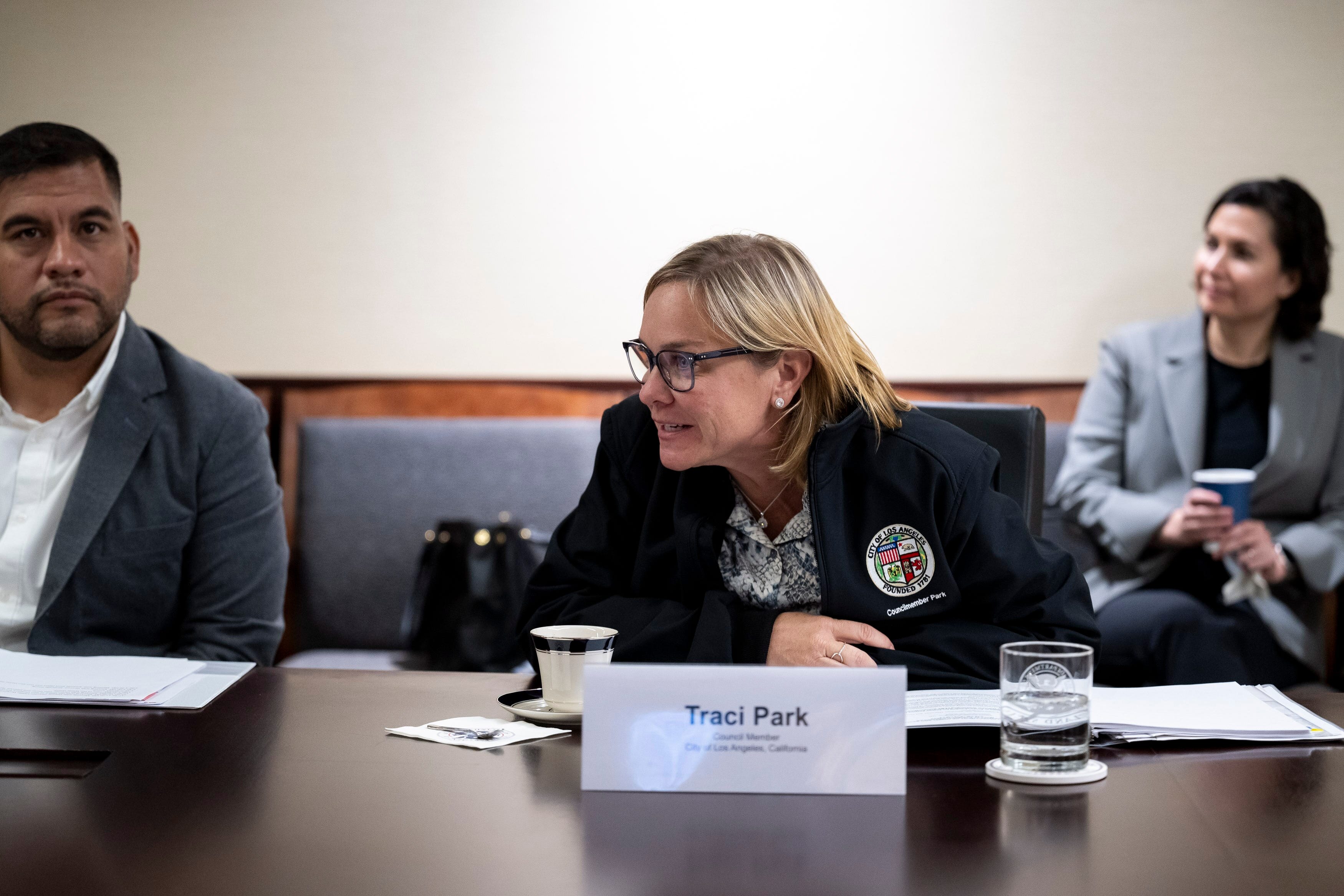
Los Angeles City Councilmember Traci Park, a Democrat whose district includes Pacific Palisades?
Yeah, it was Traci Park.
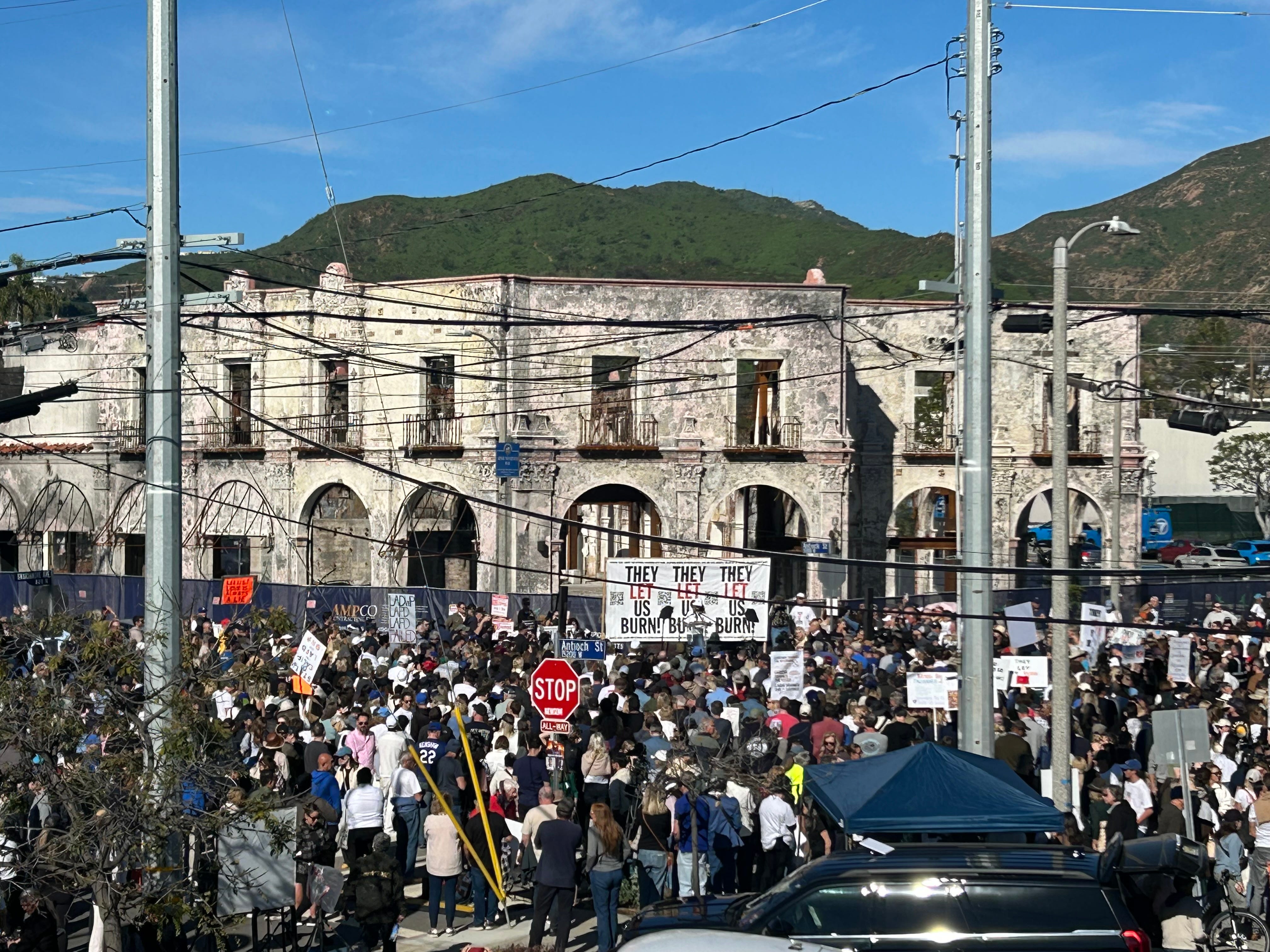
She made the wildly untrue remark during an impassioned speech at Wednesday’s “They Let Us Burn” rally, which gave Palisades fire survivors a chance to express their well-earned fury. As my former L.A. Times colleagues have been relentlessly exposing, politicians and municipal agencies — from Bass on down — failed to do all they could protect Angelenos. We deserve accountability.
We also deserve leaders who tell the whole truth.
No, climate change did not literally cause the Palisades fire. (A man has been accused of arson.) But the idea that the fires had nothing to do with our rapidly heating planet, — with California’s increasingly intense swings between ever-drier droughts and ever-stronger storms — is ludicrous. There’s tons of science linking worsening fire activity, including the L.A. fires, to fossil fuel emissions.
But in the wake of a tragedy, it’s hard to get mad at carbon dioxide accumulating in the atmosphere — or even at an oil company, whose executives’ names and faces you rarely see on TV or social media, and whose friendly advertisements may be plastered across your favorite baseball stadium.
So instead, you direct your anger at Karen Bass, who was out of town when the blaze ignited. Or at the L.A. Department of Water and Power, whose nearest reservoir was down for maintenance and hence empty. Or at the city fire department, which might have been able to stop the inferno from getting out of control.
Many of the frustrations are warranted; others are borderline fake news, encouraged by irresponsible leaders for whom acknowledging the role of systemic challenges like the climate crisis would distract from the blame game, which is an easier sell.
At last week’s rally, for instance, Park said that firefighters were “left helpless to fight fire without water,” and that “we were on the grounds in the Pacific Palisades putting out fire with dirt because there was no water” — claims that echoed some of Trump’s favorite talking points. Thing is, experts have consistently stated that L.A. had plenty of water, and even if Santa Ynez Reservoir had been full, it probably would have made little difference. The real problem was local water infrastructure that wasn’t designed to fight massive urban wildfires exacerbated by climate change.

Those inconvenient truths haven’t stopped Pratt, who like Park who has insisted the fire was not climate change. The social media influencer has pinned the blame for the devastation squarely on Bass (and also Gavin Newsom), suing the city of Los Angeles while raising a ruckus over the empty reservoir. He announced his mayoral run at last week’s “they let us burn” rally, promising to “expose the system.”
Again: Blame is easy (and often necessary). Fighting for long-term, systemic change is exhausting. Most folks don’t have the capacity for it, especially when their homes have just burned to the ground.
Which is why it’s incumbent on wise, well-meaning leaders to help bring people along — and why I’ve been so frustrated to see the opposite happening.
Bass and Newsom responded to the Palisades and Eaton fires not by doubling down on climate action but by suspending all-electric building rules (not just in burn zones but across the city and state). In retrospect, I think their actions portended a broader shift in 2025. In New York, Pennsylvania and Massachusetts, top Democrats backed away from climate policies that they came to believe were too expensive (even though solar and wind are hella cheap). The New York Times recently published one op-ed by a prominent center-left pundit urging Democrats to embrace oil and gas, and another lauding politicians and tech giants for scaling back climate commitments. Bill Gates wrote a long memo arguing that climate change isn’t actually so bad, and that society shouldn’t be spending so much money on it.
Even Tom Steyer, the billionaire perhaps best known for his climate activism, seems to be changing his tune. Now a candidate for California governor, he’s made reducing electric rates and fighting monopoly utilities — not combating global warming — his campaign’s rallying cry. At a press conference last week to mark the anniversary of the fires, he criticized utility companies for igniting wildfires and impeding rooftop solar. He made a bunch of good points, but he didn’t mention climate change once.
I wish it wasn’t so predictable. But this week last year, as I watched plumes of smoke unfurl over my city and girded myself for the dumpster fire of a presidency about to get underway, I wrote a column for the L.A. Times with the following headline: “Los Angeles is a climate disaster. The fires will change nothing.”
Forgive me for quoting myself:
For many Angelenos, this is our most jarring confrontation yet with global warming. But hundreds of millions of Americans have faced fossil-fueled disasters, and the politics of climate obstruction have hardly budged.
There was the 2018 Camp fire, which killed 85 people and leveled the Northern California town of Paradise. And the 2021 Pacific Northwest heat dome, which contributed to an estimated 1,200 fatalities. Just a few months ago, Hurricane Helene and then Hurricane Milton walloped the U.S. Southeast, collectively killing 250 people.
None of those climate disasters changed the fact that the Republican Party is almost totally beholden to the fossil fuel industry. None of them changed the fact that the Democratic Party, although largely committed to climate action — see President Biden’s Inflation Reduction Act — still hasn’t done nearly enough to phase out fossil fuels.
And none of them changed the fact that the billionaires and powerful executives who could do more than anyone to change the political landscape — many of them tech entrepreneurs, Hollywood stars and sports titans who live right here in L.A. — are typically more worried about making money than leaving the world a safer place.
Maybe this time will be different?
The headline answered the question. The fires changed nothing.
Not everything can or should be about climate change. There’s a robust debate about the political practicality of when and how to talk climate — the best strategies to win elections, the kinds of arguments that resonate with voters, the overwhelming need to elect politicians who will defend democracy, etc. It’s important and nuanced stuff, and I’ll return to it soon.
But some things shouldn’t be hard. A leading gubernatorial candidate with a proud history of climate advocacy in one of America’s most climate-conscious states needs to be able to say the words “climate change” on the anniversary of the worst fire in the state’s largest city. The city councilmember representing the community that burned can’t keep lying to her constituents about the climate crisis.
In other words, leaders need to lead. Politicians can’t just take the temperature of the room; they need to take responsibility and elevate the conversation.
The conversation must include climate. Don’t let anybody try to tell you otherwise.
Harry Reid event this week; don’t forget to vote for fossil-free expressions
Two reminders:
This Wednesday at 12 p.m. PT, I’m talking with journalist Jon Ralston about his new Harry Reid biography. We’ll discuss the late Nevada senator’s environmental legacy, and his unique ability to wield political power and overcome Republican opposition. Climate-Colored Goggles paid subscribers are invited to joins us on Zoom; you can sign up here. (It’s not too late to upgrade to paid!)
It’s also not too late to vote in our poll to replace dirty expressions like “cooking with gas” and “burning the midnight oil” with cleaner alternatives. Thanks again to everyone who submitted ideas for new turns of phrase.
Phillips 66 CEO on Dodgers, ‘Landman’
During a recent podcast interview, Mark Lashier — chief executive of Houston-based oil company Phillips 66 — brought up two subjects that caught my attention.
First, while describing the scope of the company’s business, he mentioned the 76 gas station chain — and its prominent advertisements at Dodger Stadium:
“Out in the West Coast, we've got the 76 brands. So if you watched the World Series, unfortunately the Dodgers — you know, we like the Dodgers, particularly during the World Series, because our logo's up there every time you see Shohei Ohtani hit a home run.”
I’m a huge Dodgers fan. But as I’ve written previously, I think it’s deeply unfortunate that they continue taking money from an oil giant — especially an oil giant awaiting trial for alleged Clean Water Act violations at its L.A. County refinery, and especially after the L.A. County fires. Lashier’s comments serve as a reminder of why Phillips 66 shells out the big bucks for coveted spots above both scoreboards at Dodger Stadium.
Lashier also said he’s a fan of the TV show “Landman,” a Texas oil country drama that airs on Paramount+. He especially enjoys the “great speeches” by Billy Bob Thornton’s character “about the energy industry and how important it is.”
“I tell my kids, ‘You see that speech Billy Bob gave? I’ve given that same speech about a dozen times, without the f-bombs,’” Lashier said.
For context, see my column about Season 1 of “Landman,” criticizing the show for its rampant fossil fuel propaganda and renewable energy misinformation (including some in Billy Bob’s speeches). I’m watching Season 2 now, and fortunately there hasn’t been any misinformation (so far). The whole thing is still in many ways a giant ad for the oil industry, though.
The reluctance to say "climate change" is also very noticeable in the business and investor communities right now. It's like everyone (in the U.S. at least) has collectively decided that it's too polarizing or risky of a topic to speak about publicly. It's a somewhat different story behind the scenes, but I feel like this "green-hushing" phenomenon is only going to alienate more people who can see with their own eyes what's happening to the world around them.
Name the problem! We can also talk about the way climate change is pummeling our pocket books and everything else but we can’t allow Orwellian obfuscation. We must speak up against this. The science is there, even if this admin is trying to hide it. Facts don’t hush up even if we do.