

Los Angeles needs a bold new leader
For the Department of Water and Power. Obviously.

Hello again! Today is Day 3 of my membership drive. I’m publishing a new story every day for five days, in hopes of adding 50 new paid subscribers. Here were the first two stories:
More than 6,000 people subscribe to Climate-Colored Goggles, which is incredible. But at the moment, just 10% of subscribers pay for my work. I can’t do this without you. If you can afford it, I hope you’ll consider upgrading to a paid subscription here.
Like most of my reporting and commentary, all five stories this week will be free to read.
Maybe you saw today’s headline and assumed I meant a new mayor to replace Karen Bass, who’s never prioritized climate and faces a surprise challenge from progressive City Councilmember Nithya Raman.
Nope. I’ll write about the mayoral race soon.
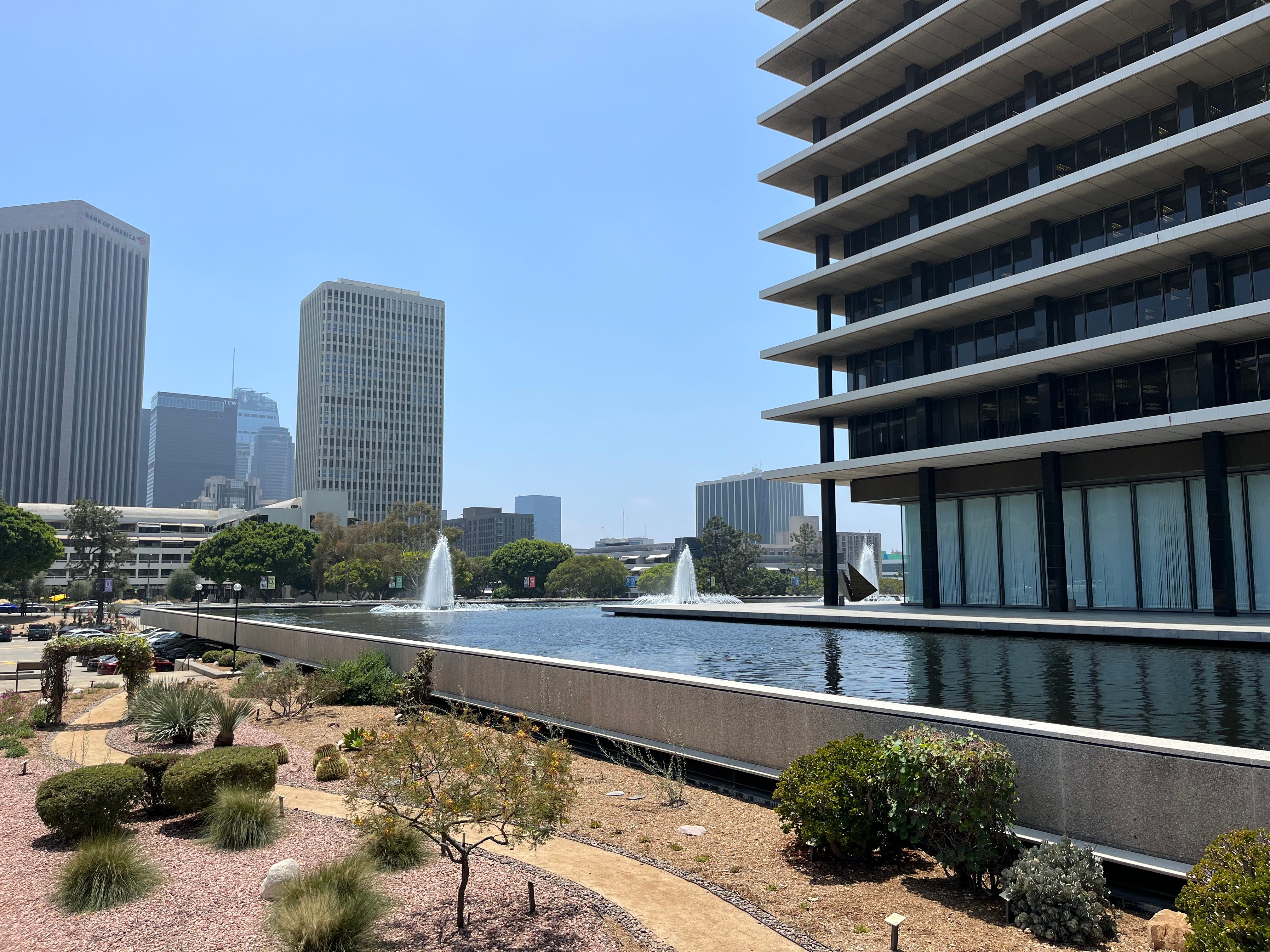
Today we’re talking about one of the most important roles in global climate policy: chief executive of the Los Angeles Department of Water and Power, or DWP.
The city announced last week that CEO Janisse Quiñones is stepping down after less than two years leading DWP. She’s accepted a new position in Puerto Rico, where she was born and raised, as CEO of the company that operates the island’s power grid.
At DWP, Quiñones was responsible for leading the city toward its ambitious goal of 100% climate-friendly electricity by 2035 — a decade ahead of California’s statewide target. There’s no guarantee that L.A. will get there. But Quiñones was working hard to make it happen, spearheading the development of giant solar farms, batteries and other renewable power projects at a breakneck pace. She knew that observers around the world were watching closely to see if she would succeed or fail.
So why is she leaving?
Reading local news, you might wonder if she faced pressure from City Hall to resign. Stories in the L.A. Times and elsewhere emphasized DWP’s response to the Palisades fire, for which Quiñones has faced vicious criticism — never mind that there wasn’t much the agency could have done to contain the climate-stoked inferno, and that Bass has given no indication she was unhappy with Quiñones. Rupert Murdoch’s California Post cruelly suggested that Quiñones was abandoning L.A., publishing the incendiary headline, “LADWP boss quits job to flee to Puerto Rico.”
Unlike the journalists writing those stories, I’ve gotten to know Quiñones. The first time we talked, at DWP headquarters in 2024, she told me about the eight months she spent rebuilding Puerto Rico’s electric grid after it was largely destroyed by Hurricane Maria in 2017. Initially, she was deployed as a reserve officer in the U.S. Coast Guard.
“I was there seven days after the storm hit,” she said. “I saw firsthand the impact.”
When the Coast Guard sent her back to her day job at San Diego Gas & Electric, she got SDG&E to assign her to a mutual assistance program, which enabled her to return to the U.S. territory and help the Puerto Rico Electric Power Authority. After that, she worked briefly as vice president of Cobra Energy in Puerto Rico.
Eventually she returned to the mainland. But when I read her written statement last week explaining why she wanted to run Puerto Rico’s Luma Energy, I wasn’t the least bit surprised. The island’s grid is still in awful shape, as Bad Bunny highlighted at the Super Bowl last month. People can’t count on reliable, round-the-clock electricity.
If Quiñones can help keep the lights on, that sounds like a dream job for her.
“Returning home to serve Puerto Rico at this pivotal moment is both a professional honor and a deeply personal commitment,” she said in her statement.
All that said, I can’t imagine leading DWP has been easy. Many Palisades fire victims are so angry over the agency’s perceived failures that DWP reported receiving “threats to [Quiñones’] personal safety, some of which have required direct intervention by law enforcement personnel.”
Even before the fire, running DWP was a notoriously thankless, frustrating job. You have to deal with the mayor, City Council, Metro and basically every other major local agency. You oversee nearly 12,000 employees charged with supplying water and power — crucial services that customers only stop to think about when there’s an outage, or when their bills go up. Running DWP means climate is your job. It means housing is your job. It means the Olympics are your job. It means making nice with IBEW Local 18, one of L.A.’s most bare-knuckled unions.
It’s been remarkably difficult for DWP to keep a leader in place for very long. When Marty Adams retired in 2024 after five years at the helm of the nation’s largest public utility, he was DWP’s longest-serving head honcho this century, by far.
It didn’t help that his predecessor, David Wright, was sentenced to six years in prison after pleading guilty to bribery. But mostly the job is a political nightmare.
“It’s a hard enough role with all the scrutiny and exposure,” said Matt Petersen, who served as chief sustainability officer under Mayor Eric Garcetti. “What Janisse had to deal with in terms of the fire and death threats is an X factor.”

Whoever follows Quiñones, they’ll have their work cut out for them.
L.A. got 59% of its electricity from climate-friendly sources in 2024, the latest year for which data is available. The number was surely much higher in 2025, when DWP shut down its last coal plant and commissioned a massive solar-plus-storage plant that was expected to provide 7% of the city’s power.
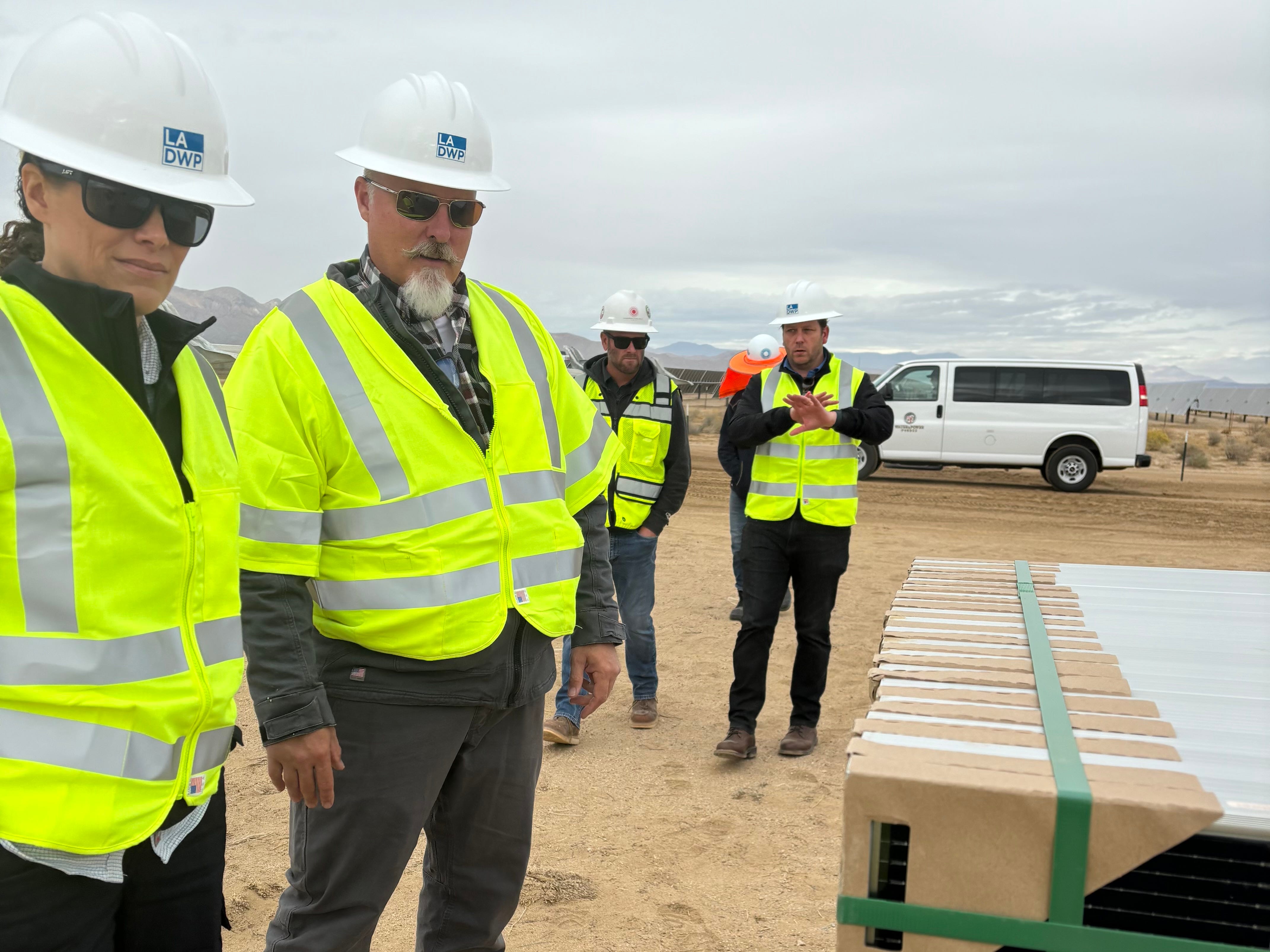
But 100% clean energy is still a long way off. When I visited the massive Eland solar-plus-storage plant in the desert north of L.A., Quiñones told me the city needed “10 more projects like this.” DWP officials are currently scrambling to negotiate contracts for more solar farms, so that developers can start construction by July 4 — after which solar farms will no longer qualify for federal tax credits and the cost to Angelenos will rise, thanks to the “Big Beautiful Bill” signed by President Trump.
DWP isn’t just investing in solar plants: It’s building out the grid to support electric vehicles and looking for companies to install rooftop solar, batteries and EV chargers across the city, which can be operated in tandem as a virtual power plant.
Petersen said DWP’s next leader needs to be “somebody who understands the utility business. Somebody who is passionate about getting to 100% clean power. Somebody who is good working with elected officials, somebody who is good working with labor, who is good working with clean energy advocates.”
It’s a big, big job.
“It’s enormously important in its impact and influence,” said Petersen, who now runs the Los Angeles Cleantech Incubator.
The mayoral election could be a game-changer.
Bass will pick Quiñones’ successor. But if Bass fails to win reelection, the next mayor could choose someone else, continuing the game of musical chairs at DWP.
Personally, I think the best thing for L.A.’s climate goals would be stability — so long as Bass chooses someone good. The last time the CEO’s chair was up for grabs, DWP starting freaking out environmentalists by raising questions about its commitment to 100% clean energy by 2035 — a target date originally set by Garcetti, not Bass.
In the end, things worked out. Facing pressure from activists to prioritize 2035, Bass hired Quiñones. At this point, the momentum to keep going is probably — hopefully? — too great to overcome. Quiñones deserves much of the credit.
“In two years, she was able to get a lot done and make a lot of progress,” Petersen said. “Hopefully the next person will be able to pick up the baton.”
No pressure.
Whoever stops to think about DWP? As you noted, only when something goes wrong. Thanks for bringing this to attention. I’d like to see more articles about DWP, Edison, SDGE and climate. Happy to support your work.
Janisse Quiñones is an inspiration, thanks for featuring her and DWP. I hope she's successful in Puerto Rico. Despite their grid's issues and the country's recurring national disasters, she'll probably have an easier time there than navigating Los Angeles and DWP!