

Ding dong, coal is dead
At least in California.

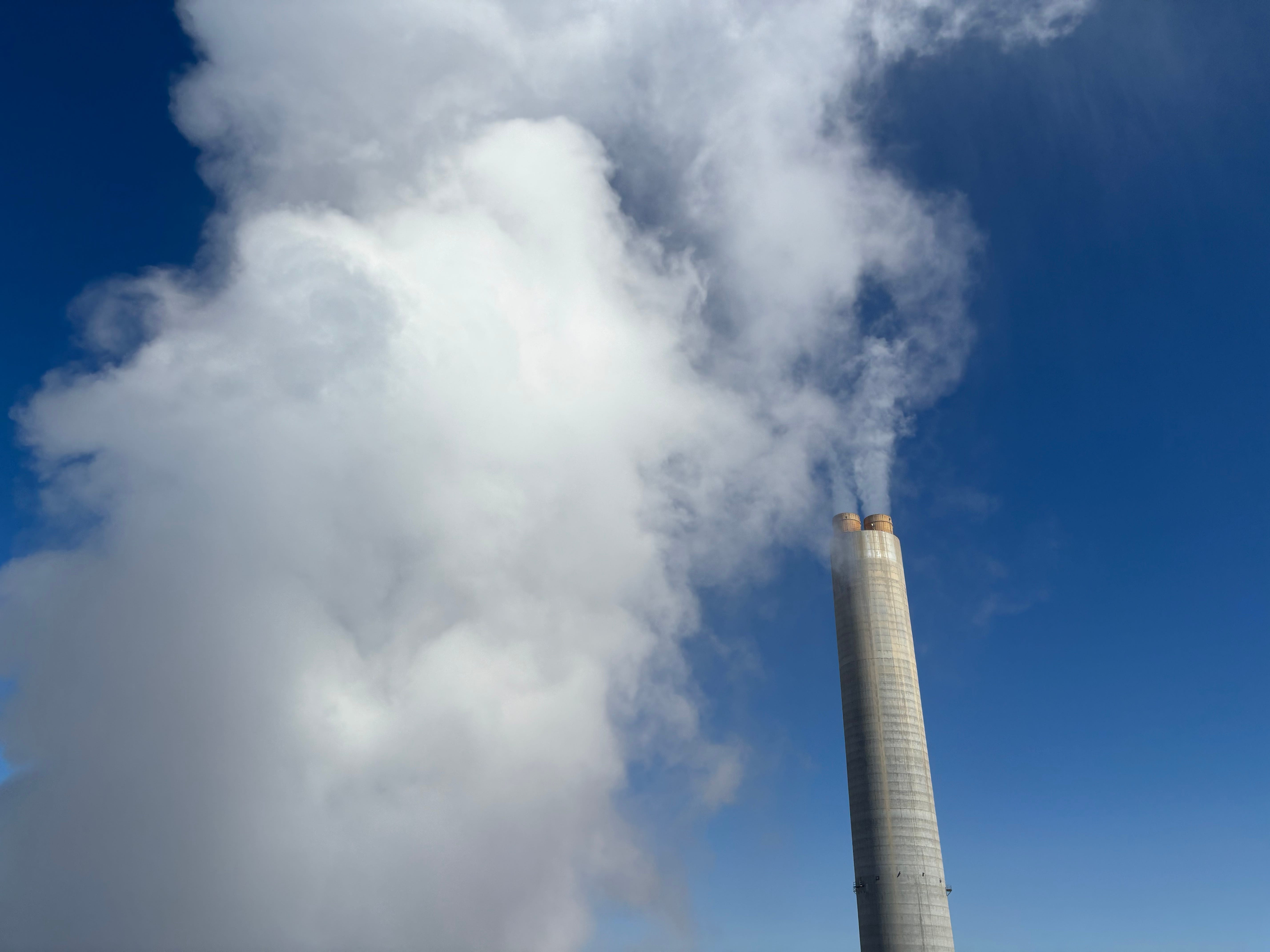
This is the way coal ends, not with a bang but a whimper.
Just after 12 p.m. last Wednesday, the Los Angeles Department of Water and Power shut down the last coal plant directly powering California. It happened 500 miles from L.A., in Millard County, Utah, with so little fanfare that the city hasn’t even put out a press release yet. I only knew about it because an astute Bluesky user posted data from the U.S. Energy Information Administration showing Intermountain Power Plant had stopped operating.
The lights didn’t flicker in Southern California, whatever President Trump might say about the importance of coal to reliable energy supplies. There were no Thanksgiving blackouts. Nobody noticed the difference.
That’s possible in part because solar is soaring.
The EIA reported last month that through August 2025, electricity from California’s large-scale solar farms was up 17% from last year. Natural gas generation was down 17%. And although the EIA data still showed gas as California’s largest power source, that wouldn’t have been the case if the data included solar production from 2.2 million rooftop and other small-scale solar systems.
Unlike coal and gas plants, solar panels can only produce energy part of the day. So it’s a good thing California has also built nearly 17,000 megawatts of battery storage — as much capacity as seven and a half Diablo Canyon nuclear plants.
I visited Intermountain in September as the coal plant prepared to shut down. It was my third visit, and definitely the most exciting. California was finally getting off coal! A long-overdue milestone.
At the same time, it was a tough moment for hundreds of people who had worked at the plant for years, in some cases decades. Coal needs to go, for climate and air quality reasons. But big cities need to understand how their energy choices impact the people and landscapes that supply their electricity. I spent two years reporting a series for the L.A. Times, Repowering the West, based on this premise.
Also worth keeping in mind: California has vanquished the dirtiest fossil fuel, but the rest of the country has not. There are 140 coal plants without retirement dates, and it may not be easy to shut them down. The economics of coal are pretty terrible, but the one-two punch of surging electricity demand (driven by AI) and Trump’s war on clean energy are conspiring to help coal stay in business, as Michael Grunwald chronicles in a well-researched story for Canary Media.
For more background on L.A.’s energy transition, see my column from September on the end of coal. I also toured the city’s record-cheap solar-plus-storage plant.
Journalism, democracy and the Olympics

Two events for you! A quick rundown:
I’ll be on Zoom tomorrow (Wednesday) at 5 p.m. PT with eminent environmental activist Bill McKibben and esteemed climate reporters Adam Mahoney and Amy Westervelt, discussing the value of robust climate journalism to a healthy planet and strong democracy. You can register here if you’re interested!
On Monday, December 8 at 3:45 p.m., I’ll be at L.A.’s BMO Stadium, talking with two Olympic athletes about how climate change is affecting sports. It’s part of the Los Angeles Cleantech Incubator’s Road to 2028 Leadership Summit ahead of the Olympics. You can get tickets here. (Discounts are available for Climate-Colored Goggles paid subscribers; click here and scroll down for the discount code!)
Also, I’m still taking suggestions for new turns of phrase to replace dirty expressions like “cooking with gas” and “burning the midnight oil.” Send me your ideas, please; in a few weeks I’ll run a poll and we’ll pick our favorites!
Watch your f-ing language

I’m a big believer in the power of language. Maybe because I write and tell stories for a living, I think the words we use have immense power, even when we choose them casually — perhaps especially when we choose them casually. They shape the way we think and how we understand the world, sometimes subconsciously.
In other news
Political climate:
After wins in Georgia and Virginia, some Democrats see data centers and rising utility bills as “the new price of eggs.” (David W. Chen, New York Times)
Even as Democrats pitch clean energy as a solution to high electric bills, they’re talking less about climate. My question: What happens when bills hopefully stop rising so much? (Shannon Osaka and Kevin Crowe, Washington Post)
Rupert Murdoch’s media empire is fueling the myth that clean energy drives up electric bills. (Rambo Talabong, Inside Climate News)
Transportation station:
Two oil giants want to build the first gasoline pipeline to California. It’s hard to know if it would make gas cheaper. (Hayley Smith, L.A. Times)
Tesla just finished building its largest charging station, along I-5 between L.A. and San Francisco. It has 164 chargers, and they’re powered by solar panels and batteries. (Tim Levin, InsideEVs)
Gas station chains such as Wawa and Sheetz are competing to attract EV drivers with better amenities. (Benton Graham, Grist)
Around the West:
The Trump administration is back to work building a border wall. Activists in Arizona are suing to block construction in an area crucial to wildlife. (Brandon Loomis, Arizona Republic)
Indigenous residents of New Mexico are suing the state over an alleged failure to protect them from harmful pollution. The state Supreme Court has agreed to hear the case. (Amal Ahmed, High Country News)
The proposed Amargosa Basin National Monument, in the Mojave Desert, sounds amazing. (Kurtis Alexander, San Francisco Chronicle)
National news:
Zillow bowed to pressure from real estate agents and removed climate risk scores from home listings. (Claire Brown, New York Times)
The Trump administration is undoing regulations for deadly soot pollution from cars, factories and power plants. (Matthew Daly, Associated Press)
Even as Trump attacks clean power, T1 Energy is betting on solar manufacturing with a massive factory outside Dallas. (Julian Spector, Canary Media)
Finally, I was saddened to learn that Tatiana Schlossberg — a young environmental journalist and granddaughter of John F. Kennedy — is dying of cancer. She wrote for the New Yorker about her treatment, her children, her cousin Robert F. Kennedy, Jr., and the enormous value of government-funded medical research.
Her essay is not an easy read. But it’s powerful and important.
I was waiting for Sammy to give the official word about the Utah plant closure since September! I've found that the most shocking graph to show people who don't follow energy news is the real time supply graph from CAISO and pointing out how much of the day is already 100% carbon free solar, wind, nuclear, and battery. I think many people assume it is still 2020 and we rely entirely on natural gas after 4pm.
Sammy, I read yesterday that some states are starting to allow balcony solar panels. This is great news! I hope you'll write about it.