

The grim barbarity of "Landman," Season 2
Spoilers abound. You have been warned.



As “Landman” wrapped up its second season this week, I wasn’t sure whether to appreciate that the oil country drama had stopped spewing anti-renewable energy misinformation, or to worry that the show’s fossil fuel propaganda was now all the more effective.
I actually like “Landman,” which airs on Paramount+. Even when I panned Season 1 for its weird, distracting diatribes against wind power and climate activists, I couldn’t help enjoy the soap opera of it all: the ever-escalating stakes, the delightfully over-the-top characters, Billy Bob Thornton’s captivating performance.
Still, the new season left me uneasy.
Even without the Trumpian lies, this was still a TV show about the noble work of oil extraction. Much of Season 2 centered on young Cooper Norris (Jacob Lofland), son of Thornton’s Tommy Norris, striking liquid gold in the Permian Basin. So many scenes began with shots of pumpjacks framed against glorious Texas sunrises or sunsets that I stopped keeping count. Tommy griped about politicians making life tough for the oil industry. The American Petroleum Institute ran ads during commercial breaks.
I’m glad showrunner Taylor Sheridan (of “Yellowstone” fame) dropped the anti-wind energy shtick. But at least the bizarre rants about wind turbines might have tipped off discerning viewers not to take “Landman” too seriously. Now I worry some fans might get lulled into supporting an increasingly popular centrist talking point: Of course we can’t use oil and gas forever, but shame on liberal extremists for attacking fossil fuels. They’re an economic and political necessity. We need an “all of the above” energy policy.
I don’t think Sheridan is playing 4D political chess. He makes TV for a living, and he’s clearly very good at it.
But watching “Landman,” it’s hard not to see art imitating life — and Sheridan trying to appeal to culturally conservative audiences. Season 2 featured a petroleum industry expo where oilfield workers fretted about automation taking their jobs, and a derisive reference to the hosts of “The View” criticizing President Trump. There were several strong-willed female characters, but it was taken for granted that they would never be fully satisfied until they found a man (or prioritized homemaking).
In one cringe-inducing storyline, Tommy’s daughter Ainsley (Michelle Randolph) left for college and started feuding with her nonbinary roommate, who was portrayed as a joyless curmudgeon. It was painful to watch — until the following episode, when the roommates bonded at cheerleading practice and Ainsley seemed to realize she’d been unfairly prejudiced. Had Sheridan been carefully working to win conservative viewers’ trust before showing that nonbinary people are no different than anyone else?
Nah, I’m probably overthinking it. He was just making TV.
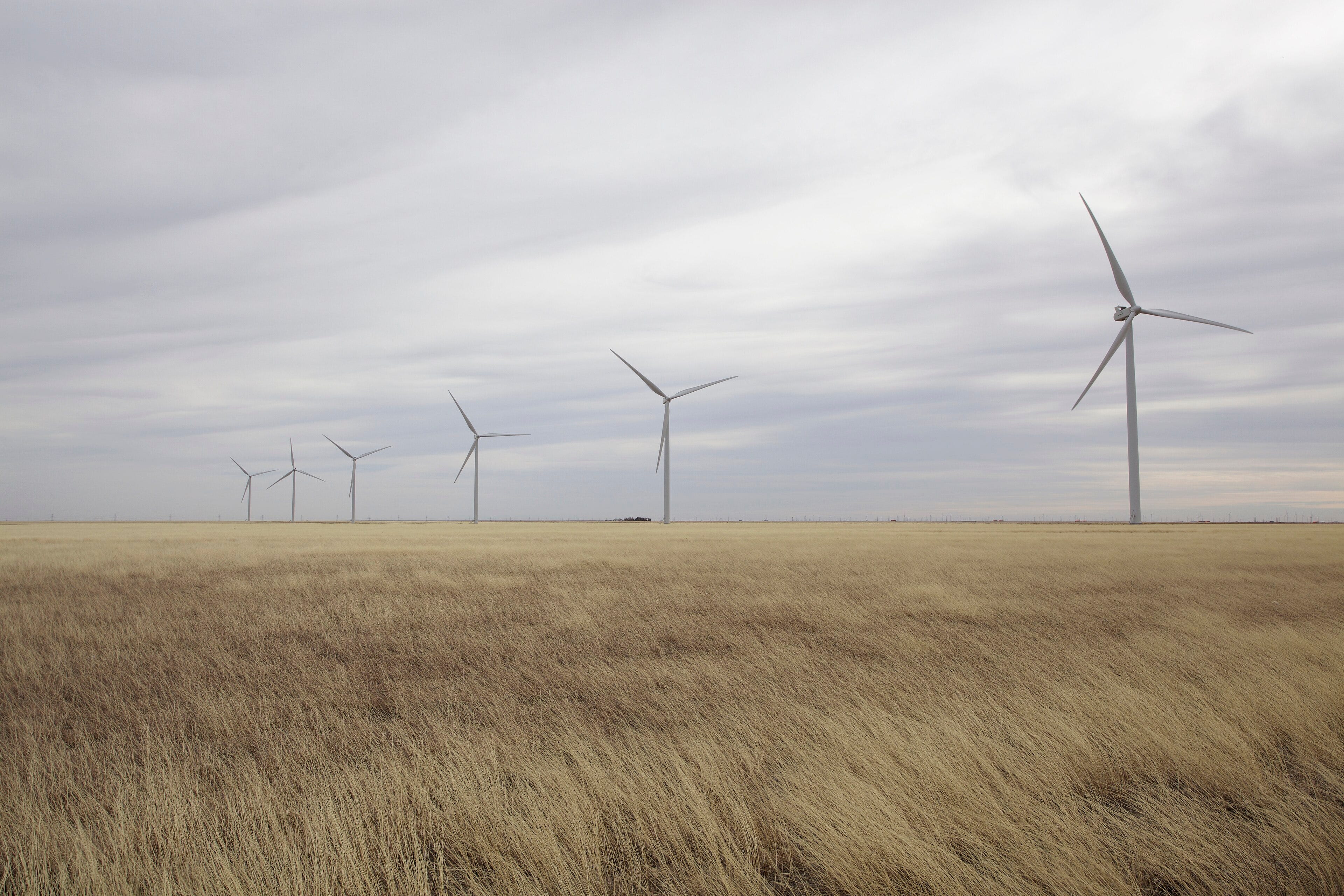
Still, some of the show’s energy and climate motifs got me asking similar questions. For instance, the new season featured regular shots of wind turbines on the horizon, even though they never mattered to the story — as if Sheridan was trying to say that the oil industry knew clean energy had arrived but couldn’t bring itself to face reality.
Or maybe it was simply difficult to find filming locations without wind farms; Texas generates more wind power than any other state, after all.
Meanwhile, the finale opened with two radio hosts chatting about a heat wave, while the camera panned down over a pumpjack:
“It is gonna be a scorcher.”
“109.”
“Yeah, in the shade, no less.”
“Surface of the sun hot.”
Was that Sheridan’s subtle way of criticizing fossil fuels? Was he hinting that even as he lionized the oil industry, it was causing serious problems?
Again, I don’t really know. I’m also not sure it matters.
Whatever nuances might lurk beneath the surface, the overall thrust of “Landman” is that working the oil patch is cool and thrilling and vitally important, a tough job done by manly men who take care of their women and children. It’s impossible not to root for them. When Tommy and Cooper ended the season by starting their own company to strike it rich, I had a big smile on my face — me, a climate columnist. Intentionally or not, this show is designed to create sympathy for the oil industry.
Not everyone is so pessimistic. In a New York Times essay this week, the great energy journalist Antonia Juhasz argued that the show’s vivid portrayal of the dangers of life in the oil patch — from deadly explosions to hydrogen sulfide poisoning — serves as a damning critique of fossil fuels, even if inadvertently:
“Every time an oil well explodes, a character dies, a woman is harassed, a drug cartel’s violence intermingles with that of the industry and yet another worker describes how deadly the job is and how desperately he wants to get out, the show is mirroring reality to make compelling television. Despite Mr. Sheridan’s clumsy attempts to communicate that there is no alternative, the show does far more to criticize the industry than it does to bolster it.”
I’d like to think Antonia is right, but I’m skeptical. Tommy is the hero, after all. We’re always meant to take his side. He’s willing to acknowledge his industry’s flaws, but he never says anything about the extreme heat. It’s just a fact of life — like the explosions and the poisonous leaks. They can’t be stopped. Oil and gas are inevitable.
Unfortunately, that’s what “Landman” preaches: complacency. Continued fossil fuel addiction. Whatever the costs.
I realize I’m setting unfair expectations for a TV show. But hey, the world’s not fair. Most people either don’t read much news or aren’t willing to let the news they read change their minds. Cultural touchstones like “Landman” — which was last month’s second-most-watched streaming title — wield immense power to shape our opinions and ideas. For better or worse.
The oil industry isn’t going away anytime soon, and neither is “Landman.” But I still believe what I said after Season 1: The show would be even more compelling if the oil giants had to start competing with the clean energy giants. Just like in real life.
Maybe Sheridan doesn’t want to make that show. But somebody should.
In other news

Golden State report:
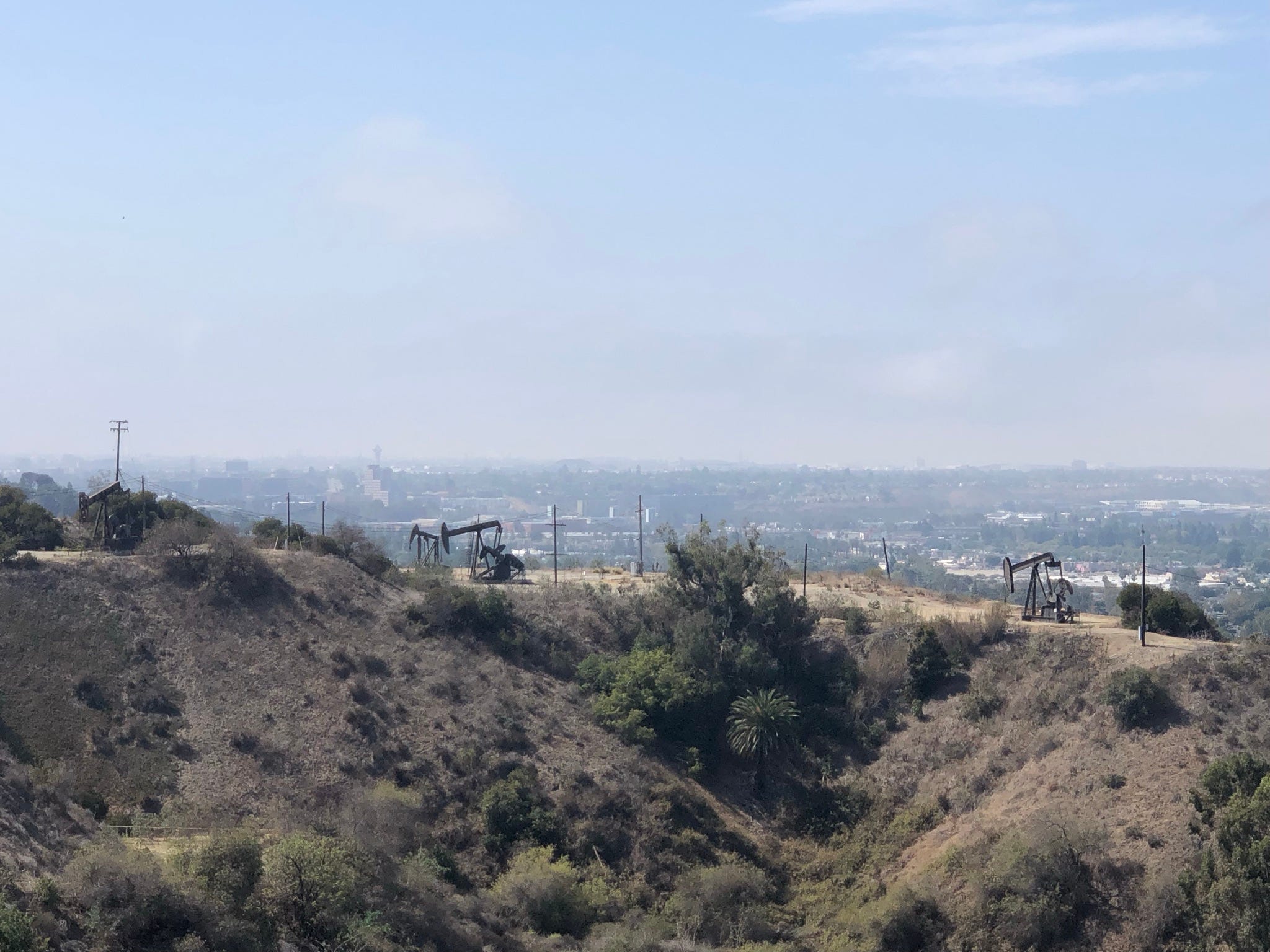
The Trump administration sued California to overturn a law banning oil and gas drilling within 3,200 feet of homes, schools, playgrounds, community centers and hospitals. (Hayley Smith, L.A. Times)
The Trump administration is pushing to open nearly 2 million acres of California public land to oil drilling. (Blanca Begert, Inside Climate News)
Southern California Edison is suing Los Angeles County and Southern California Gas (among others) over the Eaton fire, saying they should share responsibility for the damages. (Melody Petersen, L.A. Times)
Sports and outdoors:
The climate crisis and declining physical activity could cost the worldwide sports industry $1.6 trillion by 2050. (Matt Slater, New York Times)
Australia’s biggest cycling race is sponsored by an oil and gas company, and many riders — especially those with experience riding in dangerous extreme heat — are fed up. (Royce Kurmelovs, the Guardian)
The Trump administration’s National Park Service staff cuts have fueled chaos at Yosemite. Scientists are cleaning public toilets, and visitors are BASE jumping off cliffs. (Soumya Karlamangla, New York Times)
Water in the West:
California may have plenty of water in its reservoirs, but Western snowpack is in terrible shape right now. (Anthony Edwards, San Francisco Chronicle)
After an extended gathering in Salt Lake City, negotiators for the seven Colorado River Basin states still couldn’t strike a deal to avoid catastrophic water shortages at Lake Mead and Lake Powell. (Brandon Loomis, Arizona Republic)
It’s not just the American West: In a new report, United Nations scientists say the world has entered an era of “global water bankruptcy.” (Ian James, L.A. Times)
OK, some good news:
Bills proposed in the California Legislature would make it easier to install plug-in solar panels and electric heat pumps. (Alison F. Takemura, Canary Media)
Los Angeles is finally moving forward with a major transit project connecting the Westside to the San Fernando Valley. (Colleen Shalby, L.A. Times)
Federal judges allowed offshore wind developers to resume construction on three projects that Trump tried to stop on bogus “national security” grounds, in a major victory for the rule of law. (Maria Gallucci, Canary Media)
Last but not least, check out High Country News’ thoughtful “Deep Time in the West” series. As science and climate editor Emily Benson writes in the intro:
“We hope that widening our focus beyond the scope of human enterprises deepens your understanding of the West. After all, even as our species spurs ecological and climatic chaos, Earth will continue to transform and remake itself over and over again, just as it has for billions of years. Our aim is to celebrate that deep past — and implicitly acknowledge the deep and wide-open future of the West, too.”
Until next week
Sammy-Keep up the good, thoughtful work!
I'm glad you're watching that Sammy so I don't have to!