

A love letter to the Hollywood Climate Summit
The good, the bad and the Paramount.

“Maps are full of shit. They lie because they gotta lie. Otherwise, they wouldn’t be maps, they’d just be the world.” — Bill Brown, “Saugus to the Sea”
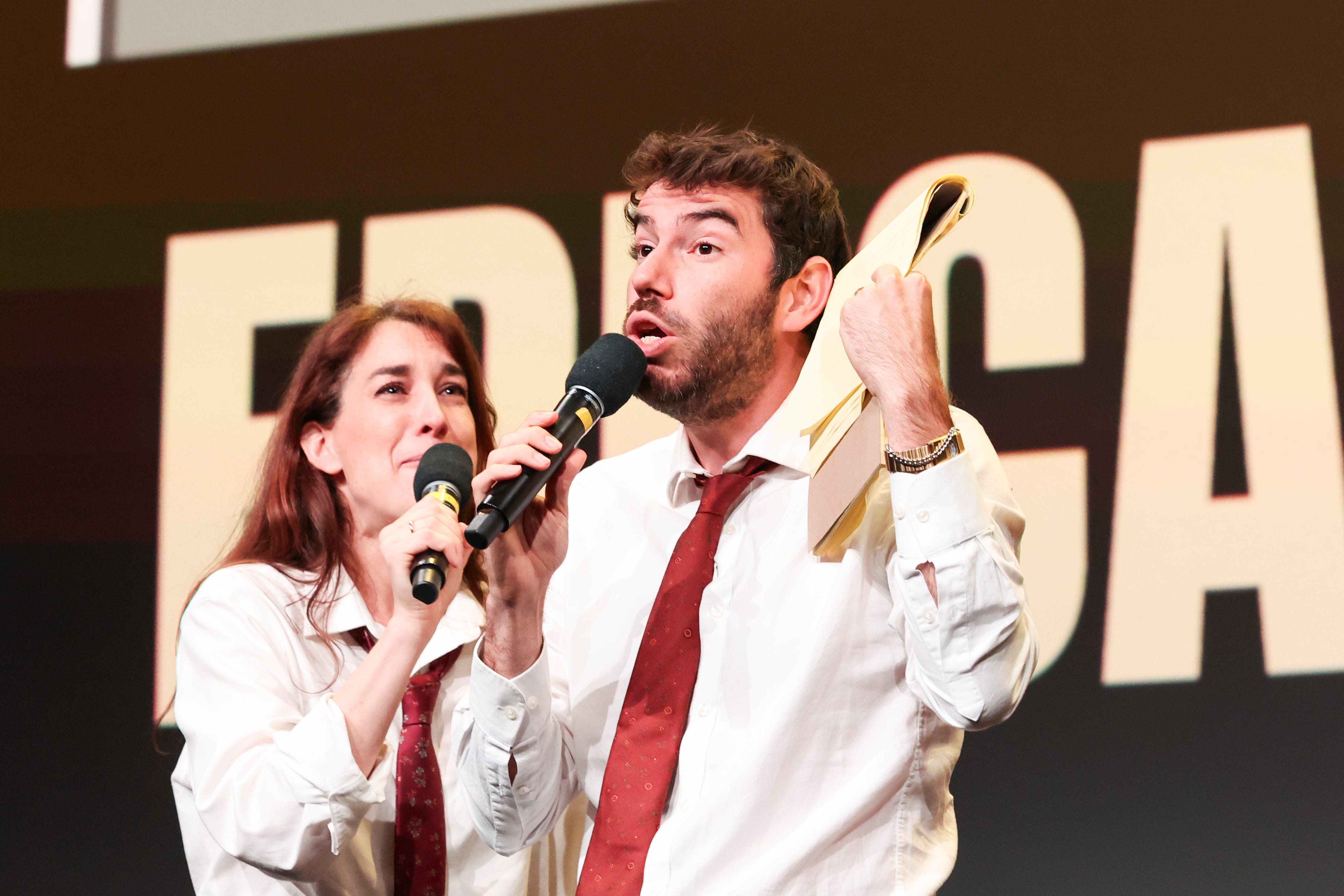
The attorneys rose to make their closing arguments. The charges were seismic: that the meat and dairy industries had run misleading ad campaigns, deceived consumers about plant-based foods and attempted to hide their massive role in the climate crisis.
But as soon as the prosecutors began to speak, things went haywire.
The lawyers reminded the jury — in reality a packed house at the Samuel Goldwyn Theater — that one of the defense attorneys had literally thrown a bag of soybeans into the audience in a fit of anger. This proved that the meat and dairy industries were — wait, what was happening?! The lawyers rushed off the stage and into the crowd. No way: A member of the “jury” had mashed the projectile soybeans into soy milk.
“This is objectively milk!” declared prosecutor Esteban Gast, holding the bag high.
The crowd went wild. Gast and co-counsel Joanna Hausmann — both of them actually comedians, not lawyers — started a theater-wide chant: This is milk! This is milk!
The defense attorneys (also comedians) weren’t having it. Feigning outrage and trying not to laugh — and sporting milk mustaches from an earlier bit — they pointed at the resourceful juror, shouting: Witch! Witch! Murder the witch!
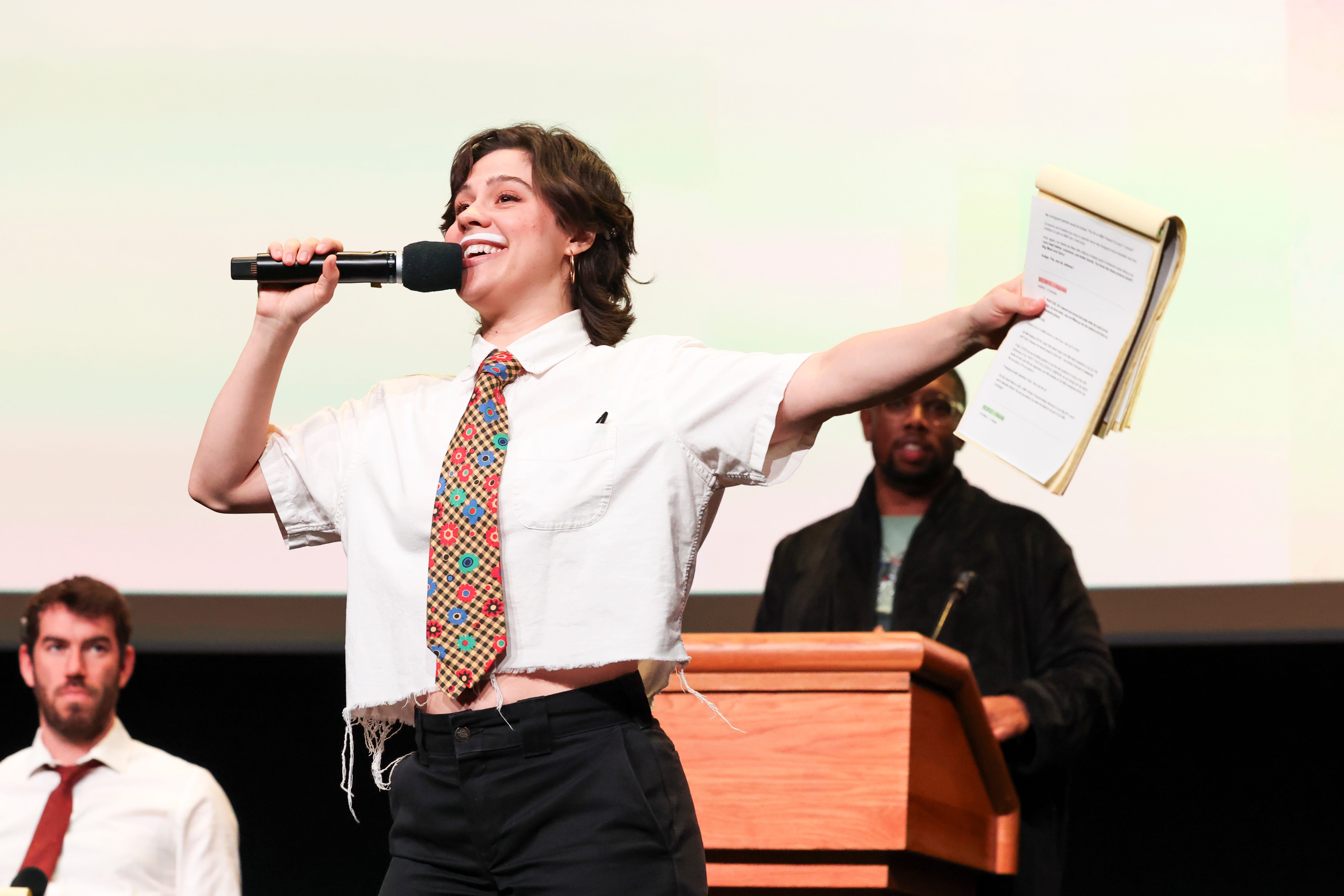
If everything I’m describing sounds totally unhinged — well, it was. It was also very funny. And it captured the spirit of the Hollywood Climate Summit.
Over two days this week, hundreds of people spanning a wide range of industries and job descriptions — environmental science, filmmaking, philanthropy, activism, space exploration, journalism, religion, video games, advertising and more — gathered for a series of panels, workshops and happy hours. Most of the summit was far less raucous than the mock trial, which was marked by “Big Meat” innuendo and a recurring joke about kidnapped children on milk cartons (as well as legitimately valuable testimony from actual experts — full video here if you’re interested).
But everything started to click for me during the chaotic closing arguments.
I go to a lot of climate conferences, and they’re usually dry, exhausting or both — even when I learn a lot and meet interesting people. The science is terrifying, but there are reasons for hope. The energy transition is daunting but doable, if we can somehow get the politics right. And no, the politics are definitely not right.
I could draw you a map of what “climate” is supposed to look like. It’s nothing like the The People v. Big Meat & Dairy.
Confession time: I’ve now been to the Hollywood Climate Summit three times, and I always have fun. It that OK? Is climate change allowed to be fun?
After the trial ended — the jury voted overwhelmingly to convict the meat and dairy industries, big surprise — I tracked down the soybean witch. I learned her name is Rachel Cellinese, and she’s a graphic designer who helps run Climate Designers LA. She told me she eats vegan and sometimes makes non-dairy milk at home. She and a fellow designer had smushed the soybeans into milk, adding water as needed.
Why bother, when the trial was a gag? They couldn’t help themselves. They wanted to strike a victory against the forces of meat of dairy.
“We wanted to prove them wrong,” she said.
This wasn’t a climate summit, not in the traditional sense; it was live theater, a pep rally, a sprawling interdisciplinary brainstorming session. It also didn’t take place in the Hollywood neighborhood of Los Angeles. In the same way that “Hollywood” is now a global industry encompassing everything from big-budget IMAX releases to 90-second YouTube micro dramas, “climate” is no longer just a scientific, economic or even political affair. It’s the story of the century.
And if it’s not a fun story, nobody’s going to care.
So I love the Hollywood Climate Summit. I loved it when Alison Tatlock, an executive producer on Apple TV’s “Pluribus” — which I badly need to watch! — explained how the show deals with environmental psychology. I smiled when marine biologist Ayana Elizabeth Johnson told Tatlock she wants to see a romantic comedy that starts with a woman returning home to find a hot, shirtless solar installer on her roof.
“Wait, are you pitching?!” Tatlock asked.
I got a kick out of watching voice actor Erika Ishii struggle through sustainability-themed video games, the audience groaning sympathetically, as researcher Marina Psaros explained how gaming can serve as a gateway drug to real-life environmental problem-solving.
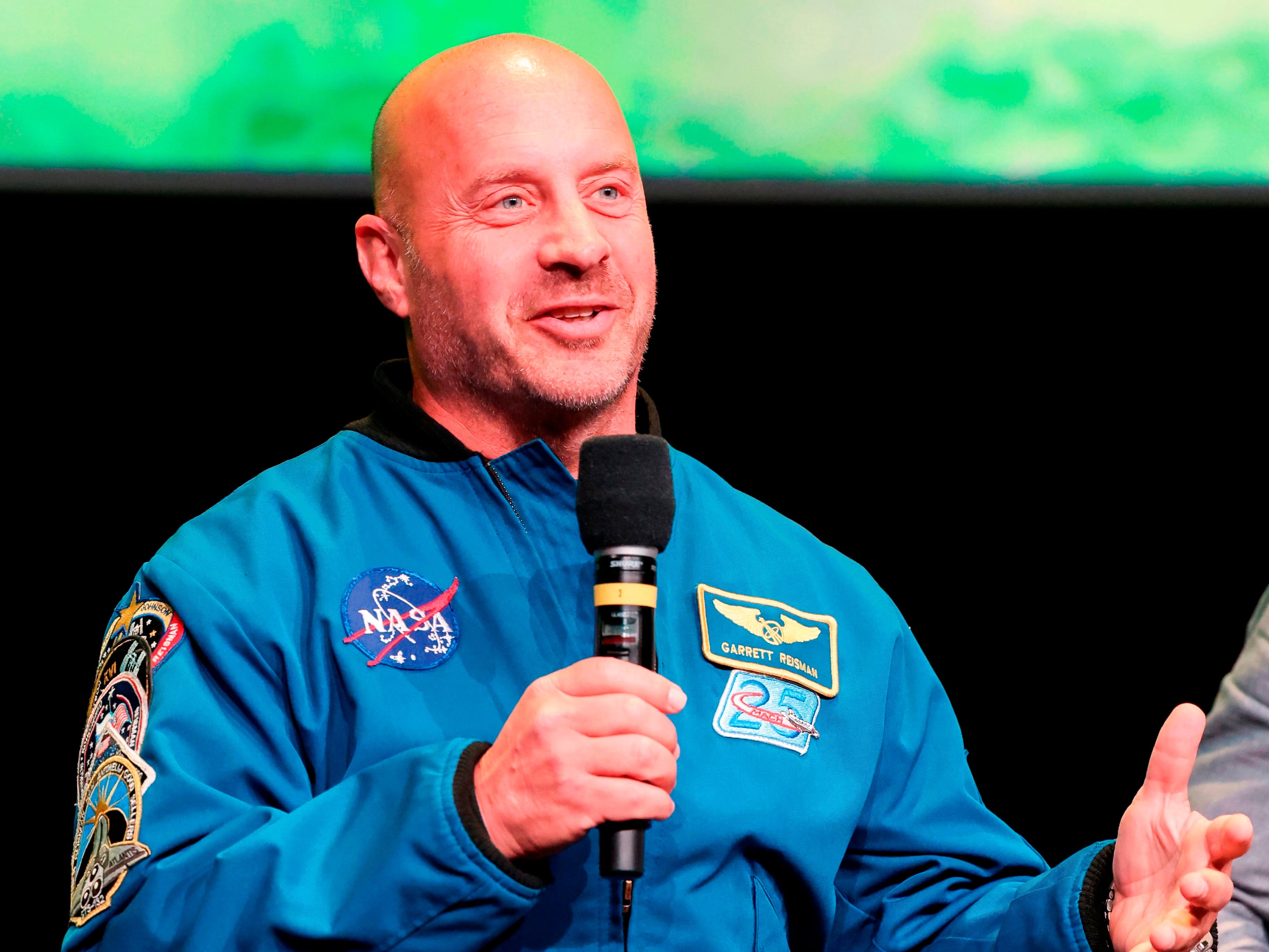
And I marveled as former NASA astronaut Garrett Reisman acknowledged that he didn’t have the classic epiphanies about human unity or our shared environment the first time he saw Earth from space — but only, he realized later, because he already understood everything he needed to understand.
“All the things that we allow to divide us, like race, nationality, gender, religion, politics, all those things — [they’re] nowhere near as important as the fact that we are all fundamentally the same, and we all share the same home, and we all live and breathe the same air from the same atmosphere, and we are all here, and we all have to get along, and there’s nowhere else to go,” he said.
“When I talk to some of my colleagues that say that they had that realization the moment they looked out the window and saw the Earth, I want to ask them, ‘What did you think before you went up there?’” Reisman said, drawing laughs. “Somebody once wrote something, which is that ‘we hold these truths to be self-evident,’ that we are all created equal. That’s the way it’s supposed to be. You shouldn’t have to, in my opinion, strap into a rocket and blast off into outer space to figure that one out.”
The summit didn’t shy away from traditional climate subject matter.
A panel on the new Netflix documentary “The Plastic Detox” offered a terrifying look at the health consequences of microplastics. A discussion about Southern California public transit delved into the kinds of policy details — budgets! permitting rules! tax credits! — that would have fired up legislative aides.
But even when the topics were wonky or scary, the conversations were joyful. Folks were bursting with energy and ideas. They were totally convinced that if they pooled their expertise and creativity, they could tell stories that inspire people to care about the climate crisis and take action.
How much of that optimism was forced or naive? Maybe some.
Most of the formal dialogue ignored the 800-metric-ton gorilla in the room: President Trump’s nonstop attacks on all things good and holy. Between sessions, though, I kept hearing grim chatter about the huge drop-off in philanthropic and corporate funding for climate work, which is tied to the hostile political climate. Everyone felt it.
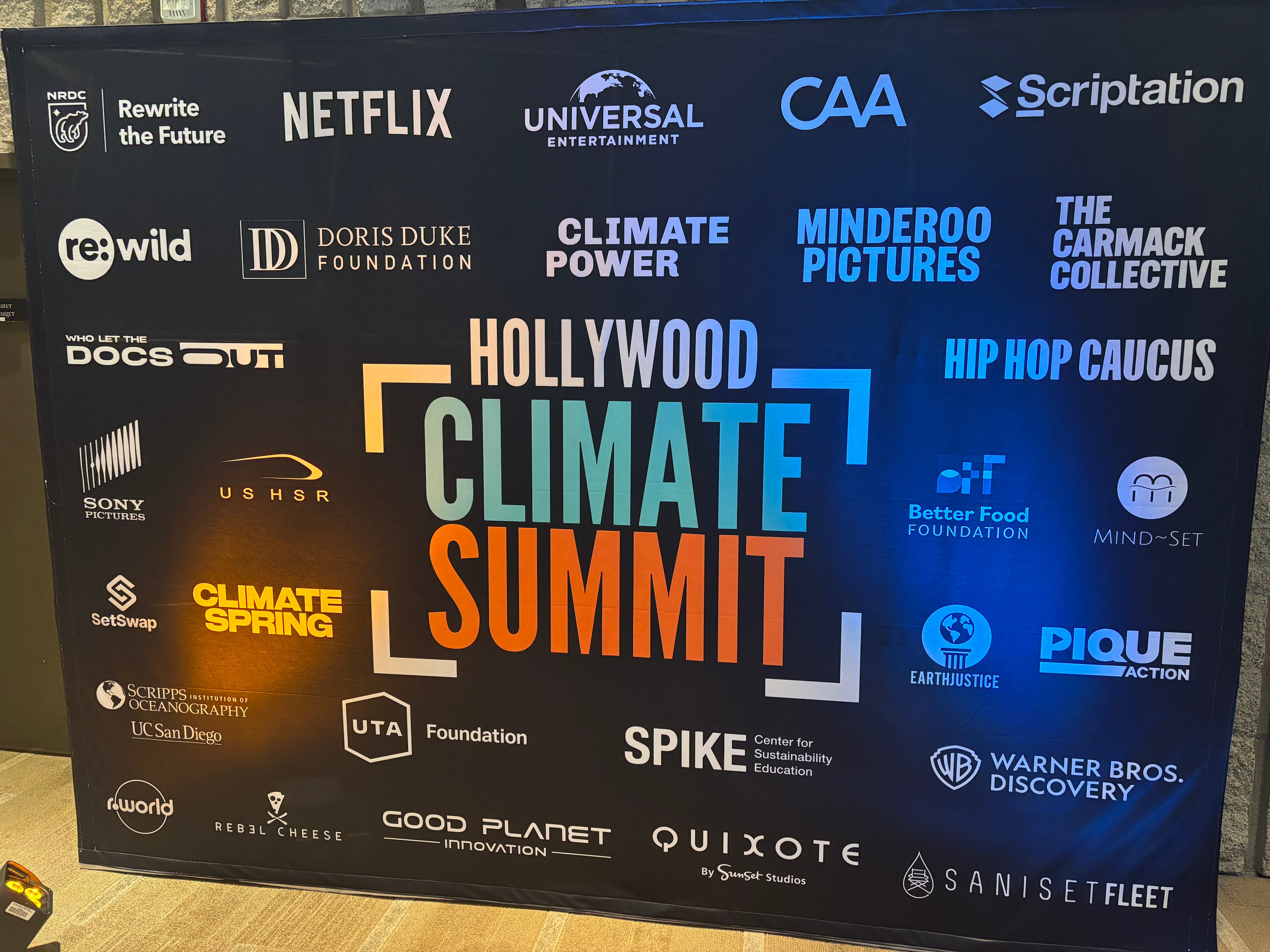
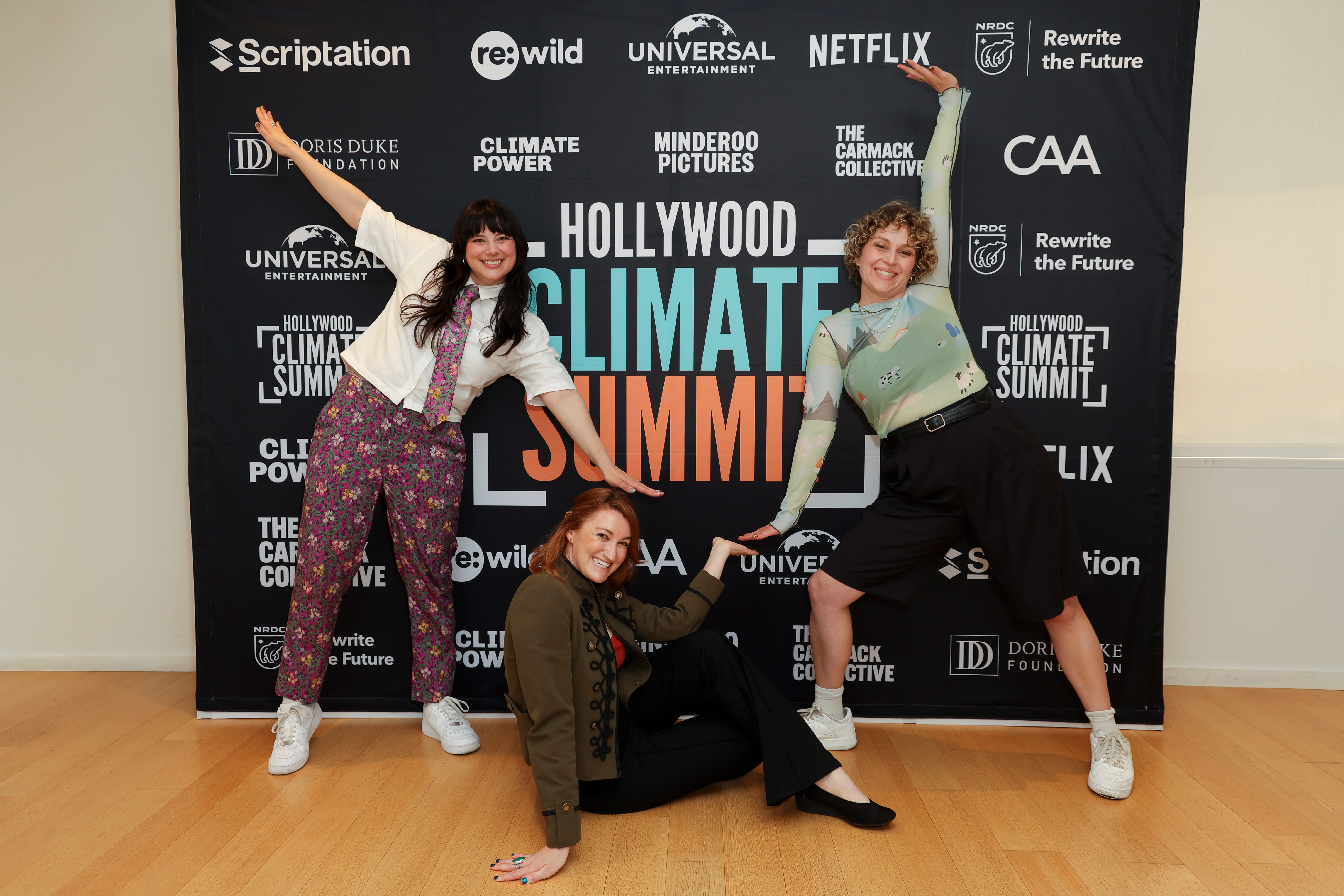
On the bright side, the Hollywood Climate Summit still boasted a robust list of major studio funders, including Netflix, Sony, Universal and Warner Bros. Discovery.
But I couldn’t help notice that Paramount, recently acquired by ultra-wealthy Trump ally Larry Ellison and his family, had dropped its sponsorship. A summit attendee who shall remain nameless also told me they’d learned that Paramount dissolved its “Green Team,” a volunteer group of employees who organized sustainability projects such as community gardening and responsible e-waste disposal.
So there were undercurrents of doubt pulsing beneath the joy.
There were also a few programming choices that struck me as questionable.
There were lots of panels about the benefits of plant-based foods but hardly any about energy and transportation, which collectively produce far more climate pollution than animal agriculture. And as much as I appreciated the organizers’ efforts to shine a harsh spotlight on the meat and dairy industries, the messaging didn’t exactly mesh with one of their other main goals: finding ways to engage with Republican voters.
If we want to tell climate stories that resonate with broader audiences, cheap solar power and cool electric cars are going to resonate with a wider swath of Americans than fake meat. Sorry, it’s true.
But those are minor complaints; like I wrote earlier this week, cynicism is self-defeating. I love the Hollywood Climate Summit because it breaks down barriers between climate and culture — exactly what I’m trying to do with this newsletter.
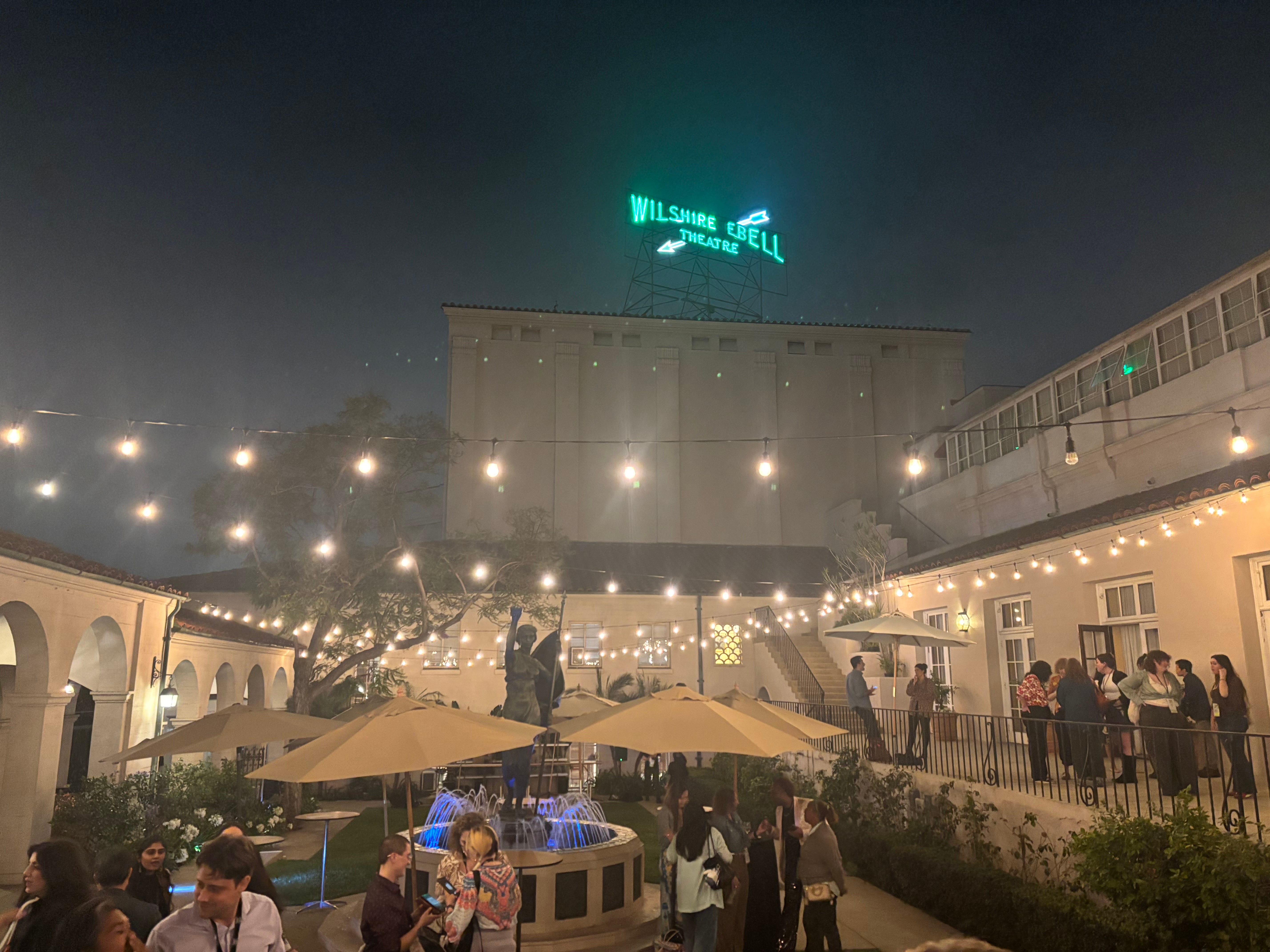
By the end of the second day, drinks were flowing, vegan snacks were circulating and it was hard not to imagine that the connections being formed would lead to shows I’d watch someday on streaming (or perhaps on TikTok).
Also, let’s not overlook the fact that a bunch of climate-tinged movies and TV shows have already been made.
The Sustainable Entertainment Alliance, a consortium backed by the major studios, launched the Green Title Database last month. Ali Weinstein, the group’s director of content and strategic communications — and a co-founder of the Hollywood Climate Summit — described the database as “a first-of-its-kind public collection of over 350 TV episodes, series, and feature films from 2018 through present that feature climate and environmental themes.”
“After years of going from list to list for examples, constantly struggling to come up with new ideas for how to best represent climate stories while persuading others to write or develop or greenlight their own, I am so proud that I had the opportunity helm a solution, especially one that is open for anyone to use, is super customizable, and allows for others to submit the climate titles they’re viewing in their day to day lives,” Weinstein wrote in a LinkedIn post.
I saw Weinstein at the summit. I hadn’t gotten a chance to explore the database yet, and I was curious: Did it include “Landman,” the Paramount+ soap opera starring Billy Bob Thornton as a Texas oilman who can’t stop lying about wind turbines and dumping on climate activists?
Yep, Weinstein told me, “Landman” is in there.
“We wanted it to be a basis for research,” she said. “Everyone has different thoughts on what is good and bad.”
I love that mindset. “Climate” is big, messy and hard to define. It’s counterproductive to draw boundaries around what — or who — is relevant to the conversation.
I’m not talking about breaking bread with oil executives or techno-fascists. But if you think you know everything there is to know about solving climate change, yet you’ve never talked with an Instagram influencer, or an ad copywriter, or a comedian — well, imagine touring the Hollywood Walk of Fame and convincing yourself you’ve seen the entire entertainment industry. You imagination may need a little expanding.
Tackling the climate crisis will require science and policy. It will also require stories across every form of media. And thank goodness, because stories are fun!
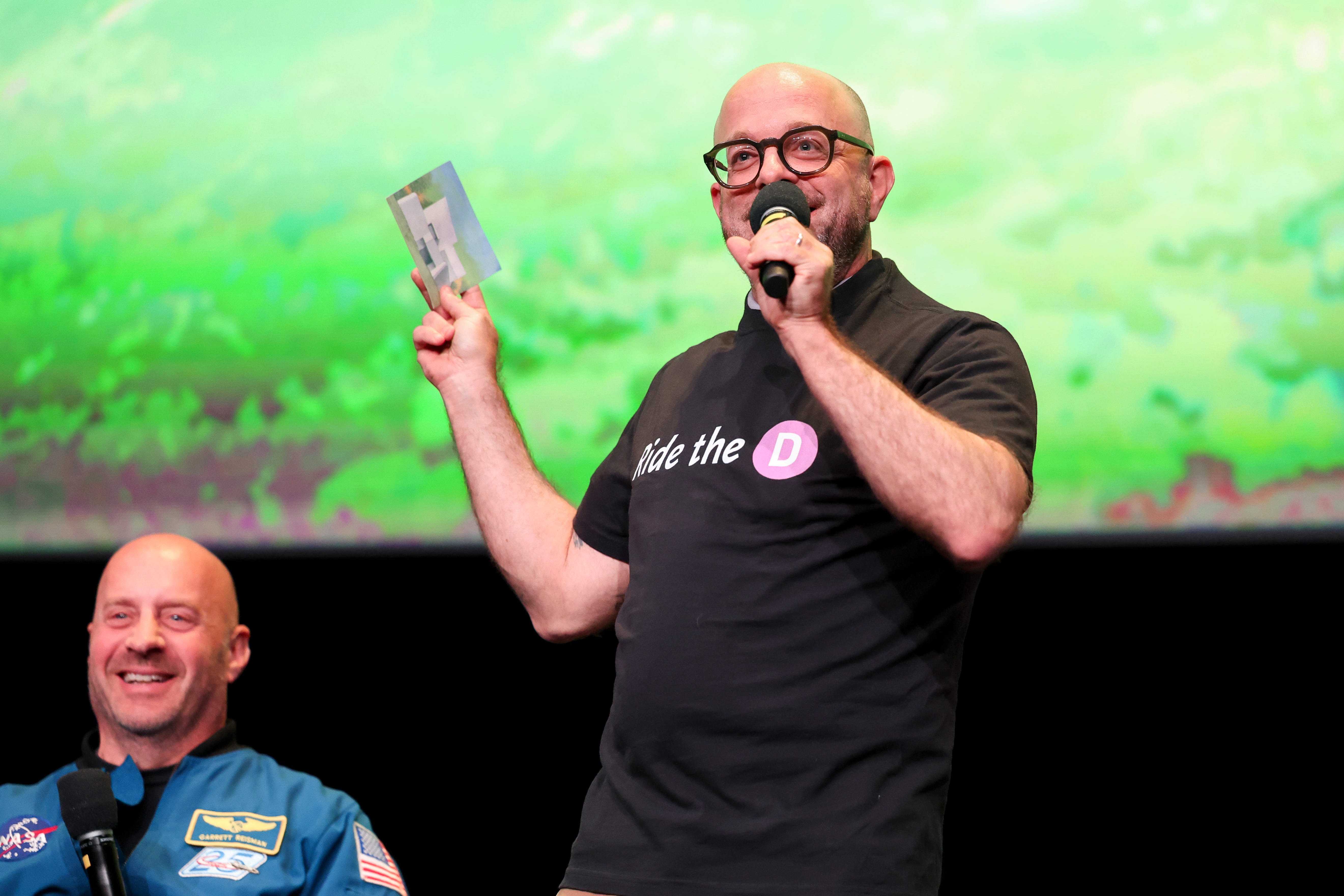
Speaking of, one last story: On Wednesday afternoon, I took a break from the summit and walked to the newly opened Wilshire/La Cienega station on Metro’s D Line. I was inspired by “Star Trek: Strange New Worlds” writer Bill Wolkoff, who had busted out his “Ride the D” T-shirt on stage. You can now get from Union Station to Beverly Hills in 21 minutes.
The new station was easy to navigate and gorgeously decorated. By next year, the train will extend to Westwood. It’s no wonder the D Line extension is changing how many Angelenos map the city in their minds.
If you have a mental map of “climate” — the challenges, the solutions, the key players — it’s worth updating every so often. When I started my career as an energy reporter, I never pictured myself watching comedians argue about the ethics of Taylor Swift’s milk-mustache advertisement. Now it’s a normal part of my job.
If you really commit, your mental map will never stop changing. And that’s OK. You don’t have to try your hand at every kind of climate action, any more than you’d try to watch every movie on Netflix — or every movie in the Green Title Database.
But feel free to wander. You never know where you’ll wind up.
I’ll have more reporting on the Hollywood Climate Summit. For now, see my recent piece on the new documentary “The [Conserv]atives,” which profiles conservative climate activists and was featured at the summit.
I ended up joining the Hollywood Climate Summit virtually but really enjoyed the dairy debate. I've been encouraging sustainability conferences to organize more of these mock debates around contentious or at least interesting issues. It's way more engaging for audiences than the typical panel about how we all need to "innovate" and "collaborate" and "keep fighting." No disrespect to the panelists, but most of you are only speaking to people inside your bubble.
Let’s bring that energy to SEJ — not that it’s among the “dry and exhausting” conferences!