

These athletes refuse to stay silent about global warming
Russell Westbrook is not down with climate hushing.

“Shut up and dribble.” — Laura Ingraham
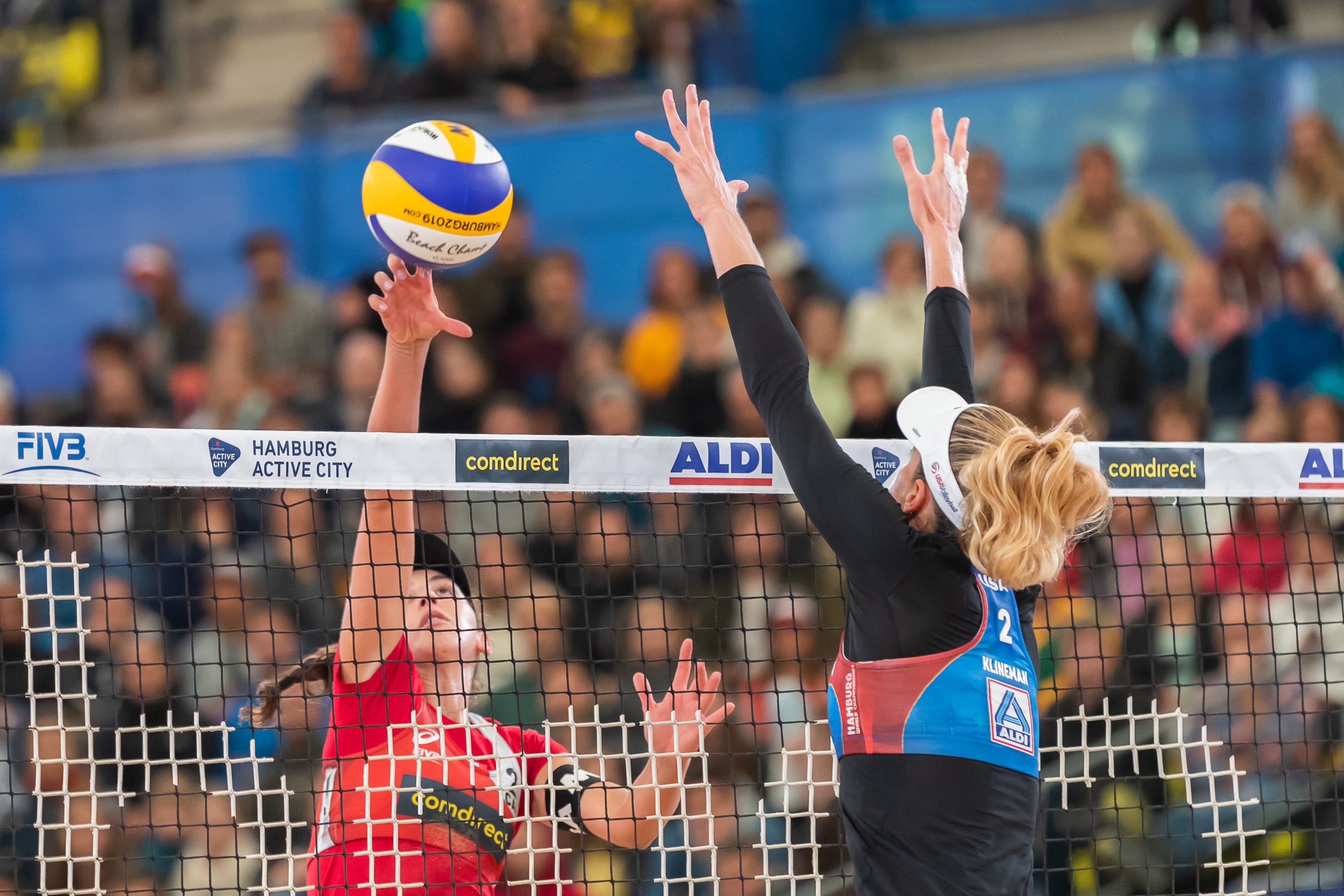

While training for the 2020 Summer Olympics, Melissa Humaña-Paredes decided she couldn’t stay quiet any longer.
Humaña-Paredes is one of the world’s best beach volleyball players; she would eventually win a silver medal for Canada during the 2024 Olympics in Paris. But first, the Southern California resident had to battle through extreme heat at the Tokyo Games, which would go down as the hottest Olympics ever.
Humaña-Paredes and her coaches spent extraordinary amounts of time developing ways to keep her core body temperature down.
“We were making custom ice vests that we could wear in our warm-ups, wear in our time-outs,” she said. “The conversations were no longer about how to maximize performance. It was about, ‘How are we going to stay healthy?’ And, ‘How are we going to avoid heat exhaustion?’”
Humaña-Paredes reached the quarter-finals in Tokyo. The struggle was real.
“We were spending a lot of time and energy on trying to find these solutions, or these band-aids to this problem of the climate crisis,” she told me last week, during a summit hosted by the Los Angeles Cleantech Incubator. “And that’s when I was like, ‘We’ve got to get to the root of the problem.’”
Elite snowboarder Bea Kim has reached a similar conclusion.
Only 19 years old, Kim represented the U.S. at this year’s Winter Olympics in Milan Cortina, a mountainous region marked by melting glaciers; she finished eighth overall in the halfpipe. Her career is just getting started, but she’s a quick study. There aren’t many good training spots for top-tier snowboarders, and they’re growing less reliable as fossil fuel combustion produces warmer, less-snowy winters overall.
Kim recently returned home to Southern California from three weeks in Australia, where conditions were supposed to be perfect for training. Not so much.
“I only ended up snowboarding for a day and a half,” she said. “Saw a lot of kangaroos, but not a lot of snowboarding.”
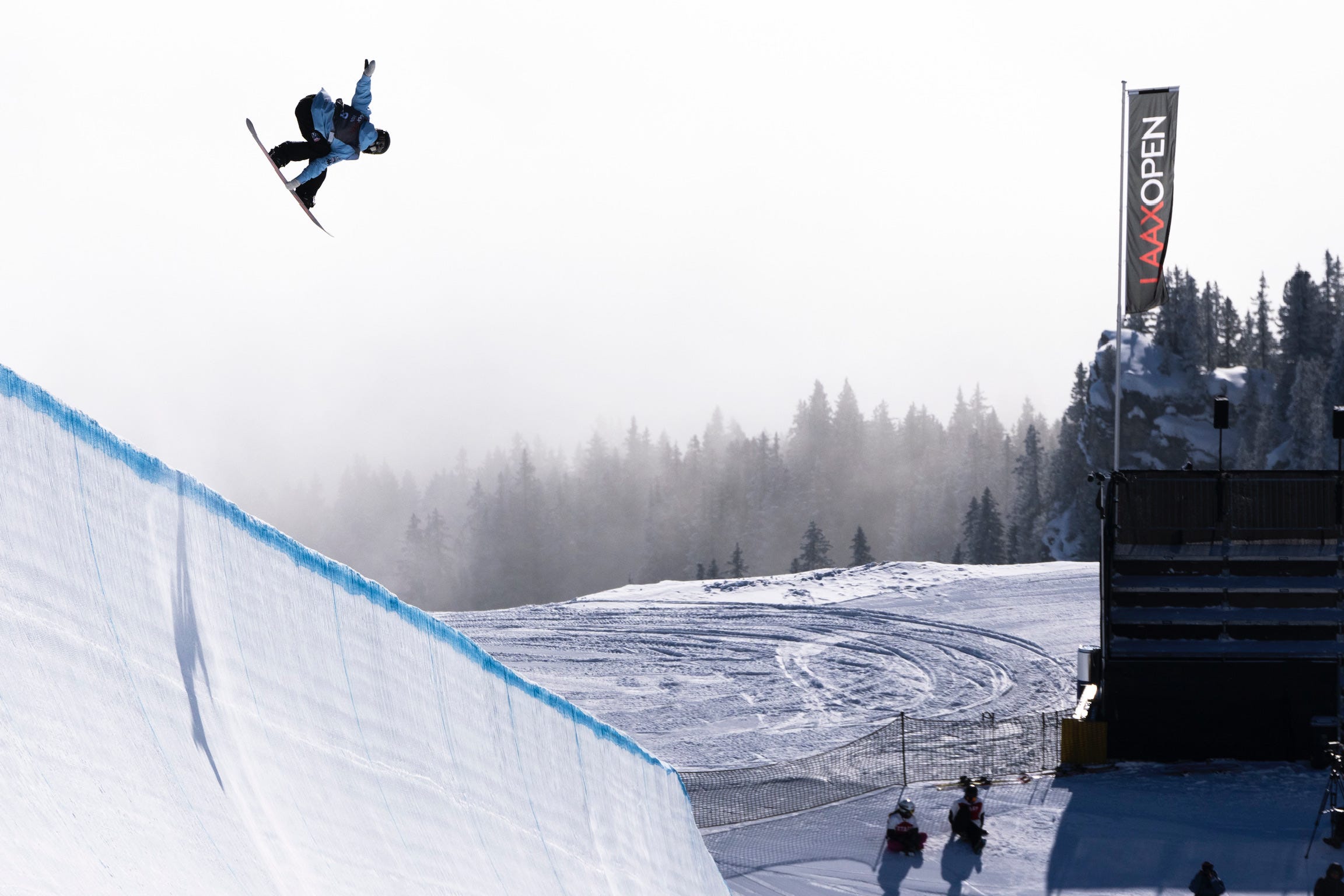
She knows she’ll see winter weather get more extreme throughout her lifetime. But already, she’s heard stories.
“You get to the same places at the same time every year, and so you get to know the locals,” she told me at last week’s summit. “You talk to them and they say, ‘Oh, this has been the craziest winter we’ve ever had, and that’s why we’re not snowboarding, because it’s dumping 10 feet of snow, and it’s shutting the whole town down, and it’s shutting the whole mountain down.’”
At a time when many politicians are going quiet on climate — the “climate hushing” phenomenon — Kim and Humaña-Paredes are sounding the alarm. Instead of playing it safe, they’re playing offense.
To be sure, volleyball and snowboarding aren’t America’s most lucrative sports. When Kim and Humaña-Paredes post on social media about climate action, they have less to lose than, say, an NBA star.
Enter Russell Westbrook, one of the greatest basketball players of the 21st century.
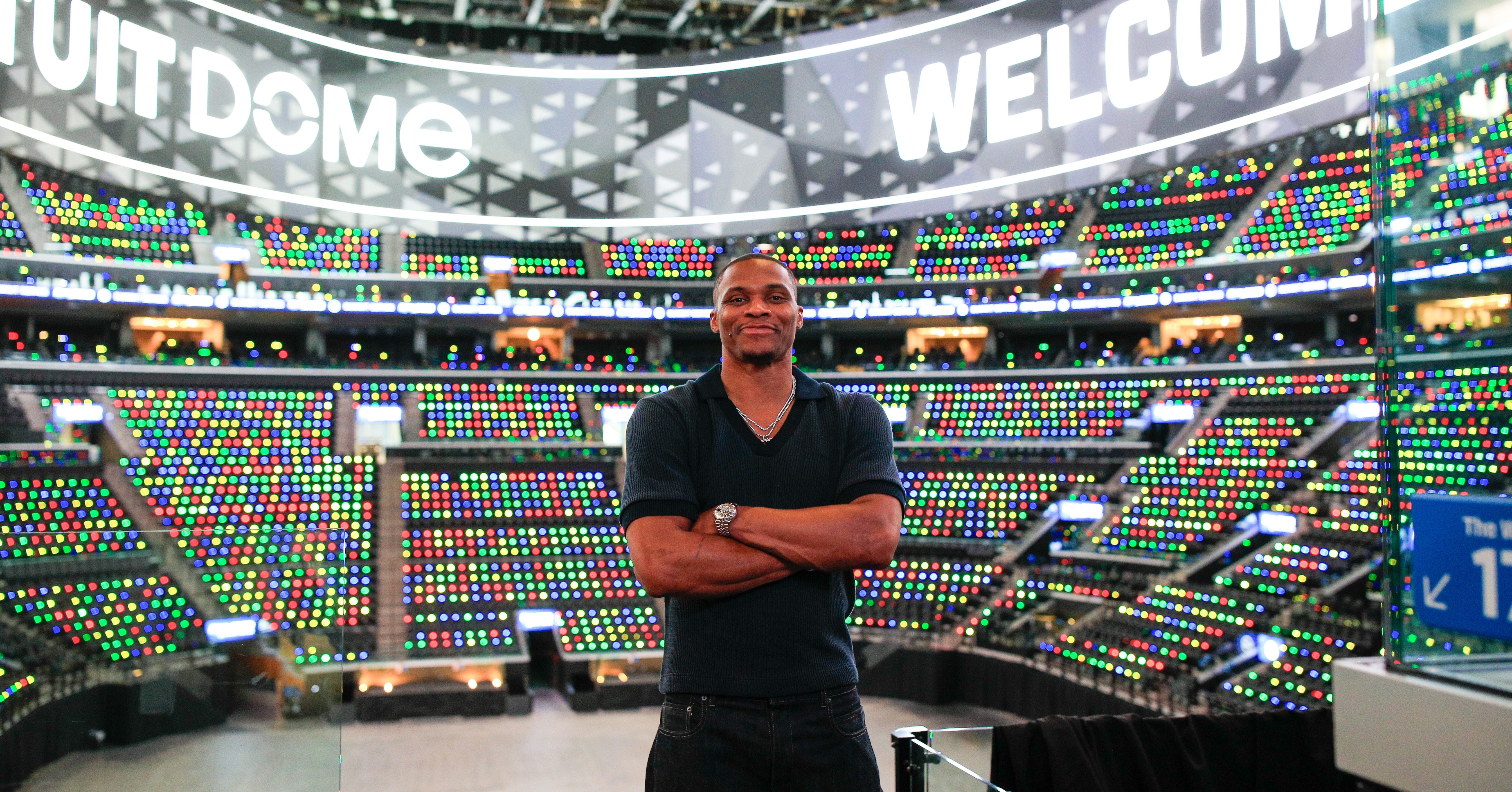
Like Kim and Humaña-Paredes, I talked with Westbrook at the Road to 2028 Summit, a gathering of activists, investors and state and local policymakers at Inglewood’s Intuit Dome, home to the L.A. Clippers. Organizers announced nearly $600 million in new commitments to advance clean air, clean energy and clean transit in the Los Angeles area, exactly two years ahead of the 2028 Summer Olympics.
Westbrook — who previously played for the Clippers and Lakers and is now a free agent after a stint with the Sacramento Kings — was the summit’s co-chair. He served as one of the opening speakers, explaining how important it is for kids in his L.A. County hometown, Hawthorne, to be able to breathe cleaner air. He stated plainly that all environmental issues are important to him — climate included.
After Westbrook left the stage, I chatted with him while looking out over the court — a real thrill for me, since I watched him play for UCLA when we were both teenagers. He told me he grew up taking the bus, and he remembers not having shade structures at bus stops. Now he understands better the connections between climate, heat, lack of shade and poor air quality — issues he’s looking to address through his foundation.
“You can focus on all of them,” he told me.
One way Westbrook is cleaning up the air: driving an electric vehicle. He has two cars, but he prefers his Porsche Taycan EV. He drives his gas car so rarely, actually, that he once forgot to fill the tank and ran out of fuel.
“I hadn’t stopped at a gas station in so long,” he said with a laugh.
Most pro athletes don’t moonlight as climate advocates. But in many ways, they’re perfect for the job.
“When they speak about climate change, they are not commenting on an abstract political issue; they are describing changes they are already experiencing,” British social scientists Sam Hampton and Steve Westlake wrote last week. “And the strong emotional connection between fans and athletes makes them powerful messengers.”
In an essay summarizing their research, they acknowledged that athletes “are often seen as unlikely climate advocates, because most elite sport depends on frequent flying, commercial sponsorship and resource-intensive events.”
At the same, “people with lived experience can become trusted and effective communicators. Sport stars are no exception,” they wrote.
Intuitively, it makes perfect sense. But it only works if fans are receptive.
Hampton and Westlake offered some advice for athletes, pointing to research finding that people “respond better to advocates who are open about the tensions they face than those who present themselves as flawless.”
That’s been Humaña-Paredes’ approach. And fans have rewarded her.
“We can’t preach perfectionism. We have to be imperfect advocates,” she said. “I’m very open about how much I travel. I track all of my kilometers that I travel on airplanes to competitions throughout the year. I translate that into a carbon emission amount, and I donate that amount to vetted climate charities every season. And I share the stats with people.”
“Sometimes I do get called a hypocrite still,” she added. “But more often than not, the conversations that I engage in, the responses that I get, are overwhelmingly positive. And people just want to help, and they just want to learn. And a lot of times when I’m at a tournament, people come up to me and they thank me for speaking about it.”
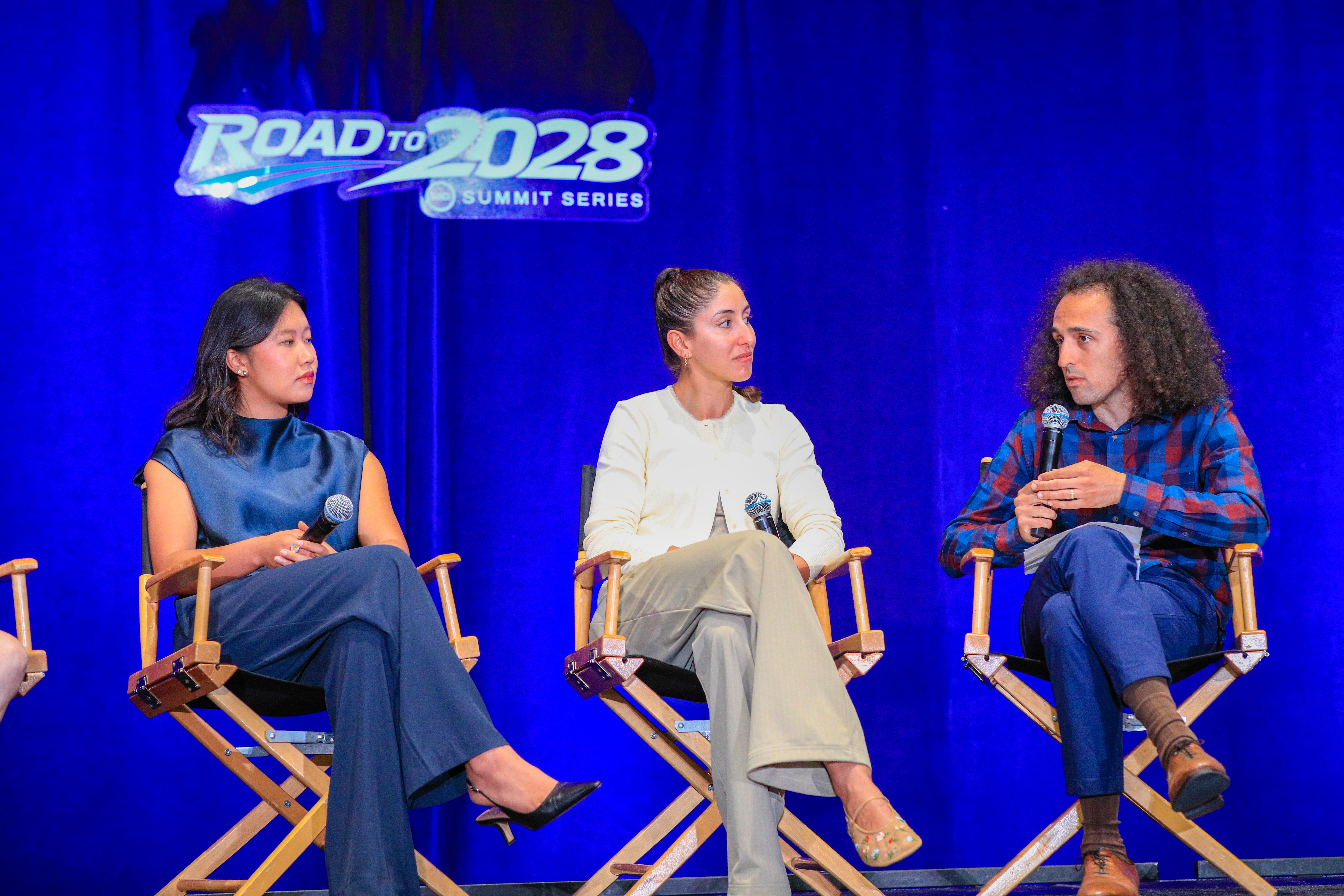
Kim, too, said she’s faced hardly any blowback, even as she’s spoken at the United Nations and visited Capitol Hill in collaboration with the group Protect Our Winters. She knows climate change is politicized, and why many pro athletes stay away. But it doesn’t worry her.
“A lot of athletes are just there to play their sport and perform,” she said. “But climate change is a human issue. It doesn’t matter where you are in the world, what you do for your job, what your background is — climate change affects everybody. We as athletes have fallen onto this platform, and it feels wrong to not say anything.”
“A lot of people do want change,” she added. “They’re just are scared to speak up.”
She’s right: Studies show that the vast majority of Americans want government to take stronger climate action. But most people massively underestimate how many of their fellow citizens feel the same way. There’s a “perception gap” on climate, and the result is climate hushing. Silence only works when everyone else is doing it.
So I’m grateful to Kim, Humaña-Paredes and Westbrook — and other athletes doing similar advocacy — for refusing to stay silent. I admire their bravery and leadership. They’re setting an amazing example for politicians and newsrooms, and for everyone else not telling nearly as many climate stories as they should be.
People know global warming is happening. They feel it every day. They need to be assured they’re not alone.
Watch the video: Olympic athletes talk climate
If you’re interested, here’s the full video of my panel, which also features climate scientist Kaitlyn Trudeau from the nonprofit Climate Central:
Two upcoming events: Wildfires and climate, and the Colorado River
This Thursday, 7/23 at 9 a.m. PT, I’m moderating a Zoom conversation about wildfire, climate change and media coverage. The event is being hosted by Covering Climate Now and is geared toward journalists covering wildfires and related stories. But everyone is welcome to join. You can register here if interested.
We have three great panelists lined up: Zachary Labe, a climate scientist at Climate Central; Kylie Mohr, a correspondent and contributing editor at High Country News; and Max Boykoff, an environmental studies professor at the University of Colorado Boulder. If you can’t make it, that’s OK — I’ll send out the video afterward.
Also, a quick reminder that next week, on Tuesday, 7/28 at 4 p.m. PT, I’m leading a conversation with Utah-based environmental journalist Zak Podmore about his prescient book, “Life After Dead Pool: Lake Powell’s Last Days and the Rebirth of the Colorado River.” The Trump administration is slated to release a highly anticipated water shortage plan for the Colorado River any day now. You can register for the Zoom here.
If you can’t join Zak and me next week, I’ll send out the video afterward, but only to Climate-Colored Goggles paid subscribers. You can subscribe here!
Powerful related piece in today's Cycling Weekly, anonymously quoting a pro cyclist who choose not to go on the record about these very same issues, even as the Tour de France continues in the wake of sweltering temps. https://tinyurl.com/yakj2nee