


Few things worry me more than the Supreme Court.
This week, the conservative majority struck another blow against the Voting Rights Act. The week before last, we learned via the New York Times that Chief Justice John Roberts was so eager to stop President Obama’s clean energy regulations in 2016 that he broke with long-established precedent and created a “shadow docket.” Sometimes I wonder how we’ll ever make climate progress with such a regressive court.
But after chatting with three climate law experts as part of a special panel for Climate-Colored Goggles — video above for paid subscribers! — I feel a bit more optimistic.
Don’t get me wrong: There’s a lot to worry about.
This fall, the justices will hear a landmark oil and gas industry accountability lawsuit brought by the city and county of Boulder, Colorado. It’s one of about 30 similar cases filed by local governments against fossil fuel companies, typically seeking damages for climate disasters. Exxon Mobil and Suncor argue that Boulder’s claims are preempted by federal law. If the justices agree, the state court suits would come to an end.
Also bad: Depending on how it’s written, a ruling for the oil companies might nullify “climate superfund” laws in New York and Vermont designed to force polluters to pay for climate damages. In California, a newly elected governor hoping to pass such a law would be stopped in their tracks.
“The argument would be that state law can’t address this issue at all, that it’s really a matter of federal law,” said Michael Gerrard, founder of Columbia University’s Sabin Center for Climate Change Law.
The Trump administration could also ask the Supreme Court to revisit a crucial 2007 decision, Massachusetts v. EPA, that allowed the federal government to regulate heat-trapping greenhouse gases under the Clean Air Act.
Already, Trump’s EPA has repealed the “endangerment finding,” thereby declaring that greenhouse gases don’t endanger public health and welfare. (Fact check: False.) But if SCOTUS were to overturn Massachusetts v. EPA, it would be much harder for future presidents to change course and regulate emissions.
“Although overturning a precedent is always a dicey thing for the court to do, it is possible,” said Ann Carlson, founding director of UCLA Law’s Emmett Institute on Climate Change and the Environment. “I think that’s exactly what the administrator of the EPA is trying to accomplish.”
One legal drama I’m kicking myself for not asking my panelists about: the question of whether cities and counties can ban gas appliances in new homes and businesses.
A federal appeals court struck down Berkeley’s pioneering gas ban in 2023. But since then, lower courts in other parts of the country have ruled differently, upholding local policies requiring or incentivizing all-electric buildings. If the issue were to reach the Supreme Court, how might the justices rule?
Impossible to know for sure. But it’s hard to think climate will be top of mind.
Reading through the 2016 “shadow docket” memos — which were leaked to the New York Times, prompting me to convene the expert panel — it’s alarming to realize that the none of the justices, even the liberals, said anything about climate before voting to issue an emergency order blocking Obama’s Clean Power Plan.
That didn’t stop the conservative justices from justifying their decision by citing the alleged costs the utility industry would be forced to incur phasing out coal. Roberts in particular sounded alarmed, calling Obama’s plan “the most expensive regulation ever imposed on the power sector,” with costs “estimated to run as high as ~$480 billion.”
In a footnote, Roberts acknowledged that this cost estimate was “likely at the high end,” considering that it came from report commissioned by regulated industries — including coal. Still, he justified his use of the (outdated!) estimate by citing a White House statement that federal officials hoped to drive an “aggressive transformation” in the energy industry — a quote he found in a Washington Post article.
That wasn’t the only time Roberts let news coverage sway his decision-making.
In his initial memo to his fellow justices, he quoted an interview that EPA chief Gina McCarthy did with with the BBC, in which she suggested that early steps toward the Clean Power Plan’s implementation would make it more difficult for future presidents to revive the coal industry. Her comments must have really bothered Roberts, because he quoted them at even greater length in a second memo, insisting the EPA was trying to undermine the judicial branch — a claim that made little sense to Carlson.
Roberts sounded like he had “just read the newspaper and got pissed off,” she said.
“It just reeks of irresponsibility to me,” she added.
Joanne Spalding, the Sierra Club’s legal director, made another good point about the chief justice’s focus on McCarthy’s public comments.
“I just find it interesting that he was so focused on that, when he has subsequently declined to look at comments of President Trump in cases where [Trump] has much more explicit posts on social media,” Spalding said.
The Sierra Club was one of the groups litigating the Clean Power Plan case back in 2016, intervening on the EPA’s behalf to defend the clean energy rules. Spalding said she and her colleagues believed they might be able to win Roberts’ vote.
Now that she’s seen the memos?
“We were completely delusional,” she said.
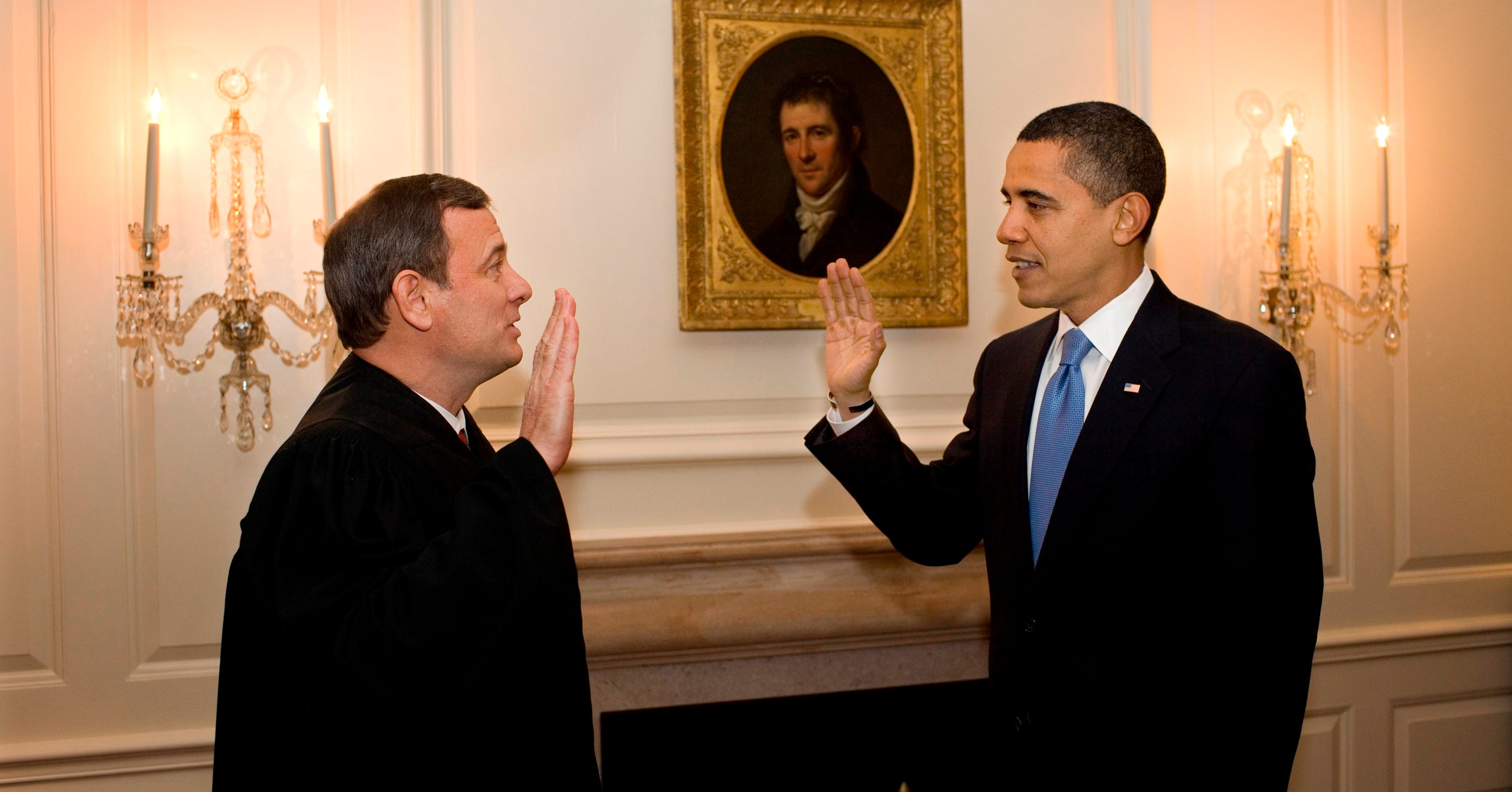
To me, that’s the biggest takeaway from the shadow docket memos: John Roberts is a bigger adversary to climate regulation than anyone understood.
So how the hell did the experts leave me feeling optimistic?
Mainly by emphasizing how much we can still accomplish through local government — where most decisions will never go to the Supreme Court.
Spalding talked about the Sierra Club’s Beyond Coal campaign, which helped force the retirement of more coal-fired power plants during Trump’s first term than during Obama’s second term (or President Biden’s only term). That success stemmed in part from an intense focus on state-level public utility commissions.
Spalding also mentioned last month’s elections for the board of Arizona’s Salt River Project, which saw the Sierra Club help elect a slate of clean energy candidates to run the powerful electric utility — despite brushing up against fierce opposition from the late Charlie Kirk’s Turning Point USA.
“At the state level, there’s so many things we can do,” Spalding said.
One state that could use help? New York, previously a climate stalwart but starting to move backward under Democratic Governor Kathy Hochul.
“The state legislature and the governor are haggling over whether to weaken the state climate law. It looks like they probably will,” Gerrard said. “New York’s strong climate law was enacted because of citizen activism. We need more citizen activism.”
Carlson shared several intriguing ideas for climate action.
For one thing, California could use its “extraordinary power” under federal law to issue stricter regulations on conventional air pollution from gas-powered vehicles — regulations that are needed to clean up the noxious air being breathed by Angelenos and Central Valley residents. Basically, the state could require a transition to electric vehicles without having to worry about federal interference on climate.
She also had two suggestions for Congress — assuming Democrats take control of the House and Senate in 2026 and win the White House in 2028, still a big “if.”
First, Democrats could amend the Clean Air Act to clarify that it covers greenhouse gases, eliminating the potential for courtroom challenges. Second, they could pursue deeper reforms to the Supreme Court, such as adding a mandatory retirement age for justices, or increasing the number of justices.
Controversial? Absolutely. But to Carlson, worth considering.
“There are a lot of things that could be done,” she said. “Whether Congress has the will to do them is a whole different question.”
As usual, the fate of American democracy — and our planet’s climate — will probably hinge on elections. At the moment, that gives me hope.


.jpg)
