

Death in the Desert, Part 2: The Hollow of God's Hand
As Lake Mead drops and the Colorado River shrinks, one of the American West's biggest water users stands accused of murder.

“Go as far as you dare in the heart of a lonely land, you cannot go so far that life and death are not before you.” — Mary Austin, “The Land of Little Rain”
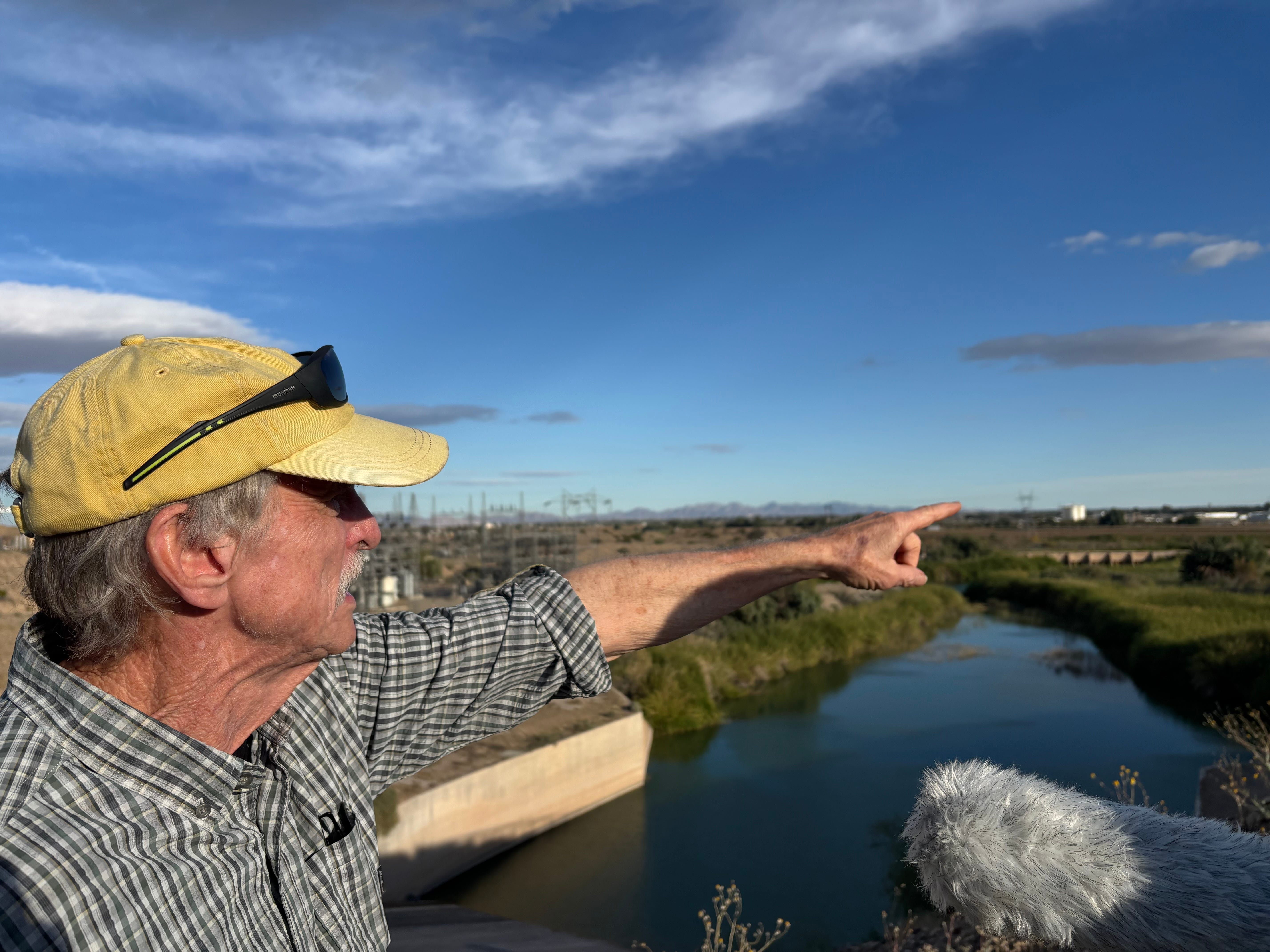
The past never dies in California’s Imperial Valley.
As I drove east last week along Interstate 8, a desolate desert highway straddling the U.S.-Mexico border, my tour guide Brian McNeece pointed ahead toward Pilot Knob, a small volcanic peak. He asked if I could see the light gray area partway up the peak, where the rock was terraced. He told me it was a quarry. In 1905, the Colorado River’s torrential flow tore through a flimsy irrigation canal, flooding the Imperial Valley and creating the Salton Sea. Rocks were needed to dam the raging river and protect towns and farms. An emergency quarry was set up at Pilot Knob.
The rocks did the job, eventually. Crisis averted.
“It took, in the end, seven attempts to close the gap in the river,” McNeece said.
One hundred twenty years later, the Salton Sea persists. So do the fifth-generation farmers whose ancestors settled the Imperial Valley, and the nearly half-million acres they continue to irrigate with Rocky Mountain snowmelt, using more Colorado River water than the headwater state of Colorado. McNeece, a retired English professor and amateur local historian, was eager to show me the dilapidated structures where water was first diverted in the early 1900s.
But for a place stuck in time, Imperial can’t avoid grappling with the fierce urgency of now: Rising temperatures. Climate-fueled megadrought. Corporations hungry to build solar farms, lithium mines and data centers.
Recent months have proven especially nerve-wracking as farmers face the likelihood of water cutbacks amid perilously low reservoir levels at Lake Mead — an emergency brought about by global warming, and arguably by 120 years of overconsumption.
“This is the crisis time for the Imperial Valley in very many ways,” McNeece told me, as we watched the sun set from Imperial Dam near Yuma.
Even if the past never dies, people do. And amid the tectonic shifts in California’s far southeastern corner, a killing has rocked the valley.
When I last wrote about 59-year-old Kerri Abatti’s tragic slaying, her husband Mike Abatti — a prominent farmer and former elected official, whom I spent years covering for the Desert Sun newspaper — hadn’t been named as a suspect. That changed in late December, when he was arrested and charged with first-degree murder.

Kerri and Mike had been going through contentious divorce proceedings. Police say she was shot at a home they owned in Pinetop, Arizona, with the shot fired through a window from the backyard. The story is eerily similar to the death of Mike’s maternal grandmother Gertrude Studer, who was shot and killed by Mike’s grandfather John at their Imperial Valley home in 1950. Gertrude, too, had filed for divorce amid “marital difficulties,” according to the Calexico Chronicle.
Before Mike was arrested and charged, I often wondered if he was above the law. In a kingdom of farm barons, he was practically royalty, owning thousands of acres that in 2012 accounted for roughly 1% of the valley’s entire water use. He served on the board of the powerful Imperial Irrigation District. He never faced legal consequences for the allegedly corrupt power supply deals he struck with IID after leaving the board, which cost the public tens of millions of dollars.
As Imperial Valley Press editor Arturo Bojórquez wrote recently, Abatti “personified the kind of regional power that feels untouchable.”
More than anything, Abatti wielded his power to try to win the water wars that have defined Imperial’s modern history.
At times, his wife helped him.
In October 2013, shortly before Mike sued IID over a policy that could limit his water use during drought years, Kerri read a letter on his behalf at an IID board meeting. He was out of town attending a funeral. She put on her glasses; her delivery was halting at times, but confident. She explained why the proposal was unfair.
Later in the meeting, another commenter urged the board not to be swayed by “a few people that have been suing the IID to get their ways” — a reference to Mike, who had already sued over a previous version of the water conservation plan.
Kerri returned to the lectern. This time she spoke off the cuff, growing angry.
“We have three children who we are hoping can continue to farm here in the valley, and be productive citizens so that other people can have jobs,” she said. “As a family, we have fought tirelessly for the good of the valley.”
“And that lawsuit that you’re referring to is because we want those water rights for the entire valley, and we want the water to stay in the valley for all of the people, not just for ourselves,” she added. “Why would I do that with my children’s college fund, or wherever that else would come from? It’s for the entire valley.”
After glaring fiercely at the offending commenter, she stormed off.
The lawsuit Mike filed the next month — one of many water-rights battles he and his brother Jimmy and their father Ben Sr. have waged against IID — would end in failure when the U.S. Supreme Court declined to hear the case.
But Mike did win a surprising first-round victory thanks to a local judge with ties to his family. As I reported for the Desert Sun, Judge L. Brooks Anderholt had done work for Jimmy’s farming business before his election to the bench. Much earlier in his life, he had worked as an irrigation foreman for Ben Sr. In 2012, when he was campaigning for office, he received contributions from both of their businesses.
Despite that history, Anderholt didn’t recuse himself from Mike Abatti’s lawsuit. And in a decision that toppled a century of precedent, he essentially ruled that farmers, not the public, controlled the largest water rights on the Colorado River.
If Anderholt’s decision had stood, Mike and his allies would have had a powerful new legal tool to try to block IID from joining agreements to leave water in Lake Mead and prevent shortages across the West. Fortunately, the ruling was reversed on appeal.
But like I said: The past never dies. Mike and Kerri’s children now find themselves in probate court, dealing with the transfer of their mother’s estate to her rightful heirs — not an easy task given that their father stands accused of murdering her.
The judge assigned to the probate case? Anderholt.
I wanted to review the probate filings, as well as certain public records only available in El Centro, the county seat. To get there, I drove through the Cuyamaca Mountains from San Diego, where I was attending a solar industry conference last week. I woke up early, hopping on I-80 and heading east through light rain. I crested Tecate Divide at 4,140 feet and started my descent.
Soon the sky cleared. By the time I reached the wind turbines on the desert floor, 39 degrees had become a sunny 64. The trip took two hours.
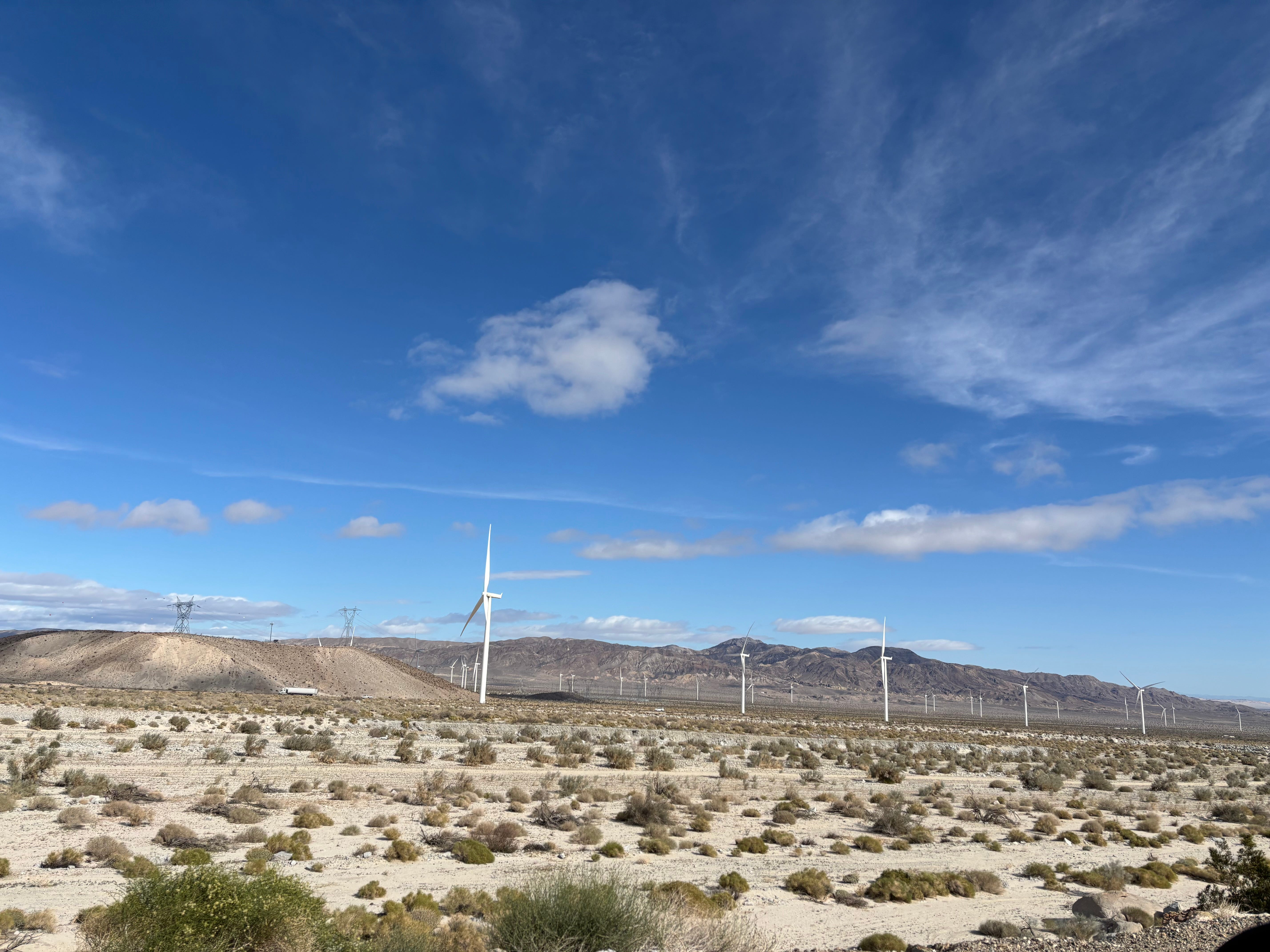
The journey from coast to desert wasn’t always so easy. In his best-selling 1911 novel “The Winning of Barbara Worth,” Harold Bell Wright took great pains to describe the arduous trip to a lightly fictionalized version of Imperial — in his telling, a beautiful but unforgiving land known as the Hollow of God’s Hand. The multiday horseback ride could turn deadly if travelers hit a sandstorm or ran short on water.
Here’s how Bell described the moment the desert came into view:
“From horizon to horizon, so far that the eye ached in the effort to comprehend it, there was no cloud to cast a shadow, and the deep sky poured its resistless flood of light upon the vast dun plain with savage fury, as if to beat into helplessness any living creature that might chance to be caught thereon.”
Denizens of today’s Imperial Valley are far from helpless: They use more Colorado River water than the rest of California combined, growing most of America’s winter vegetables. They’ve conquered the desert.
And still they’re vulnerable.
Lake Mead is two-thirds empty; a few hundred miles upstream, Lake Powell is even emptier. Federal officials are considering massive water cuts that would target cities and farmers in the Colorado River’s Lower Basin, including California. And although the river is drier than ever, the threat to Imperial isn’t new: Since the turn of the 21st century, farmers have faced intense pressure to sell water to growing cities.
So perhaps it’s no surprise that Mike Abatti has worked zealously — obsessively — to protect his water supplies. A century ago, the Hollow of God’s Hand was nearly laid to waste by flood; now it’s drought standing in for the devil.
Abatti, meanwhile, is an alfalfa farmer in the drying West, clinging desperately to the past and lashing out at anyone who tries to stop him. Even his own family.
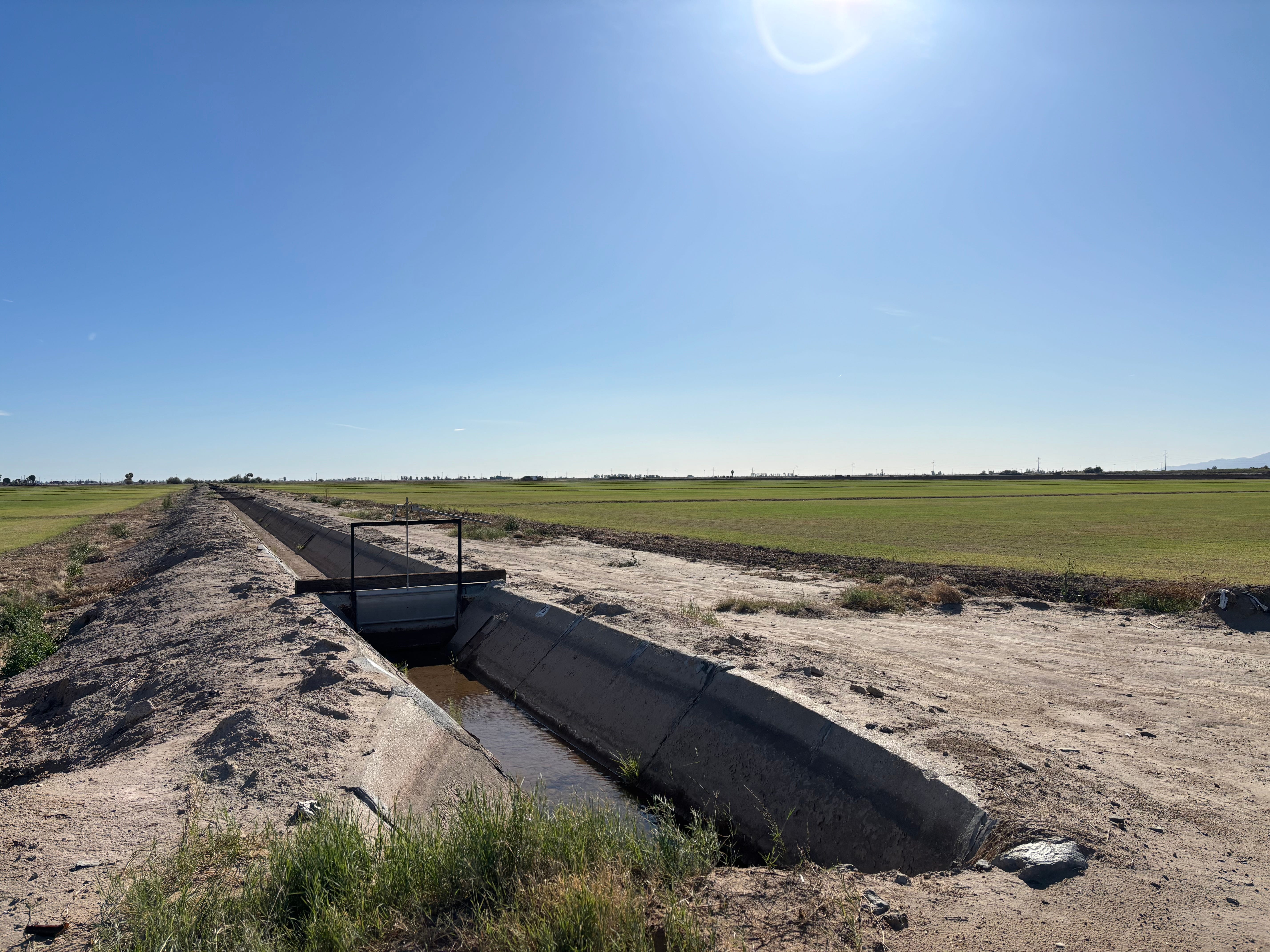
After leaving El Centro, I drove to Holtville, the small town where Mike grew up and the self-proclaimed “Carrot Capital of the World.” I had a meeting with Mike’s cousin Wally Leimgruber, a former county supervisor and opponent of Mike’s efforts to wrest control of the water from the public — a fight Leimgruber has embraced even though it’s pitted him against his own brother Ronnie.
Leimgruber had some papers for me — including a nasty email Mike sent him in 2019, at which point Leimgruber was consulting for IID. Mike was not pleased.
“Go find another job,” Mike told his cousin. “Start at Lego Land. Its a happy place.”
Leimgruber also shared a 2018 social media post by Mike’s sister-in-law Judy Abatti, the wife of his brother Ben Jr. It’s well-known in Imperial that Mike and Ben Jr. aren’t on good terms — a fact that was easy to discern from Judy’s post, which shared a story I had written about Mike, their other brother Jimmy and their father Ben Sr.
“These people are just greedy and ruthless and ridiculous,” Judy wrote.
Leimgruber agreed. He described Mike Abatti as “good guy” when he was younger — a wrestling coach in Holtville, a guy “just like any other young farmer.”
But over time, Mike grew obsessed with controlling the water. His three children left Imperial. Kerri left him, moving to their home in Arizona and filing for divorce. They fought over spousal support. After he was charged with murder, statements from their daughters were read in court, sharing their fears that “they [were] going to be harmed” if Mike were released on bail, as a prosecutor put it.
Asked why Mike had changed, Leimgruber mostly blamed greed.
“Truly, [it’s] the love of money that’s the root of all evil,” he said.
Indeed, for all the noble rhetoric — like Kerri insisting, “we have fought tirelessly for the good of the valley” — Mike’s priorities are unmistakably selfish. Back in 2015, he was willing to settle his lawsuit against IID so long as the agency promised to supply him, Jimmy and their father with “the water they reasonably need.” All other farmers would be hung out to dry.
IID refused to settle. Mike lost in court. But he kept on agitating. In August 2023 — nine days before Kerri left him — he and Jimmy wrote a letter to the U.S. Bureau of Reclamation urging the agency to consider decommissioning Glen Canyon Dam and draining Lake Powell. No, Mike hadn’t suddenly become a conservationist committed to restoring Glen Canyon to its past glory. Rather, he was worried that efforts to keep Powell from crashing would lead federal officials to release less water downstream to Mead — potentially limiting water availability in Imperial.
These days, Mike has bigger problems. Two decades after he won election to the IID board — and nine years after Anderholt ruled decisively in his favor — this is how his address appears on a document I downloaded in El Centro:
H Pod, Cell 5
100 Code Talkers Drive
Holbrook, AZ 86025
For the record, that’s a jail cell in rural Arizona. Abatti is being held on a $5.5-million bond. His lawyers say he’s suffering from liver failure.
Should he ever again walk free, he may find himself returning to an Imperial whose hallowed past has given way to a grudging present. After years of relentless pressure to reduce water use, many farmers are choosing to cut back incrementally instead of fighting for every last drop. IID has shed its reputation as a problem child in Western water talks; the agency’s vice chair, JB Hamby, is now California’s lead Colorado River negotiator. Abatti’s lawsuits have failed to halt progress.
It’s not clear how long the good times will last. Mead and Powell keep dropping, and the seven Colorado River states can’t seem to decide how to keep them from crashing — in other words, which states should cut back how much.
If the feds brings the hammer down on California — or if it starts to look like Mead could hit “dead pool,” cutting off Imperial’s water supply entirely — the farm barons might stop playing nice. Some of them already think Abatti was right all along.
Will Imperial keep inching toward the future, or revert to the past? A lot is riding on Hamby, a 29-year-old political wunderkind who was elected to the IID board at age 24 after annihilating Abatti’s friend Bruce Kuhn.
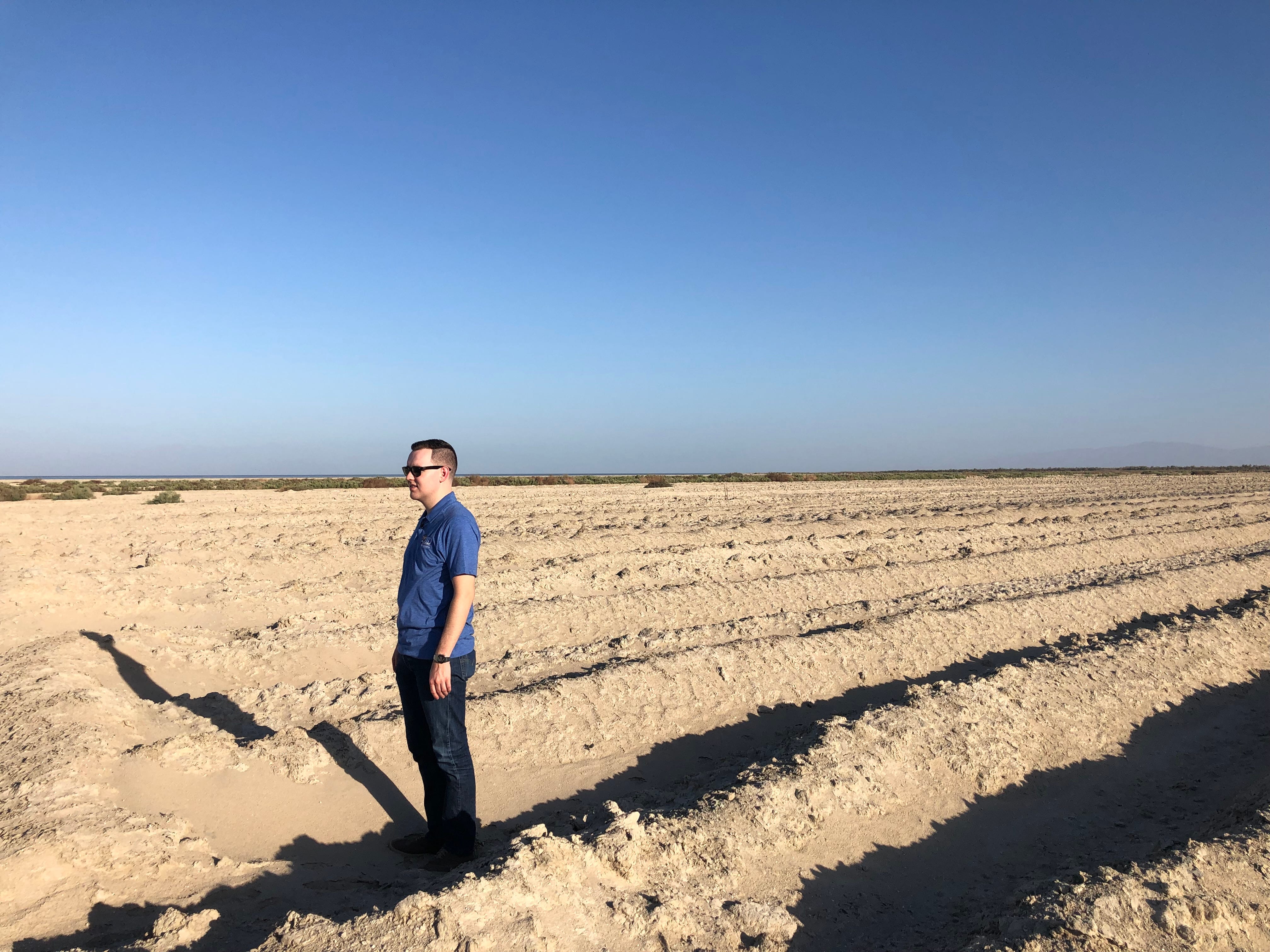
When I caught up with Hamby last week at his office in El Centro, he sounded a bit stressed, or maybe just tired. He’d recently returned from Washington, D.C., where he met with Interior Secretary Doug Burgum and several Colorado River Basin governors in a failed effort to negotiate a water-saving deal before a Valentine’s Day deadline set by the Trump administration. The deadline had passed a few days ago, but discussions continued. Hamby didn’t have much time to chat; he needed to fly to Phoenix.
Still, Hamby said he wasn’t “living in a worried state.” The Colorado River Basin had weathered past crises. California had saved water. It was willing to save more.
“Our farmers in this community have stepped up in a tremendous way,” Hamby said.
Except for Mike Abatti — unless he had stepped up?
Like a desert farm kingdom tormented by flood and drought — yet no less dependent on hydrology for its survival — life is full of contradictions. Even as Abatti fought like hell to keep water flowing to his fields, he hedged his economic bets, developing solar projects that stood to take huge expanses of farmland out of production — and create enormous potential for water savings.
Mike’s second career in energy was made possible by a Sacramento-area engineering firm called ZGlobal. I explored their relationship in a 2018 exposé.
But the story didn’t end there; maybe the past does die on occasion, but it rarely stays buried. Stay tuned for Part 3.
Death in the Desert, Part 1: Who Killed Kerri Abatti?

An Imperial Valley murder mystery, with a helping of climate change.
Great article, Sammy, as usual. I look forward to more! Such terrible political intrigue that now involves murder, not just of Abatti's wife, but worse, maybe the Colorado river itself. This should be made into a movie, Chinatown part 2?
Death in the Desert... wow, what a series Sammy! If I were one of his kids I sure wouldn't want him out on bail either!