


Confession time: Until last month, I hadn’t read “Abundance.”
The 2025 book by Ezra Klein and Derek Thompson has divided progressives with its provocative argument that environmental regulations are stifling climate progress — and undermining support for Democrats — by impeding construction of solar farms, wind turbines and dense new housing. After a year of hearing people argue about it, I got sick of not fully understanding what all the fuss was about.
At the risk of annoying absolutely everybody, here’s my lukewarm take: I think Klein and Thompson make some very good points! I’m also not convinced their ideas would single-handedly solve the climate crisis, as the internet’s most vocal “abundance bros” would have you believe.
I’m glad I read the book, and I appreciate that Gavin Newsom and other high-profile Democrats are taking it seriously. I also understand why critics are so frustrated by its insistence that environmental regulations are, in many cases, bad for the environment. It’s already hard enough defending those regulations against polluting industries and the Trump administration; now some progressives are piling on, too?
Having written extensively about the need to balance building clean energy projects with protecting wildlife habitat, I figured I’d have mixed feelings about “Abundance.” No surprises on that front.
Nonetheless, the book defied my expectations.
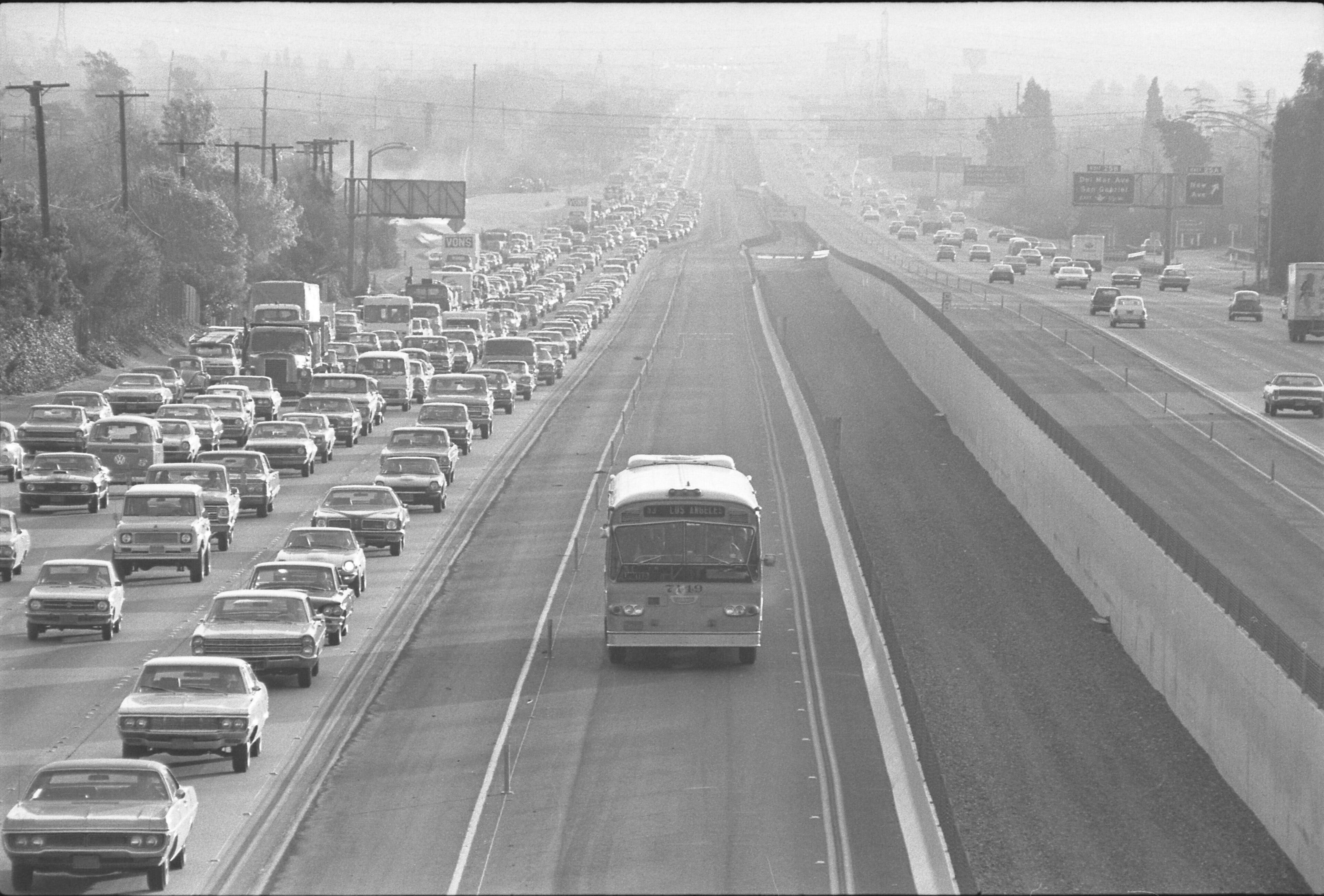
While discussing homelessness in L.A., for instance, Klein and Thompson quote an affordable housing consultant who raises a surprising obstacle to building affordable housing: Projects near freeway are required to have higher-quality air ventilation.
“All the affordable housing development is subject to green building requirements,” says Yasmin Tong, founder of CTY Housing. “The standards in California are higher than anywhere else in the country.”
“You’re not just required to build to the standard, you also need to hire a consultant to confirm you’ve built to the standard,” she adds. “That adds costs.”
Her comments prompt Klein and Thompson to ask whether requiring higher-quality air filtration near freeways makes sense, “when the alternative, for many of the would-be residents, is a tent beneath the freeway.”
“To pose the question sounds callous,” they write. “But to refuse to pose the question, given the need for more housing, is cruel.”
The first time I read this, I recoiled a bit: Of course homes near freeways should have top-notch filtration. Air pollution near highways is terrible. People living near highways are more prone to asthma, heart attacks, strokes and lung cancer.
But the more I dwelled on it, the more I wondered. I thought about all the trade-offs between renewable energy development and habitat conservation. Was this a similar trade-off? Do we live in a world where trying to solve every environmental and public health problem means failing to solve most of them, including the biggest one of all?
According to “Abundance,” the answer is “yes.” The book catalogs how liberals have slowed down badly needed infrastructure projects — high-speed rail, solar and wind farms, apartment buildings near public transit — by bogging them down with far too many costs and requirements. Good costs and requirements, as it happens: prevailing wages for workers, diverse hiring rules, detailed environmental reports, regular audits to ensure taxpayer funds aren’t being wasted, and many more.
Taken individually, those are all good and important things. But collectively, they can result in never-ending boondoggles like California’s bullet train.
Blue cities and states “too often add too many goals to a single project,” Klein and Thompson write. “A government that tries to accomplish too much all at once often ends up accomplishing nothing at all.”
So what’s the solution?
Based on the fiery discourse around “Abundance,” I feared the book would call for a total unwinding of foundational environmental laws. Fortunately, it doesn’t. Klein and Thompson recommend permitting reform only for climate-friendly energy, instead of an “all of the above” approach that benefits oil and gas.
Bigger picture, they acknowledge the trade-offs inherent to environmental policy.
“It is not always clear how to strike the right balance,” they write. “But a balance that does not allow us to meet our climate goals has to be the wrong one.”
On the whole, the book felt a lot more nuanced than much of the small-a “abundance” rhetoric I’ve encountered online.
Last week, for instance, pundit Matt Yglesias published, “The case for clean energy abundance,” in which he berated climate activists for promoting energy conservation (seriously!) and described true abundance as “a desire to create so much electricity that nobody’s bothering to conserve.”
For Yglesias, environmentalists are the enemy. He castigates green groups constantly, convinced that if only environmental crusaders would shut up about keeping oil in the ground, “normal” Americans would be more likely to vote for Democrats.


If you’ve mainly heard about “abundance” from abundance bros like Yglesias, I can understand why it might sound awful! The internet has a fascinating way of making basically anything toxic. We should all read more books.
We should also resist the temptation to believe in climate silver bullets.
For all the things I think “Abundance” gets right, it mostly ignores the villains of the climate story: fossil fuel companies, automakers, plastic manufacturers, Big Ag — the folk fighting like hell to keep cooking the planet. They will keep fighting like hell, and thanks to America’s dysfunctional democratic institutions, they will probably succeed — even if Democrats make it easier to build clean energy.
Eventually, economics will kill off the dirty industries — but not nearly soon enough to avoid some truly scary warming. Building clean energy won’t vanquish the climate crisis, at least not on its own; Democrats need to confront the root causes, too.
“Abundance” has another major flaw: It largely ignores rooftop solar (and really any clean energy solution that isn’t large-scale infrastructure). Which is a shame, because rooftop solar is super popular and increasingly affordable, and also has the benefit of not destroying wildlife habitat. But Klein and Thompson don’t seem interested.
So if you’re not an “Abundance” fan: Yeah, I sympathize. It’s frustrating that the most influential climate book in recent times leaves so much to be desired.
But also: If you haven’t read it yet, maybe give it a shot. Like I said earlier, it defied my expectations — in part because most of the book had nothing to do with energy.
Klein and Thompson make the case that government can be a powerful force for good in American life — an idea rarely articulated anymore by Democrats. They call for far more investment in medical research and basic science, and a greater appetite for risk-taking with taxpayer funds. (No risk, no reward.) They note that the moon mission was wildly unpopular throughout the 1960s. But President Kennedy pursued it anyway.
“Leaders define what counts as a crisis,” Klein and Thompson write. “And leaders are the ones who choose to focus.”
With courageous political leadership, they suggest, the U.S. could choose to make the climate crisis a national priority. It’s a stirring call to action for the next Congress and president: Don’t just read the polls. Learn the science, consult the experts and do what needs to be done.
What needs to be done, then? “Abundance” offers a reasonable starting point, but it’s far from a comprehensive guide. Let’s all read some more books.
‘An Inconvenient Truth’ turns 20
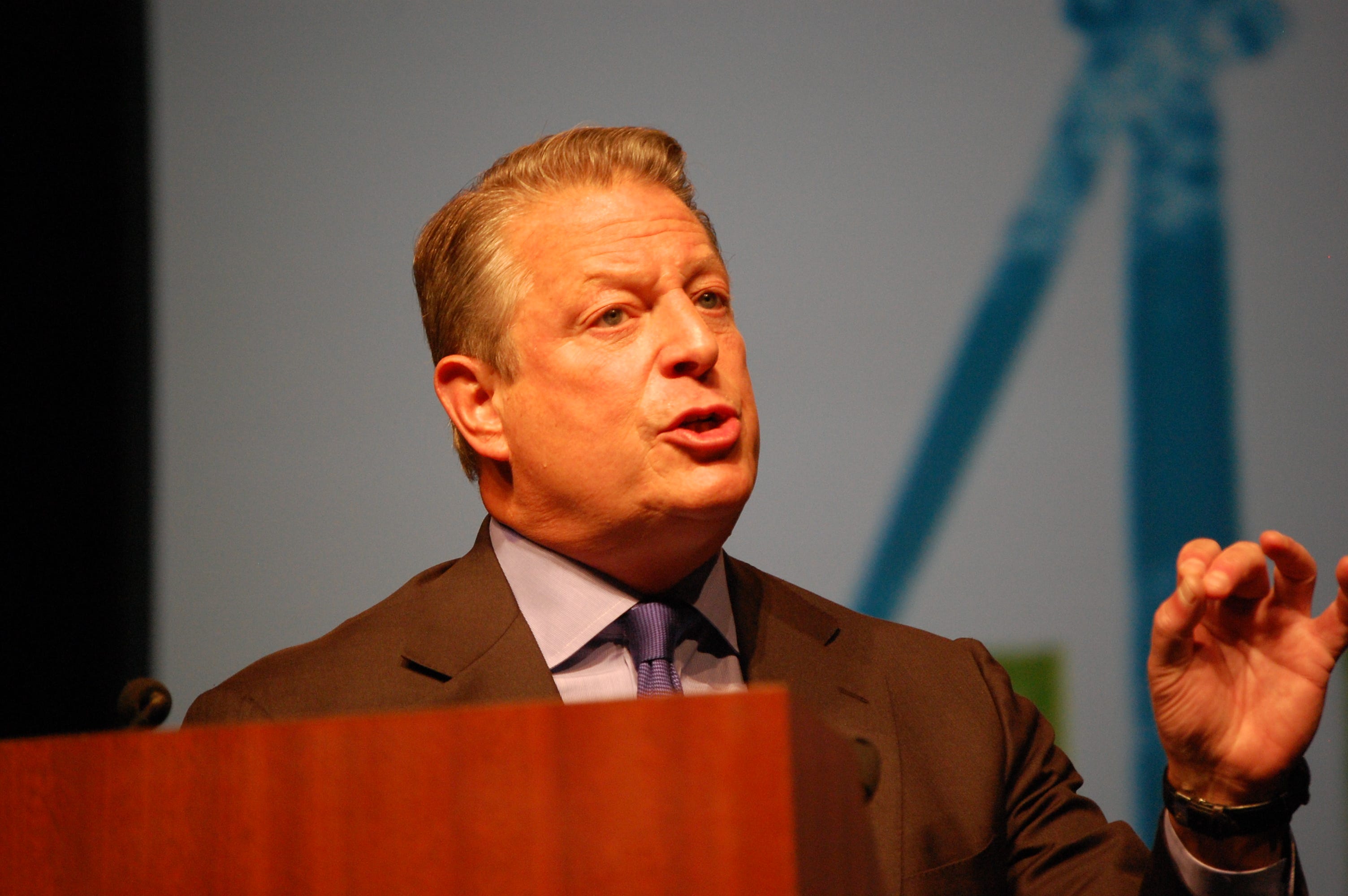

I was 13 years old when “An Inconvenient Truth” came out; I asked my parents to drop me off at the movie theater. I don’t remember what inspired me to want to see it, or how exactly I felt afterward. But I know the film made an impression on me: deadly heat waves, worsening storms, rising seas, melting glaciers. My eyes were opened.
And not just mine. Al Gore’s scientifically grounded presentation of global warming as an urgent threat helped define a generation of American climate discourse, teeing up U.S. support for the Paris Agreement and the eventual passage of President Biden’s climate law, the Inflation Reduction Act. Even amid fossil fuel industry resistance and the Republican Party’s burgeoning hostility, climate advocates kept winning.
They didn’t stop global temperature increases from surpassing 1.5 degrees Celsius, the Paris Agreement’s most ambitious target. But with 1.5 degrees front of mind, they bent the emissions curve downward, helping avoid worst-case scenarios for humanity. They did so by building a political movement around ideas articulated in Gore’s film: that global warming is a crisis; that certain temperature thresholds should be avoided; and that translating science into policy is paramount.
“We have everything we need, save perhaps political will,” Gore said in the movie.
“An Inconvenient Truth” — which was released 20 years ago this Sunday — can feel like a relic today, when the U.S. is led by MAGA grifters and even many progressives have decided climate action is a losing political message. In California and New York, governors are softening existing clean energy commitments and declining to fight for new ones. Elsewhere, even saying the words “climate change” is increasingly frowned upon for elected officials. “Climate hushing” is all the rage.
But you know what? Not talking about a problem doesn’t make it go away.
Just ask Gore. Two decades later, the science he presented in “An Inconvenient Truth” looks pretty darn accurate. And his film definitely made an impact.
No single documentary could have such a big influence today; the media landscape is too fractured, our attention spans too short, the nation’s politics too polarized.
But if enough people with enough influence spent enough time talking about climate science, they’d make a difference.
In other news

Climate backsliding:
California regulators are poised to weaken a crucial climate program next week, undermining the state’s ability to achieve its 2030 emissions reduction goal. (Jeff St. John, Canary Media)
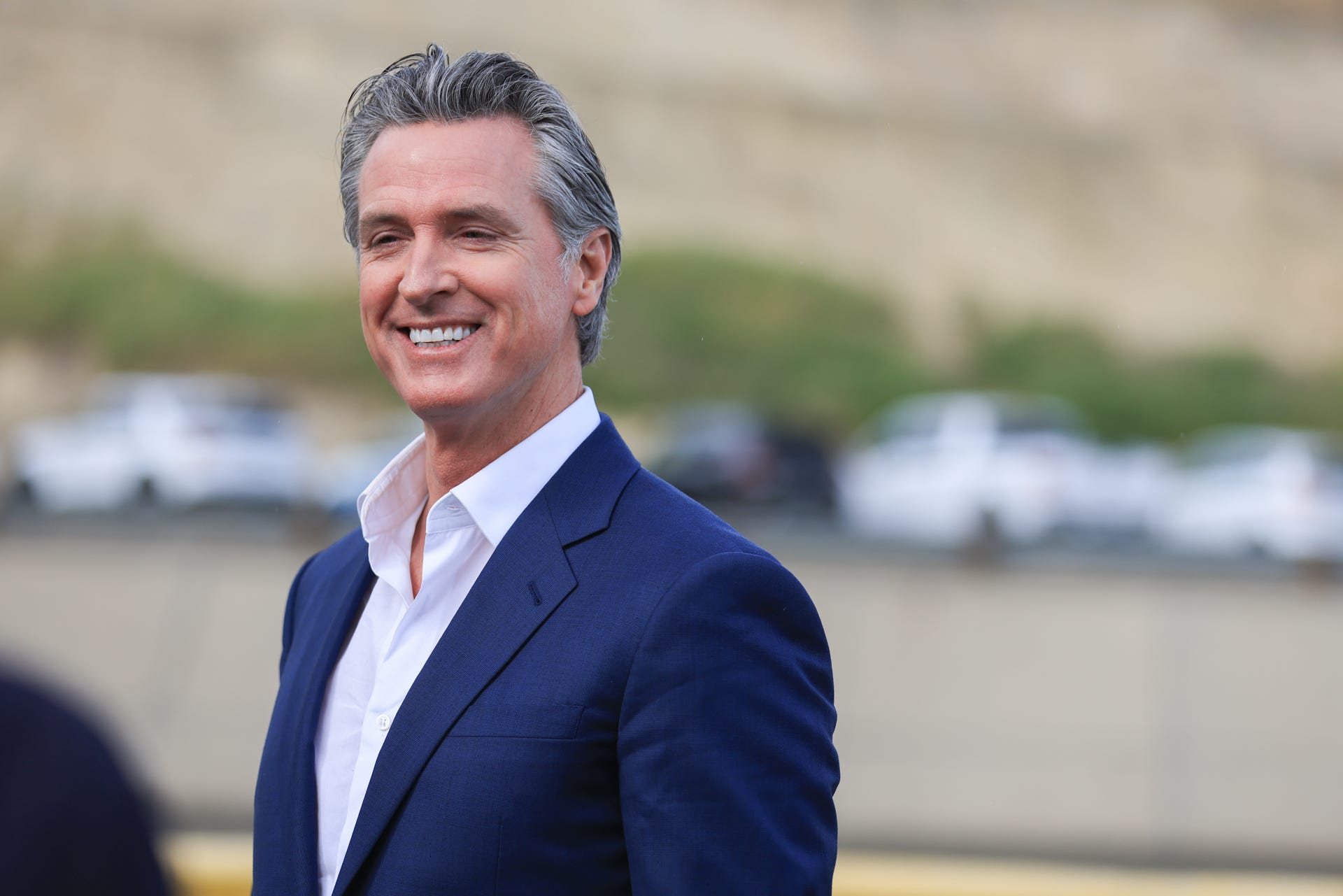
Gavin Newsom keeps trying to kill America’s biggest virtual power plant. (Blanca Begert, L.A. Times)
New York Governor Kathy Hochul persuaded legislators to roll back key elements of the state’s emissions reduction law. (Jon Campbell, Gothamist)
On our public lands:
The Senate confirmed Steve Pearce, a former member of Congress from New Mexico, to lead the U.S. Bureau of Land Management. He has previous argued that “we do not even need” most federal lands. (Chris D’Angelo, Public Domain)
President Trump’s destructive border wall is militarizing the southern end of the Continental Divide Trail. (Alicia Inez Guzmán, High Country News)
Climate change and habitat destruction are killing Joshua trees. Hidden networks of underground fungi could help them survive. (Alex Wigglesworth, L.A. Times)
The energy transition:
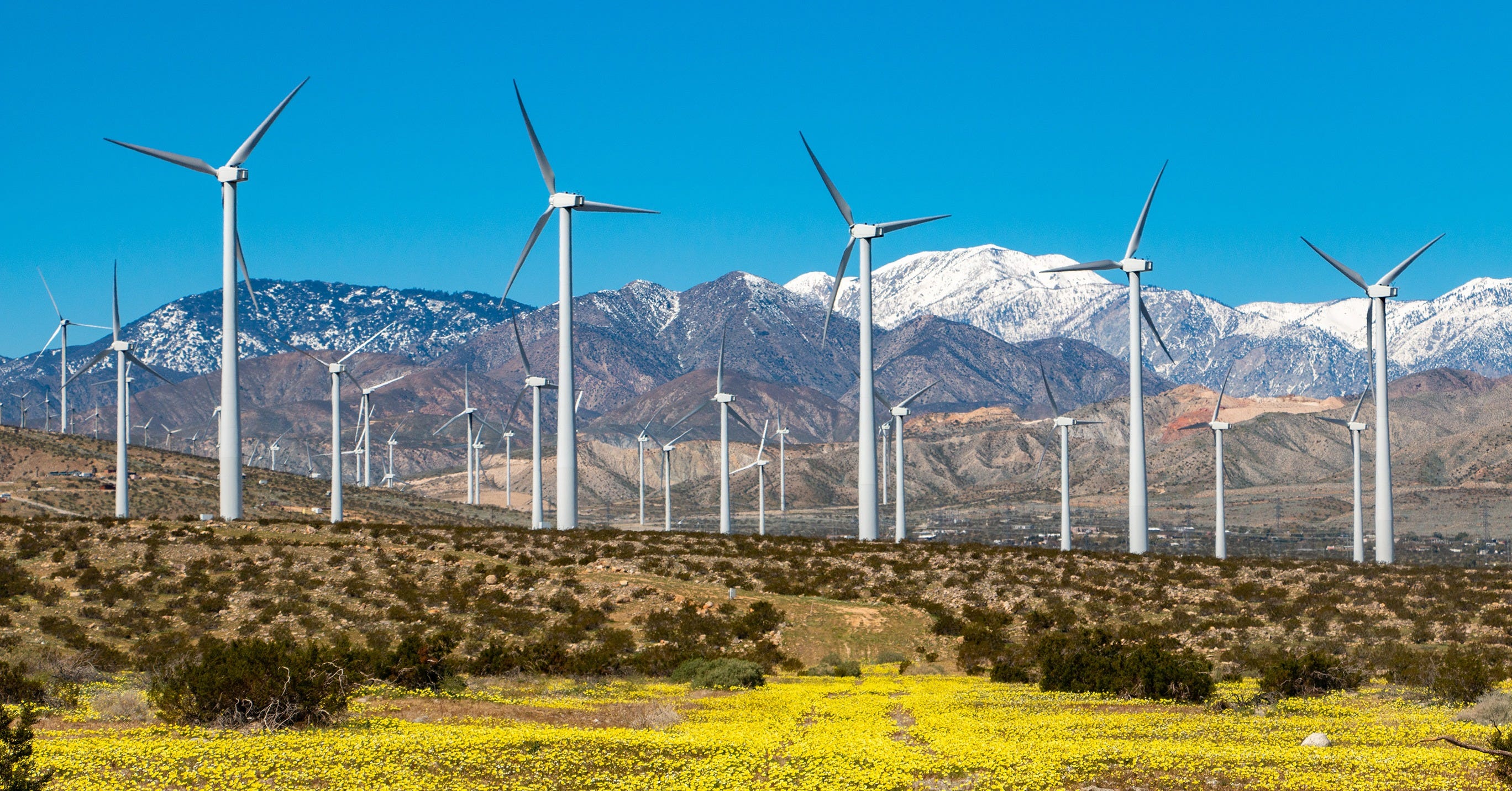
Nineteen new wind turbines will produce as much electricity as 400 old turbines in California’s Altamont Pass. The U.S. could more than double its onshore wind capacity with no new land via “repowering.” (Justin Gerdes, Quitting Carbon)
Berkeley is reducing emissions by requiring home sellers to make green upgrades such as heat pumps, solar panels and batteries. (Todd Woody, Bloomberg)
“I believe data centers, the only place that they exist, is in hell.” A tiny California city is drafting a five-year moratorium on data centers. (Philip Salata, inewsource)
Around the world:
As Trump’s war in Iran sends oil and gas prices soaring, Europeans are investing in rooftop solar, EVs and electric heat pumps. (Eshe Nelson, New York Times)
Costa Ricans are flocking to low-cost Chinese-made EVs to avoid paying high oil prices. (Jack Ewing, New York Times)
This summer’s FIFA World Cup, with 104 matches across North America, will be the most polluting soccer tournament ever. (Blanca Begert, L.A. Times)
Last but not least, U.S. Transportation Secretary Sean Duffy has been driving around the country with his wife and nine kids for a reality TV show funded by companies he regulates, including Toyota, Boeing, Shell, United Airlines and Comcast, per the Wall Street Journal’s Andrew Tangel and Sharon Terlep. Just another insane scandal.
I don't know if "Abundance" discussed the killing of the ICE industry, but it's happening. China's new car sales are now 60% EVs, and Europe is between 30% and 100% (Norway). After 2035, China and Europe will no longer allow the sale of new ICE vehicles, so legacy auto will need to fully transition, or find another market for millions of ICE cars nobody wants. After 2035, Joe MAGA will walk into his Lubbock, TX Ford dealership looking for a new truck and the only vehicles available are electric.
After the ICE industry is over, there will still be around a billion ICE cars on the world's roads, but all of those will age out over the following decade as refineries close, followed by the closure of thousands of gas stations. It's entirely possible that 20 years from today, virtually all ground transportation will be electric and powered by an ever-greening grid.
What we can do to help speed up this process is easy - never buy a gas car again. Only EVs going forward.
Roughly 25% of oil is used for transportation. Right now the rest of oil is used for consumer products like plastic just to name one. The important point is EV’s need to take over as they are in the rest of the world. We need regulations because without them people and animals die. Even with all the regulations solar and wind are still being pursued. Without regulations, people just take advantage. If we were all driving EVs you would not need expensive clean air filters for people living next to highways. The list goes on. People are too focused on short term thinking. Need to invest in the future now or things will continue to get worse.