

Enough climate hushing, more listening to scientists
As we celebrate July 4, let's resolve to start learning from the folks who make America great.


Late last year — after Bill Gates published a lengthy screed claiming that the threats posed by global warming had been exaggerated — I called a bunch of scientists to ask how they felt about the state of the American Climate Discourse.
Frankly, I was frustrated. Ever since President Trump’s reelection, many left-leaning politicians had started engaging in “climate hushing,” choosing to stop talking about the climate crisis — typically advised by strategists who saw climate as a losing issue. The New York Times began publishing opinion pieces arguing that Democrats should cater to the political center on climate and energy. Many blue-state governors stopped pursuing aggressive climate plans. Some of them rolled backed existing plans.
The vibe shift reverberated across society. Legacy news organizations laid off climate reporters. Prominent companies ditched their climate goals. Billionaires slashed their climate philanthropy and investments.
In retrospect, Gates’ screed was hardly a surprise. A few weeks earlier, the Microsoft co-founder had groveled before Trump at the White House; of course he was going to throw climate under the bus. “Climate” was out.
Still, I was frustrated. The Trump administration was working furiously to dismantle America’s renowned scientific institutions, and liberals were tripping over themselves to defend the sanctity of science. And yet when it came to climate change, maybe the most important scientific issue of modern times, none of the loudest, most influential voices in leftist and center-left circles belonged to scientists.
In fact, the folks dominating the climate conversation sounded like they hadn’t spent much time talking with scientists.
So a few months after Gates published his memo, I called nine climate scientists and asked for a gut check: Was I losing my mind, or had something gone terribly wrong in the Climate Discourse?
Short answer: No, I hadn’t lost my mind. Yes, something had gone wrong.
The scientists offered a wide range of nuanced opinions about American politics and climate messaging — too wide-ranging and nuanced for me to write a story, at least at the time. But ahead of America’s 250th birthday this weekend, I’ve been thinking back to those conversations.
The scientists didn’t agree on everything. But they were united by their own pent-up frustration — that America isn’t doing more to confront the climate crisis.
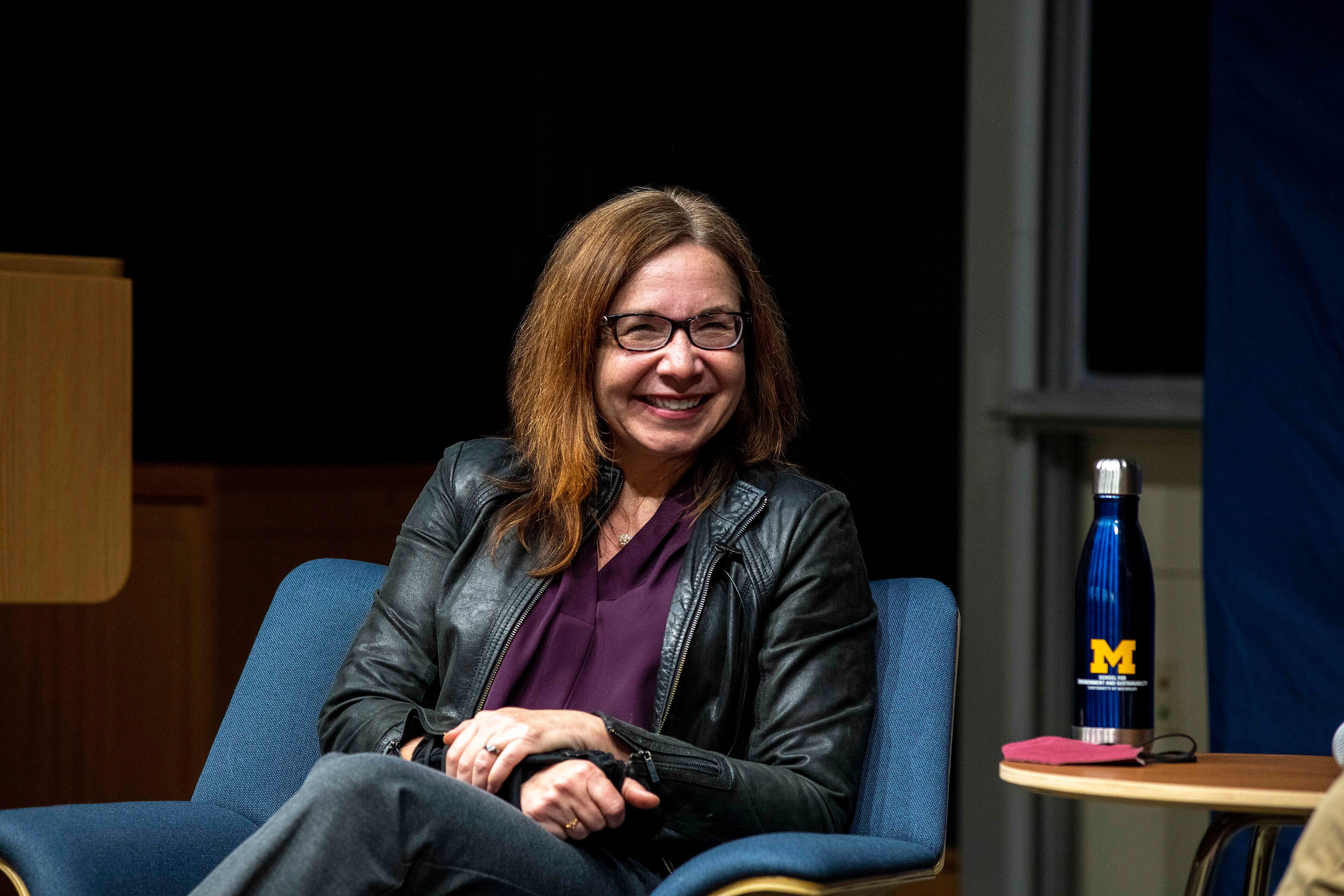
“I have been baffled by the rush to say, ‘Climate change is not existential, this is not a big deal, we shouldn’t care about it,’” NASA scientist Kate Marvel said.
Soon after we talked, Marvel resigned from NASA, citing Trump’s attacks on science. But whatever constraints she might have felt at the space agency, she didn’t hold back during our call, ticking off a few of the many reasons to support clean energy: cheaper electricity, less air pollution, keeping up with China.
“It’s weird to me that at the exact time that all these true and compelling arguments are possible, we’ve just retreated to not talking about it at all,” she said.
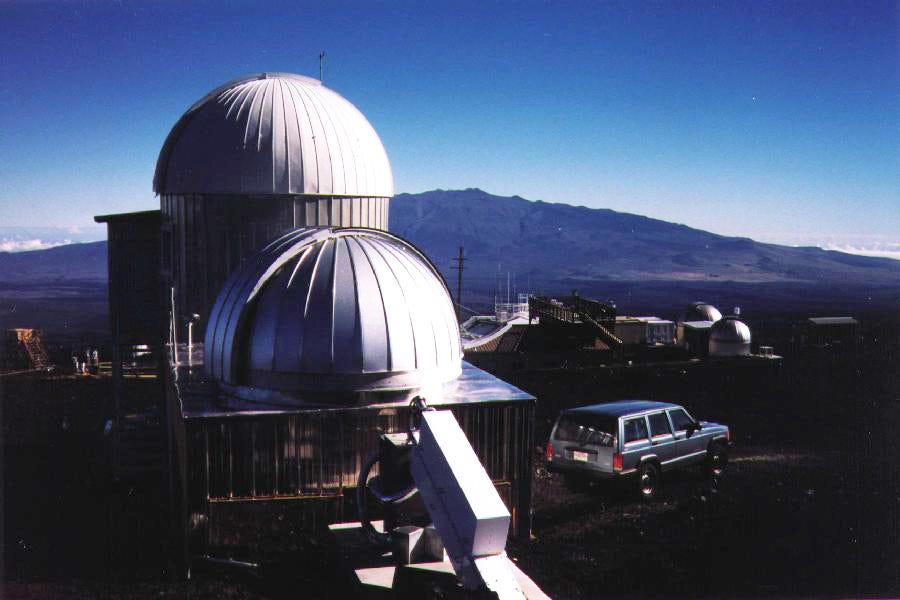
David Ho, a marine biogeochemist at the University of Hawaiʻi at Mānoa, expressed similar bewilderment about Gates, who argued in his memo that spending money on climate limits the funding available to fight disease and poverty.
“I didn’t understand the motivation,” Ho said. “It seems he should understand that the things that he cares about are affected by climate.”
Ho was less charitable toward Matt Yglesias, a popular centrist pundit who has urged Democrats to embrace oil and gas. Ho called Yglesias’ commentary “a bit unhinged.”
“I don’t take him seriously. I have him blocked on Bluesky,” he said. “I just think he’s unserious. But he does have a platform, and I guess people do listen to him.”
Jacquelyn Gill, a paleoecologist at the University of Maine, sees a distinction between pundits like Yglesias and capitalist power brokers like Gates. The former shape public opinion; the latter shape policy and technology.
Gates “is one of the people who could actually influence markets,” Gill said. “He has so much more power to move the needle, as a business leader, than any of us.”
From Gill’s perspective, the problem with both men — and with others who downplay global warming — is that creating urgency to act is already hard enough. The world is very nearly 1.5 degrees Celsius warmer than preindustrial times, a grim milestone that scientists had hoped to avoid. Limiting warming to 2 degrees — the next big target on the horizon — won’t be easy.
Given the political obstacles to ambitious climate action in the U.S., does it even make sense to keep talking about 2 degrees? Should we just do the best we can?
Gill summed up the key conundrum.
“How do you create urgency around reducing emissions as much as possible, as fast as possible?” she asked. “That’s the million-dollar question.”
Like many scientists, Katharine Hayhoe — a Texas Tech professor and chief scientist at the Nature Conservancy — is wary of continuing to emphasize targets like 1.5 or 2 degrees. Temperature thresholds can motivate people to act. But they can also mislead people into believing that humanity is doomed if the threshold is crossed.
To be clear, the doomsday mentality is wrong: Any climate scientist will tell you that a little less warming always means less suffering, less illness, less death.
But even as Hayhoe helped shape global climate goals, she “always worried that if we didn’t make it [to 1.5 degrees], people would give up.”
“Unfortunately I feel like that’s what’s happening now among policymakers: ‘Oh well, we didn’t make it. Let’s move on to the price of housing and eggs,’” Hayhoe said.
Still, she doesn’t think temperature targets are a waste of time.
“I truly believe that people have tried harder because we had a 1.5-degree goal than they would have if we had a 2-degree goal,” she said.

These are the types of questions that have defined the Climate Discourse my entire adult life: Should climate advocates avoid abstract concepts like global temperatures and focus exclusively on the economic case for cheap renewable energy? Should they use words like “extreme weather” instead of “global warming”? How about reframing the energy transition as a jobs and public health agenda?
It annoys me how much oxygen these arguments take up, when in reality no one can police the messages hawked by who knows how many thousands of activists, pundits, politicians and influencers. Most folks are ultimately going to say whatever they want to say. We have free speech in this country.
But we can also choose who to listen to. We can choose whose voices to elevate.
This Fourth of July, let’s use our freedoms wisely. Let’s choose scientists.
Andrew Dessler, a climate scientist at Texas A&M University, thinks limiting global warming to 2 degrees is possible — and he sees it as “a political decision, not really a scientific or technical issue.” He described Big Oil as the main obstacle, calling fossil fuels “probably the most powerful special interest in the history of humanity.”
“They have revenues of [trillions of dollars] a year, and they’re doing everything they can to stop us,” he said.
Dessler has come to consider temperature targets distracting. He’d rather talk about the geopolitical instability caused by fossil fuel dependence; the deadly air pollution spewed by oil and gas; and the amazing economics of solar and wind. He pointed out that the U.S. “could pretty easily get to 80% or 90% [emissions reductions] at low cost or negative cost” — a fact that many Americans would struggle to believe.
“In some sense, all problems in society go back to the media environment, and social media,” Dessler said. “No politicians suffer from lying. They get away with it.”
.jpg)
Here’s the question I find most relevant: Given our broken information ecosystems, what does it mean to cut emissions as fast as possible? How fast can we actually move away from oil, gas and coal, without sparking a misinformation-fueled backlash that threatens the whole enterprise?
I asked several scientists about the delicate dance between climate imperatives and political realities.
Zeke Hausfather, a research scientist at Berkeley Earth, thinks “the best thing we can do is to throw as much money as possible at clean energy,” creating jobs and building support for climate solutions — including in red states. But he acknowledged that this is basically what the Biden administration did with the Inflation Reduction Act — and the Trump administration still gutted the law.
“If we want to make the politics of more ambitious climate action possible, we have to make climate more resonant with the public,” he said.
Indeed. So how do we do that?
Like all the other scientists I talked with, Hausfather was humble, reminding me that he’s not a communications expert or social scientist. But he offered a few suggestions. He think it’s crucial to beat back false claims that clean power will make people’s lives more expensive — nobody wants to pay more for stuff.
At the same time, he believes affordability arguments can only accomplish so much if Americans don’t also care about the climate crisis. Limiting warming to 2 degrees will require massive emissions cuts from the U.S.
“It’s not like 2 degrees is a magical line, just like 1.5 degrees wasn’t a magical line,” he said. “But once you get much above 2 degrees, you get a lot worse impacts.”
Karen McKinnon, a climate scientist at UCLA, made a point that I doubt many folks would disagree with — that when it comes to building support for phasing out oil and gas, the best strategies involve highlighting local, deeply personal harms.
“This isn’t about 2 degrees Celsius,” she said. “This is about, do you get to send your kids to summer camp? Do they get to swim in the lake, or is the camp burning?”
McKinnon sees hope in the explosive growth of solar power and electric vehicles, led by China. She wishes America would catch up. When centrist pundits urge Democrats to embrace oil and gas, she doesn’t understand the logic.
“It’s just a poor economic decision,” she said.
.jpg)
Michael Mann, a professor at the University of Pennsylvania and longtime lightning rod for climate deniers, sees a burgeoning “climate defeatism” on the left and center-left. He thinks a lot of well-meaning people “feel besieged, both by what’s happening with the climate and what’s happening with the politics.” Some of them are giving up on aggressive climate action, at least for now. Others are coping by telling themselves that the climate crisis isn’t actually so bad, à la Gates.
“It expresses itself in the form of denial, a different kind of denial,” Mann said.
That’s his theory, anyway. He wishes more people understood how much progress is being made through solar, wind and battery technology growth.
“The greatest threat to meaningful climate action is the belief that we can’t act,” he said. “I like to balance urgency with agency.”
So who can spread the word that climate change is urgent, and we’re not powerless? How can we translate all these ideas into action?
Jonathan Foley, a climate scientist who leads Project Drawdown, said we “absolutely need political leadership.” But in the meantime, he’d love to hear a “clarion call” from faith leaders and scientists. He suggested Pope Leo XIV and leading Swedish climate researcher Johan Rockström as esteemed figures who could collaborate on some kind of climate message, cutting through the noise and speaking to people’s hearts. Maybe they could even help investors identify worthy climate solutions.
“We have all the things we need right now to stop climate change,” Foley said. “Some of them are expensive. Most aren’t.”
If Foley’s rhetoric sounds audacious — well, that’s why I love it. Unlike most political people yapping about climate, he’s thinking big instead of ducking for cover.
What’s more, he thinks scientists have a role to play in fixing our broken discourse — and I couldn’t agree more. Scientists don’t know everything about politics, but neither does anyone — including political operatives. Even better, scientists tend to be smart, thoughtful people who follow policy and politics. We should strive to learn from them — and not just from their peer-reviewed studies.
That’s me talking, by the way, not Foley. He was exceedingly modest, although he did tear into Gates, saying the billionaire “never understood climate to begin with.”
“I’ve seen a lot of other philanthropists question themselves based on what Bill Gates wrote,” Foley said. “What a mess that was. I was so disappointed in that.”
My advice: Stop listening to Gates, start listening to Foley. And as you’re celebrating America this July 4, raise a glass to the scientists who make this nation great. Bask in the honest-to-goodness patriotism of baseball, apple pie and science.
Then next time you hear a pundit claiming that global warming isn’t salient to voters, or a presidential candidate arguing that clean energy goals are too expensive, or a tech bro insisting that climate change is no big deal — pause and ask yourself, what would a climate scientist say?
Then try to find out. Our democracy will be better for it.
That Bill Gates memo still makes me angry. What an absolute ass-hat. The fact that he was ever looked at as a climate leader is proof that we need better climate leaders.
I'm all for scientists leading the way, but they could learn a thing or two from the entertainment industry about how to connect with audiences. Neil deGrasse Tyson is popular because he's affable. He's not afraid to lean into his idiosyncracies.
I don't know what that looks like in the climate realm, but the prompt of "would I want to get a drink with this person?" is usually a good start.
Thanks for the thoughtful 4th of July tribute to climate scientists and their consistent research-based messages about climate change. Let's not forget that Bill Gates, just 5+ years ago, wrote the book How to Avoid a Climate Disaster. Which makes is all the more curious, dubious, that he wrote that screed a few months ago downplaying the climate crisis.