

Breaking: Washington Post gutting its climate team
Clean energy dies in darkness. Courtesy of Jeff Bezos.

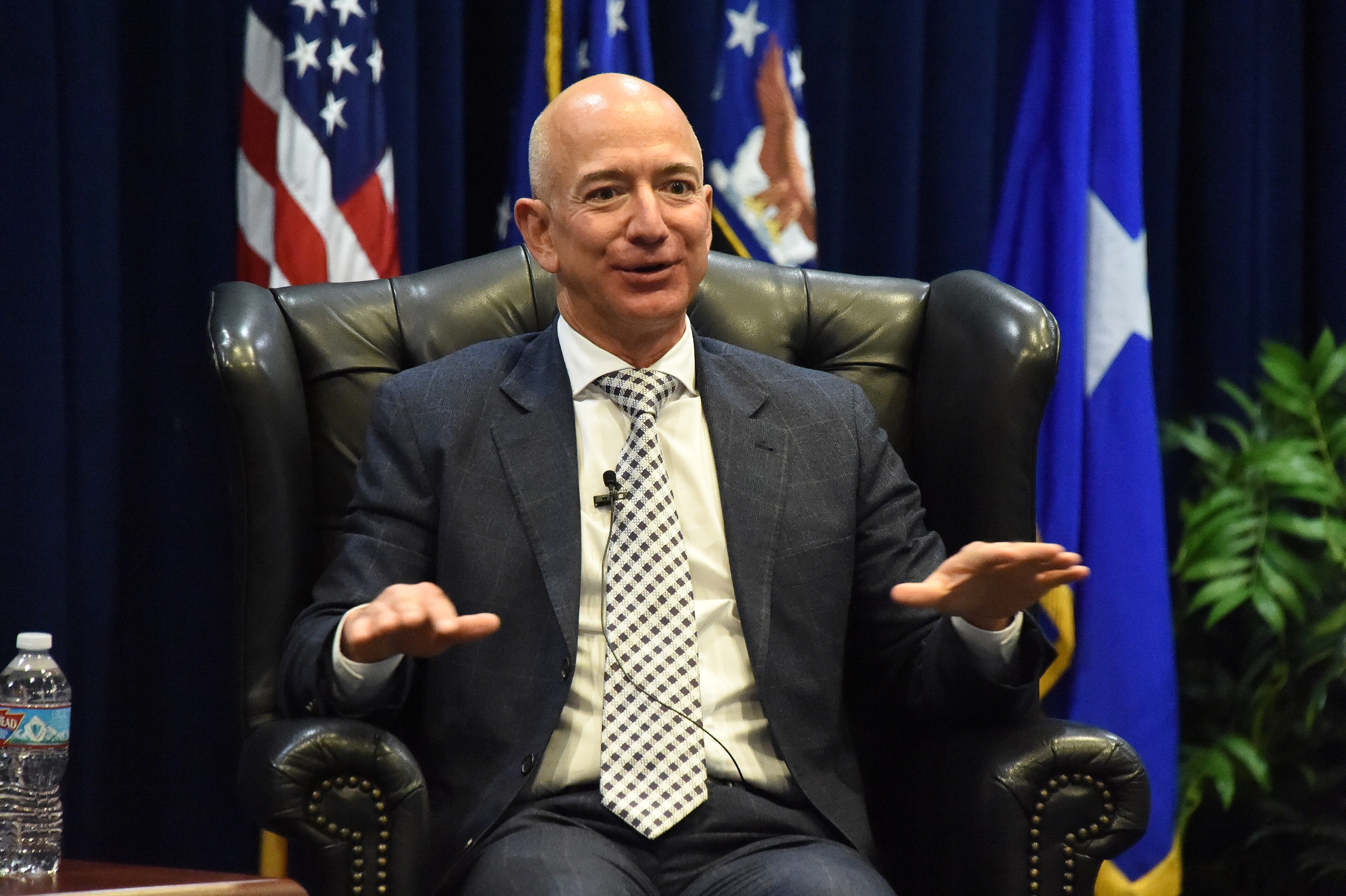
.jpg)
The Washington Post produced some of America’s finest climate journalism over the last decade, aggressively covering President Trump’s regulatory rollbacks and winning a Pulitzer Prize for a series about Earth’s fastest-warming places. Alongside the New York Times and the Associated Press, I don’t think any U.S. news outlet published a greater volume of urgent, high-quality climate and clean energy coverage.
Everything changed on Wednesday morning.
The Post sent layoff notices to at least 14 climate journalists, newsroom sources told me, part of a massive round of cost-cutting that will see more than 300 journalists lose their jobs — about 30% of all employees at the Jeff Bezos-owned company.
The climate team layoffs include eight writer/reporters, an editor and several video, data and graphics journalists, I’m told. I’m not publishing their names, since many of them haven’t discussed their situations publicly. But to see the invaluable work they and their colleagues have been doing, check out the Post’s climate page here.
After the layoffs, the Post will have five writer/reporters left on its climate desk, by my sources’ count, and possibly a few other journalists. That’s a far cry from the sweeping vision that then-executive editor Sally Buzbee unveiled in 2022, when she announced a major expansion of the outlet’s climate coverage. She said the Post “has long been a leader in covering the climate and environment” and would nearly triple the size of its climate team to more than 30 journalists.
Buzbee called global warming “perhaps the century’s biggest story.”
“No story is more global than climate, and we are placing reporters across the country and the world to capture it as it unfolds. At the same time, we are reimagining climate journalism to be more visual and accessible, bringing on trusted voices and some of the world’s best visual journalists to tell stories in intimate, visceral ways that we hope will both inform and empower you,” she wrote.
Will the Post try to maintain that commitment, even with a vastly diminished staff? I don’t know. A spokesperson didn’t immediately respond to my request for comment.
Either way, the rise and fall of the climate team serves as a sad reflection of Bezos’ shifting role in American politics. When the billionaire Amazon founder purchased the Post for $250 million in 2013, he was hailed as a savior. He invested in a growing newsroom, which adopted the slogan “democracy dies in darkness.” Trump attacked the paper as the “Amazon Washington Post” for its hard-hitting stories. Bezos joked about sending Trump into space.
Then Trump got elected a second time — and like many ultra-rich executives, Bezos seemingly decided appeasing Trump was more important than principle or morality. Even before the election, when it looked like Trump might win, he blocked the Post editorial board from endorsing Kamala Harris, prompting a quarter-million people to cancel their subscriptions. Amazon helped bankroll Trump’s inauguration, as well as his demolition of the East Wing. Amazon MGM Studios spent $75 million buying and marketing “Melania,” a propaganda film about Trump’s wife.
Meanwhile, the Post was losing money — a reported $100 million in 2024. Bezos could have covered the losses easily; Forbes estimates his net worth at $244 billion, making him the world’s fourth-wealthiest person. Even better, he could have reinvested in the newsroom, helping fill our country’s widening information vacuum and betting that it would yield financial dividends, much like it has for the New York Times.
Instead, Bezos chose to eliminate hundreds of jobs, decimating the newsroom of “All the President’s Men” — a decision that may very well please Trump.
“Bezos appears to have embraced a crude calculus: laying off staff and trimming the sails of a once-great news organization sends a message to an audience of one at 1600 Pennsylvania Avenue,” former Post fact-checker Glenn Kessler wrote on his Substack.
“After all, since the election Bezos has worked hard to ingratiate himself with Trump,” Kessler added.

The climate team was one of many casualties this week. But the sad loss of another dozen jobs only adds to a sad trend of legacy media organizations pulling back from climate coverage, even as global warming accelerates.
CBS News — following its acquisition by Skydance Media, a purchase backed by Trump-friendly billionaire Larry Ellison — laid off most of its climate journalists in October, as I reported at the time. The L.A. Times, while still producing fantastic climate journalism, saw its environment team shrink by several members last year.
Data from the Media and Climate Change Observatory, an academic research project, showed that climate coverage across five major U.S. newspapers — including the Post — continued its yearslong downward slide in 2025. TV news showed a similar trend.
Former Post climate reporter Chris Mooney discussed the data on Substack.
“I continue to think this is more a zeitgeist thing, where there’s a broader shift away from considering climate change an urgent issue,” he wrote. “Nothing major about the science has changed, of course. But I think there is just fatigue, reflecting in part the domestic and global failures to show significant progress on the issue.”
This isn’t just a U.S. problem.
“Across the globe, coverage has diminished 14% in 2025 from the previous year 2024 and is 38% lower than the highest year of coverage in 2021,” researchers wrote.
Not everything is terrible. If you want climate and clean energy journalism, there are still lots of good options, from the New York Times to the Guardian to Inside Climate News to Canary Media to High Country News. There are also independent folks like me, freelancing and writing newsletters (and hoping you’ll pay for our work so we can keep doing it). I especially like reading Emily Atkin, Miranda Green, Daniel Rothberg Jonathan P. Thompson and Alissa Walker.
One other way you can help: The Washington Post Guild is raising money to support the journalists losing their jobs. There’s a GoFundMe here.
All the good journalism in the world won’t make a dent in the climate crisis on its own. But healthier information ecosystems are a necessary precondition for durable political and economic change.
If more people don’t demand solutions commensurate with the science — loudly, consistently, urgently — they won’t happen. Clean energy dies in darkness.
CBS News just gutted its climate team

Paramount and Bari Weiss aren't off to a great start. Here's why David Ellison should change course.
A sad day indeed. Thank you for breaking this story with more detail and perspective.
I subscribe to WAPO. Their comments sections were full of negativity with a lot of people stating they would drop their subscriptions due to the massive staff cut. WAPO is the second paper I read every day, right after the LA Times. I am suddenly contemplating a switch to the NY Times.
Jeff Bezos, who owns the Washington Post, funded the Melania mocumentary to the tune of $75 million but doesn't care to keep WAPO running properly...probably because of his attachment to Dear Leader. Bezos' net worth is said to be $250 billion. Breaking that into million-dollar chunks, it is 250,000 x $1 million. Does he really need Dear Leader that bad? I am mystified why this current group of billionaires gives so little to charity and social causes (climate!) while they keep their money to themselves. All while treating their employees poorly. OK, I am just ranting here. Better go. Thanks for what you do, Sammy.