

Netflix's 'Train Dreams' is a deeply moving climate drama — sort of
Director Clint Bentley said he wanted the film to feel like “a love letter to nature, and to our interconnectedness to the natural world.”

“Oh you’ve been on a fast train and it’s going off the rail / And you can’t come back, can’t come back again…” — Solomon Burke, “Fast Train”
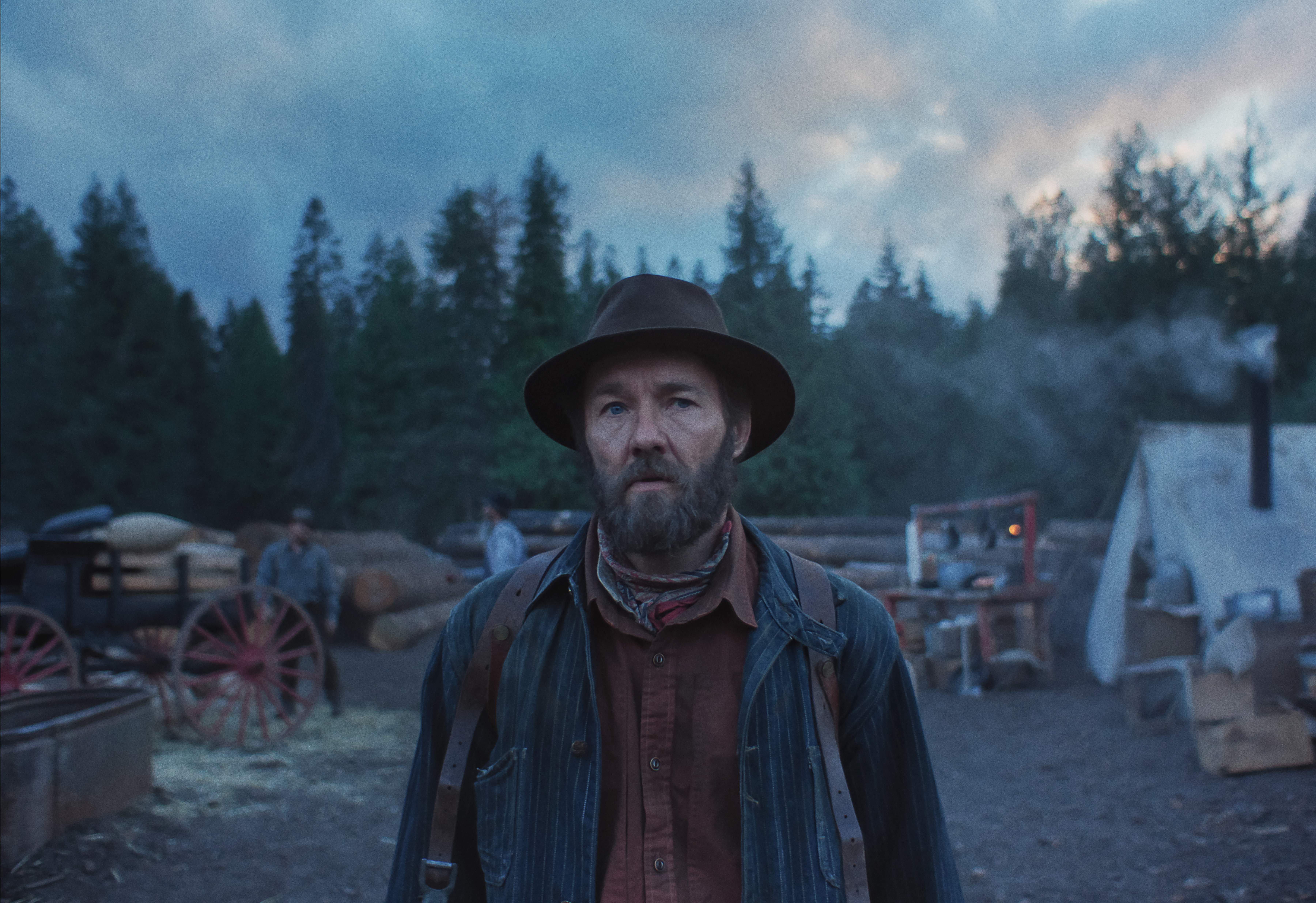
As the train pulls into Bonners Ferry, a lumber town in the Idaho Panhandle, thick-bearded Robert Grainier awakes from a disturbing dream to see thick clouds of dark smoke hanging over the forest. He hurries outside to find chaos — fleeing townsfolk, bright orange flames licking at the sky.
His home is on fire. His family is in danger.
We’re sometime in the early 1900s, about halfway through Netflix’s heartrending new film “Train Dreams.” So no, this isn’t technically a climate change parable.
But watching the movie at the end of 2025 — a year that started with big swaths of Los Angeles burning to the ground, a year that will likely go down as the second- or third-warmest ever recorded — I felt an intensely personal terror watching Grainier stumble through burning trees, calling for his wife and daughter. This was the Pacific Northwest a century ago, but it could have been California today.
Only today, fossil fuel pollution has loaded the dice for bigger, more frequent blazes.
“Train Dreams” follows Grainier’s life as a good-hearted logger and railroad worker, showcasing superb cinematography and an incredible cast, including Joel Edgerton as Grainier, Felicity Jones as his wife and William H. Macy as a quirky fellow logger. The film touches on several highly relevant themes, including respect for the environment, mistreatment of immigrants and the constant march of technological progress.
Co-writer/director Clint Bentley and co-writer Greg Kwedar take a soft approach to those politically charged topics. Grainier is disturbed when a Chinese immigrant is attacked — in fact, it haunts his dreams — but he never talks about it. A few loggers sitting by a warm fire briefly debate the ethics of chopping down old trees. But they keep doing it.
During a panel after a screening at Netflix’s Hollywood offices last week, Bentley said he wanted the movie to feel like “an elegy for a lost world,” or perhaps “a love letter to nature, and to our interconnectedness to the natural world.”
“If I can give the audience something of an appreciation for the natural world and our place in it, then I feel very good about that,” he said.
Sitting to Bentley’s left, Netflix’s sustainability officer, environmental scientist Emma Stewart, said she appreciated that the movie doesn’t scold viewers.
“The environmental community, we love to scold,” she said.
As part of her job, Stewart oversees Netflix’s work on sustainability storytelling. That work could soon become even more consequential.
On Friday, two days after the “Train Dreams” panel, the streaming giant announced an $82.7-billion agreement to buy Warner Bros., which — if approved by regulators — would make Netflix one of Hollywood’s biggest film and TV studios.
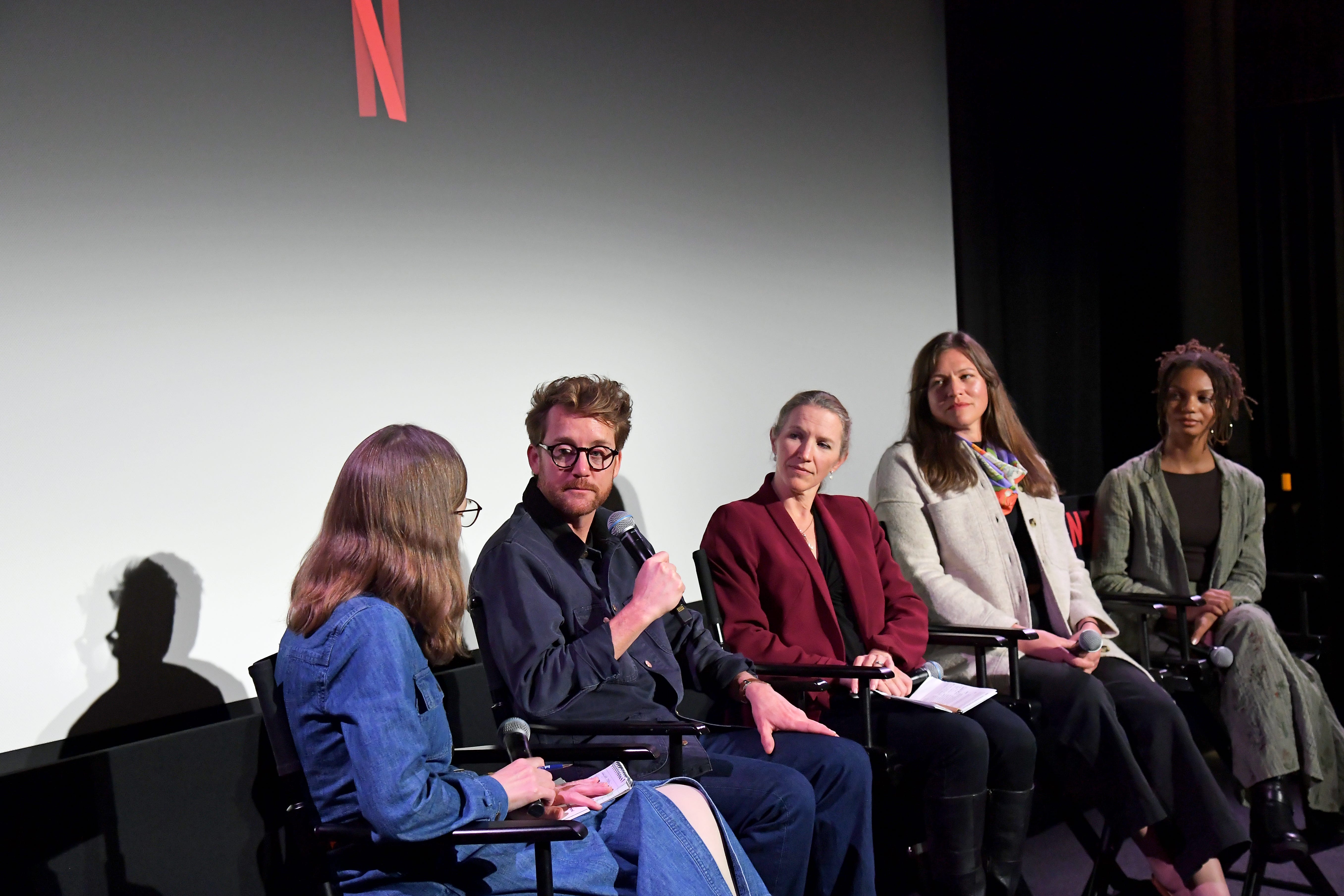
Even without Warner Bros., Netflix has a powerful megaphone. And broadly speaking, I liked what I heard and saw from the company at last week’s screening.
For context, there are lots of competing ideas about what makes an effective climate story — in films, news coverage, politics. Some folks believe most climate messaging should feel something like “Train Dreams”: totally apolitical, populated by characters who can’t easily be written off as liberal (i.e. rural families working the land).
Other climate advocates prefer a more explicit approach. As fossil fuel combustion drives ever-more-dangerous heat waves, storms and wildfires, they want journalists, politicians, screenwriters and other storytellers to meet the urgency of the moment, with honest depictions of the reality we’re all experiencing.
Those aren’t the only dividing lines in the climate discourse. What’s more motivating, stories of hope or stories of doom? What’s more important, helping people understand and advocate for climate solutions, or helping them build emotional resilience against the scary consequences that are already here? Is encouraging audiences to think about their lifestyle choices irresponsible, since Big Oil is the real villain?
These are hard questions. I’ve encountered plenty of climate advocates who don’t fall neatly on one side or the other.
I also know people who insist that there’s a right way — that if you try to inspire hope, or if you sound alarmist, or if you appeal to conservatives, you’re doing it wrong.
Which to my mind is silly.
For one thing, not everyone responds to the same types of messages. Some folks need hope! Others respond to fear. Still others might reject the words “climate change” but nonetheless be receptive to the right story.
If this were the 1970s, and most Americans were getting their information from daily newspapers and a few broadcast networks, I might worry about message consistency. But this is 2025. Our media diets are increasingly determined by algorithms and other self-sorting mechanisms that box us into content siloes. If you’re interested in living a more sustainable life, just check your Instagram or TikTok feed. If you like politicians or podcasters who attack Big Oil, the algorithms will probably figure it out. If climate doom intrigues you, check your streaming recommendations.
Which brings us back to Netflix. Long before “Train Dreams,” this was the company that released “Don’t Look Up,” the film where a comet destroys Earth after scientists’ warnings are ignored. The whole thing is an obvious climate metaphor.
“We are looking to serve our 300 million member households,” Stewart said at last week’s panel. “They are as diverse as the biodiversity of a healthy forest. And so you can’t tell one story. You have to tell a multitude.”
Which is exactly right, I think. Tell stories for everybody.
As for “Train Dreams,” you may not find the same climate resonance in it that I did. Which is OK. It’s a beautiful story, and those are always in short supply.
There are some really great comments here about the intersection of culture and climate activism, which I can't add to. I just want to vent and say I'm so tired of seeing these constant media conglomerate mergers and dread the day when all the content is once locked up again in a cable subscription but without the physical cable.
Sounds good, I'll have to check it out. I don't think scolding has changed many minds, if any, and I'm not sure how many movies influence people to take climate action, if any, but encouraging respect for the environment, though not something that can be done overnight, is bound to help. I LOVED Don't Look Up — it may not make anyone take climate action, but I found it somehow hopeful and inspiring, especially that dinner table scene where what's-his-name says, "We really had everything." That's us now, and we do.
Although a movie may not directly get people to take climate action, movies and other pieces of culture can slowly seep into our consciousness and have a real effect — like Will and Grace.