

Climate change goes to the Oscars
Several Academy Award-nominated films told stories dealing with global warming. More movies like this, please!

This year’s Academy Awards are still a week away, and already they’ve set two records.
First: most nominations for a single movie, with 16 nods for vampire flick “Sinners.”
Second: most nominees to pass the Climate Reality Check, which tests whether a film acknowledges the reality of the climate crisis.
Developed as a climate version of the Bechdel test — which measures representation of women in film — the climate test has been around since 2024. Two years ago, three Oscar-nominated movies passed muster. Last year, the number dropped to one.
This year, five nominees acknowledged climate change, according to a report released Thursday. Maybe not a tidal wave of climate storytelling, but an improvement.
“I think it’s an indicator that because climate change is becoming such a big part of our lived experience and collective dialogue, it’s showing up in more films,” said Anna Jane Joyner, CEO of Good Energy, which created the Climate Reality Check.
“I think we will definitely see the trend tick up, too,” she added. “This is the world we live in… Filmmakers are experiencing [climate change] in their lives. Their experiences are definitely going to influence the stories they tell.”
Here are the 2026 Oscar nominees that passed the test:
“Arco,” a French animated film about a time-traveling boy who journeys to the year 2075 and discovers (among other things) a “protopian” world where humans haven’t solved climate change but have found ways to adapt and limit the damage (nominated for best animated feature);
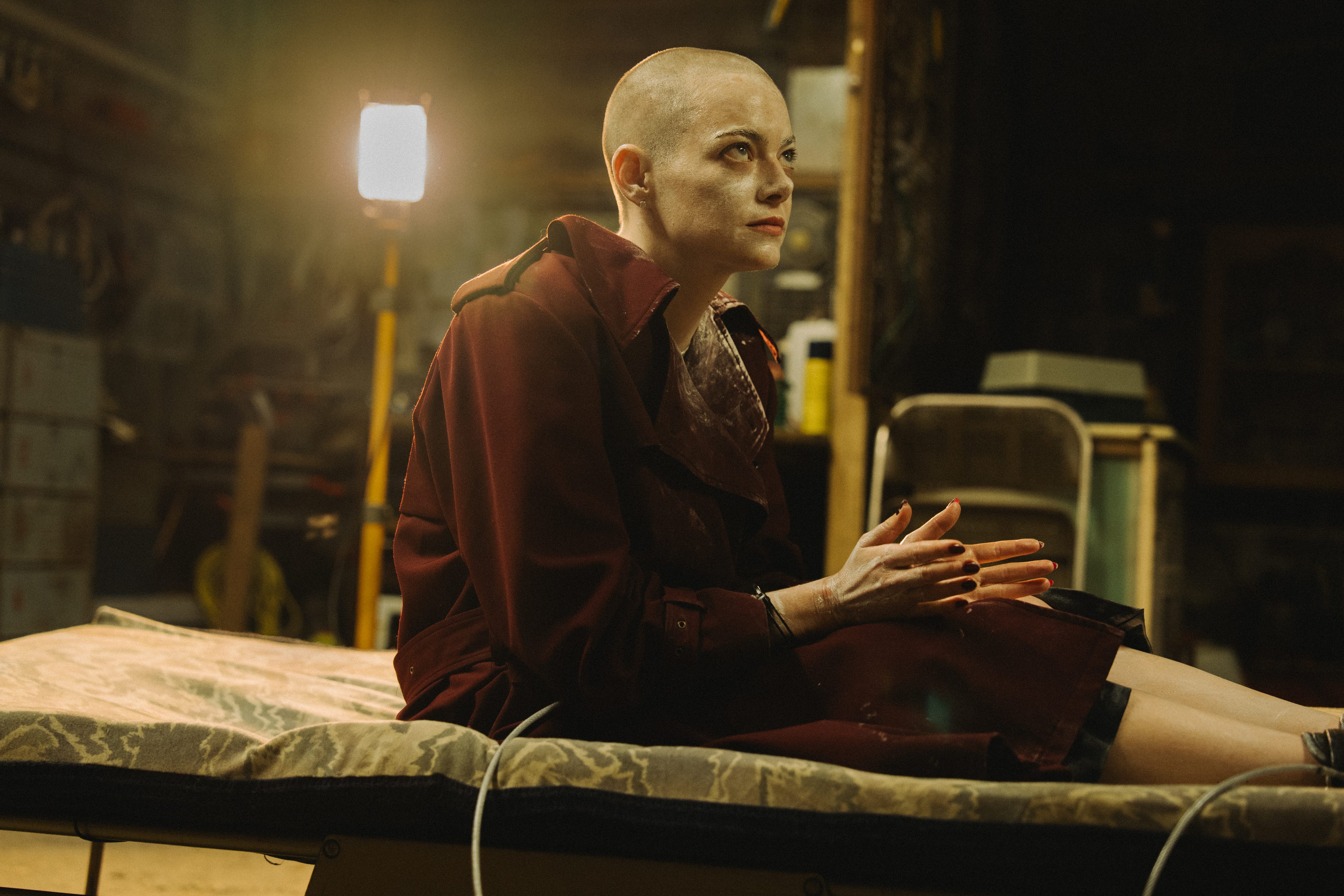
“Bugonia,” which stars Emma Stone as a pharmaceutical executive kidnapped by a conspiracist beekeeper who thinks she’s an alien bent on killing pollinators and destroying humanity (nominated for best picture and other awards);

“Jurassic World Rebirth,” the latest entry in the classic franchise, which includes discussion of how changing climate conditions can impact dinosaurs and humans alike (nominated for best visual effects);
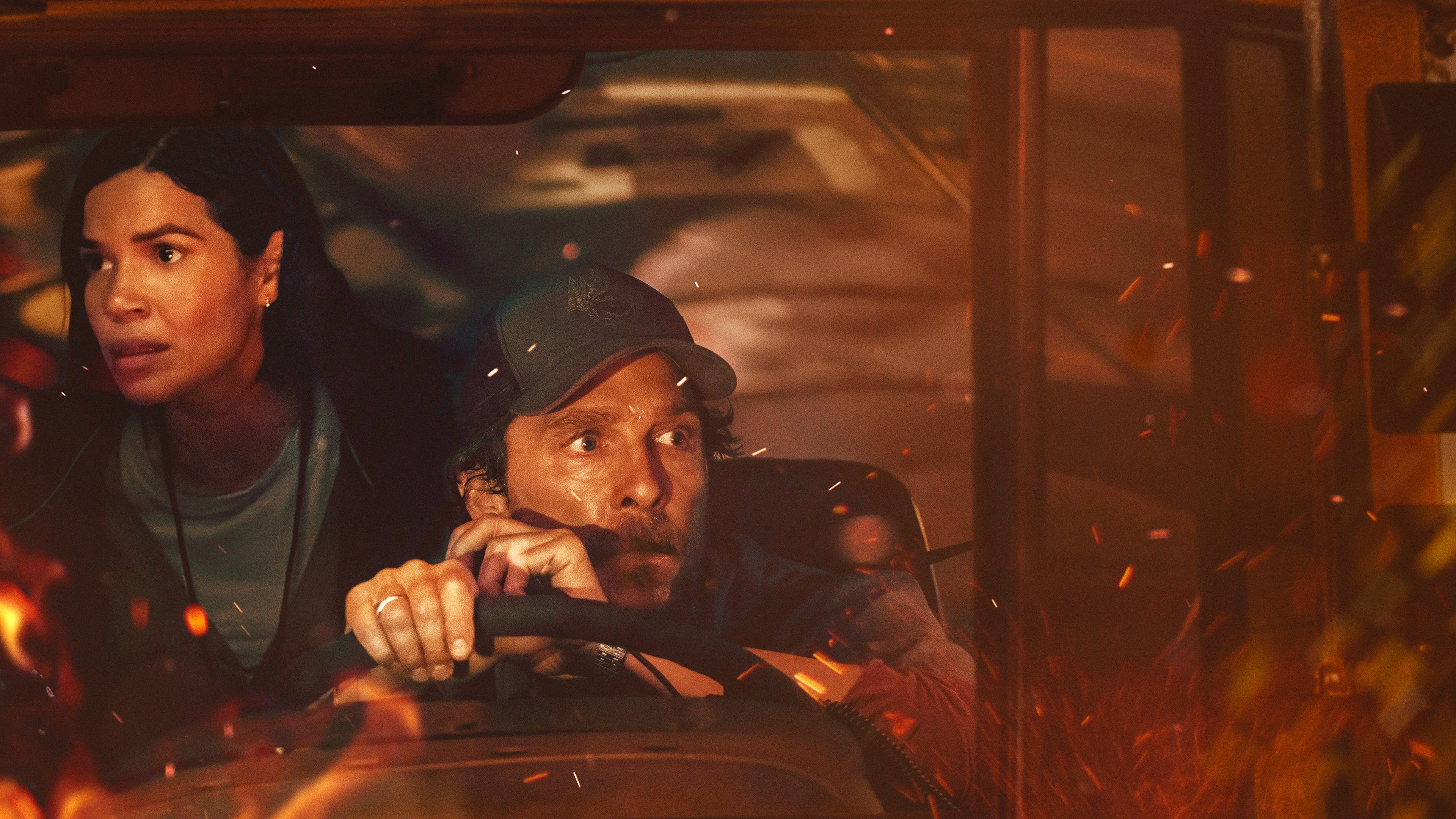
“The Lost Bus,” a story about the 2018 Camp fire that killed 85 people and largely destroyed the California town of Paradise (nominated for best visual effects)
Additionally, “Sirāt” (nominated for best international feature) takes place in a desert ravaged by apocalyptic drought. But although global warming is happening, none of the characters demonstrate explicitly that they know it’s happening — a requirement for passing the Climate Reality Check. So technically, four movies passed, not five.
Sadly, I haven’t seen any of those films. I want to see them now, though.
I write about climate, so of course I think this stuff sounds interesting. But I’m also a human being living in a world growing hotter and more dangerous. I need stories that help me understand and process the scary stuff taking place all around me. That’s true for everyone. It’ll only grow more true as global warming worsens.
“It’s becoming a more and more pervasive part of our lives,” Joyner said.
I also think it’s cool and noteworthy that Hollywood keeps releasing and promoting films that touch on the climate crisis, given the Trump administration’s eagerness to weaponize the U.S. government against entertainment companies whose content runs afoul of its agenda. We’ve seen this authoritarian tendency again and again, from the Jimmy Kimmel suspension to the “60 Minutes” settlement to the FCC’s DEI policing.
I wouldn’t call the continued existence of global warming on the silver screen an act of political courage. These are aren’t in-your-face climate stories like Adam McKay’s “Don’t Look Up” or Al Gore’s “An Inconvenient Truth.”
But the fact that major studios haven’t ordered screenwriters and producers to scrub all climate references — the terrifying “obey in advance” approach that has taken root in some sectors of American society — is a victory.
And although some of the climate angles in the Academy Awards nominees are subtle or small, that’s not a bad thing. There’s a role for all kinds of storytelling, at least if we want to remind a lot more people to care about climate. Romances, thrillers, comedies — they can all spotlight climate, one way or another.
That’s why Joyner was pleased by the wide range of genres represented by the Oscar nominees that passed the Climate Reality Check this year.
“It’s not just the ecoterrorists, or the environmentalists shaming people about their plastic straws,” she said. “That’s a really good sign. There’s complexity and creativity in how to write about [climate] in the most critically acclaimed films.”
The Oscars take place Sunday, March 15. Conan O'Brien is hosting. Personally, I’m pulling for “One Battle After Another” to win best picture.
Bigger picture, I’m pulling for more filmmakers to think seriously about the climate crisis. Looking beyond Oscar nominees, just 2.8% of scripted movies and TV episodes released from 2016 through 2020 included any mention of the words “climate change” or a long list of related keywords, according to USC researchers.
Has the picture improved since 2020? We’ll know soon. Good Energy is updating the USC analysis to include movies and TV shows released through 2024 — an effort that involves scrutinizing tens of thousands of additional scripts. They plan to finish their report in the next few months.
Joyner said to expect progress — although perhaps not as quickly as she once hoped for. A couple of years ago, she told me she wanted to see 50% of movies and TV shows pass the Climate Reality Check by 2027. Since then, she’s adjusted her expectations.
“I don’t think it will be by next year,” she said. “But I think by 2030, it’s doable.”
In other news
Along the Colorado River:
California, Arizona and Nevada absolutely hate the Trump administration’s ideas for conserving water and propping up reservoirs. (Ian James, L.A. Times)
San Diego has so much desalinated water, it might sell some of its Colorado River supplies to Arizona and Nevada cities. (Ian James again)
If Glen Canyon Dam stops being able to produce hydropower, electricity costs are likely to rise across the rural West. (Brandon Loomis, Arizona Republic)
The energy transition:
Lawmakers in 28 states have introduced bills that would let people install do-it-yourself, plug-in solar systems — aka “balcony solar.” Some of the lawmakers are Republican, too! (Alison F. Takemura, Canary Media)
California wants to install six million home heat pumps by 2030. A big obstacle? High electric rates. (Ben Christopher and Alejandro Lazo, CalMatters)
The Nuclear Regulatory Commission voted to allow Bill Gates’ nuclear company, TerraPower, to start building the nation’s first new commercial reactor in nearly a decade. (Brad Plumer, New York Times)
The great outdoors:
Because running a beloved local ski resort isn’t hard enough, climate-induced weather whiplash is wreaking havoc on Mt. Baldy. (Jack Dolan, L.A. Times)
As a huge fan of Sand to Snow National Monument, it is very frustrating to me that there is still no management plan or signage. (Erin Rode, SFGATE)
Steve Pearce, President Trump’s pick to lead the Bureau of Land Management, promised he’d protect Chuckwalla and Sáttítla Highlands national monuments. We’ll see if he sticks to that promise. (Debra Utacia Krol, Arizona Republic)
Trump nonsense:
National Park Service staff are diligently telling Trump administration officials lots of historical facts and scientific realities they might want to censor, probably to avoid getting fired. (Karin Brulliard and Brady Dennis, Washington Post)
Trump invited a bunch of tech executives to the White House, then claimed that data centers will now save people money rather than cost them money. How will that work? The details are still unclear. (Hayley Smith, L.A. Times)
Smokey Bear, meet Coalie. No, a ridiculous new mascot promoted by Interior Secretary Doug Burgum won’t save the coal industry. (Michael Hiltzik, L.A. Times)
Last but certainly not least, Bill McKibben wrote about Trump and war and oil — and the potential for renewable energy to help create peace.
I've seen each of the films listed here with the exception of Arco and Sirat, both of which are on my list. Agree it's important to see more filmmakers embrace climate themes, although tbh the only one that I think did the topic justice was "The Lost Bus" (all without actually saying the words climate change).
Many of the Oscar nominees do a good job of highlighting other social themes, which often intersect with climate issues. "One Battle After Another" comes to mind, as does "Train Dreams" and docs like "The Alabama Solution" and "Mr. Nobody Against Putin."
Not all audiences will intuitively understand the connection, but at least these films are helping to start important dialogue.
I just read the fiction book "The Great Transition" by Nick Fuller Googins, published in 2023. I remember hearing how important it was that the climate narrative make it into fiction - that we have a way of processing the information differently to actually make some of the ideas stick, especially for those who have tuned out the climate narrative in the past.